

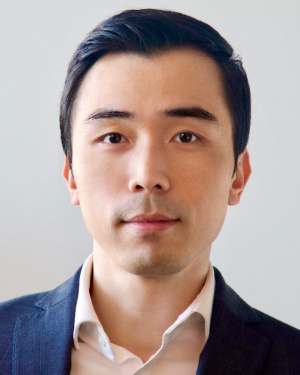
 Duen Horng Chau
· 4 previous affiliations
- Georgia Institute of TechnologySince 2014
- Full Professor · Since 2024
- Associate Director, MS in Analytics · Since 2014
- Director of Industry Relations, The Institute for Data Engineering and Science (IDEaS) · 2019–2025
- Apple (United States)Since 2025
- Visiting Professor & Research Scientist · Since 2025
- Carnegie Mellon University2007–2009
- PhD student · 2007–2009
- CMU2005–2007
- Research Associate · 2005–2007
Research Overview
Duen Horng Chau focuses on interactive visual analytics, machine learning interpretability, and the security of deep learning systems. His early work developed scalable tools for exploring large network data and detecting anomalies. More recently, his research addresses the safety and adversarial robustness of generative models, large language models, and 3D rendering frameworks.
Research Trajectory
Chau’s early research established a foundation in making complex systems transparent and navigable for users. His work on Answering why and why not questions in user interfaces explored how to clarify system behaviors to end-users. He subsequently applied machine learning to large-scale networks, participating in the development of Netprobe: a fast and scalable system for fraud detection in online auction networks, which utilized Markov Random Fields and Belief Propagation to detect suspicious transaction patterns. Building on these themes of network analysis and user interaction, he introduced Apolo: making sense of large network data by combining rich user interaction and machine learning, a mixed-initiative system that allowed users to incrementally explore and build an understanding of large network datasets from the bottom up.
As deep neural networks became ubiquitous, Chau’s focus shifted toward visual analytics designed specifically for model interpretability. He oversaw the creation of ActiVis: Visual Exploration of Industry-Scale Deep Neural Network Models, an interactive system deployed to help engineers interpret complex, large-scale models. He collaborated on extending this educational and exploratory approach to generative architectures with GAN Lab: Understanding Complex Deep Generative Models using Interactive Visual Experimentation, a tool enabling non-experts to visualize the dynamic training process of Generative Adversarial Networks. This work contributed to the broader research direction of Hardware-Accelerated Machine Learning in the Web Browser. He further advanced interpretability with Summit: Scaling Deep Learning Interpretability by Visualizing Activation and Attribution Summarizations, which aggregates neuron activations into attribution graphs to reveal hierarchical features, advancing the area of Bridging the Local to Global Interpretability Gap. Continuing to build accessible "glass box" views of neural architectures, he developed CNN Explainer: Learning Convolutional Neural Networks with Interactive Visualization to demystify low-level mathematical operations in computer vision models.
Chau has continued to expand the application of visual analytics and novel interfaces across diverse domains. He extended visual exploration techniques to scientific literature with Visual Exploration of Literature with Argo Scholar. In the medical domain, he guided the development of HybridCollab: Unifying In-Person and Remote Collaboration for Cardiovascular Surgical Planning in Mobile Augmented Reality, enabling real-time, multi-user surgical planning across geographically dispersed teams. To better capture semantic relationships in complex, high-dimensional data, he participated in the design of EnergyMap: Unraveling the Data Manifold with Energy-based Dimensionality Reduction, which uses energy-based models to compute geodesic distances for more meaningful embeddings.
A major recent theme in his trajectory involves the security of computer vision systems, particularly concerning the research direction of Overcoming the Digital to Physical Domain Gap. He introduced Revamp: Automated Simulations of Adversarial Attacks on Arbitrary Objects in Realistic Scenes, leveraging differentiable rendering to test model robustness under varying environmental conditions. This approach was expanded in UNDREAM: Bridging Differentiable Rendering and Photorealistic Simulation for End-to-end Adversarial Attacks, a framework optimizing adversarial perturbations by integrating simulation factors like weather and lighting. He formalized the landscape of these techniques in RenderBender: A Survey on Adversarial Attacks Using Differentiable Rendering. Concurrently, his research identified novel vulnerabilities in 3D Gaussian Splatting (3DGS), demonstrating how adversarial camouflages can deceive object detectors in safety-critical applications in ComplicitSplat: Downstream Models are Vulnerable to Blackbox Attacks by 3D Gaussian Splat Camouflages and 3D Gaussian Splat Vulnerabilities.
Most recently, Chau’s interpretability research has intersected with the safety of large language models (LLMs) and generative transformers. He synthesized the landscape of safety-focused interpretation techniques in Interpretation Meets Safety: A Survey on Interpretation Methods and Tools for Improving LLM Safety. Moving to active mitigation, he developed Shape it Up! Restoring LLM Safety during Finetuning, introducing a dynamic safety shaping framework that evaluates safety at the token level to prevent alignment degradation during fine-tuning. Finally, he investigated the internal representations of Diffusion Transformers in ConceptAttention: Diffusion Transformers Learn Highly Interpretable Features, demonstrating that these models can function as zero-shot vision encoders by extracting high-fidelity saliency maps directly from their attention layers.
Current Directions
Recent work investigates the intersection of model interpretability, safety alignment, and adversarial robustness in state-of-the-art architectures. A primary focus is securing large language models during deployment and fine-tuning, developing token-level interventions to maintain safety guardrails without sacrificing model utility. Concurrently, ongoing research addresses the physical and simulated vulnerabilities of advanced 3D rendering techniques, particularly 3D Gaussian Splatting, exposing how adversarial camouflages can compromise downstream object detection in contexts like autonomous driving. Finally, recent investigations explore the latent representations of generative models, leveraging energy-based dimensionality reduction and the internal attention mechanisms of Diffusion Transformers to extract highly interpretable, zero-shot semantic features.
Profile updated
Loading new papers…
Other researchers whose papers cluster into the same research directions — a proxy for overlapping technical interests and shared intellectual neighborhoods.
See something wrong? Report a mistake