

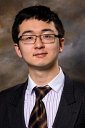
 Dongyi Wang
· 3 previous affiliations
- University of Arkansas at FayettevilleSince 2021
- Assistant Professor · Since 2021
- University of Maryland, College Park2016–2021
- PhD student · 2016–2021
- Fudan University2012–2016
- Undergrad student · 2012–2016
1 other author named Dongyi Wang: Dongyi Wang (Xi'an Jiaotong University · 1 paper)
Research Overview
Dongyi Wang focuses on the development and application of machine vision, embodied artificial intelligence, and robotics within the domains of agrifood manufacturing and biomedical imaging. His work primarily addresses the challenges of automating complex industrial processes—such as poultry processing and agricultural sorting—while maintaining high standards for food safety, quality, and animal welfare. By integrating hyperspectral imaging, deep learning, and synthetic data generation, he develops systems capable of operating in the unstructured and variable environments characteristic of biological production.
Research Trajectory
The evolution of Wang’s research reflects a transition from medical informatics and diagnostic signal processing toward the broader application of computer vision in agricultural and industrial automation. His early work, beginning around 2015, was situated in the field of computer-aided diagnosis, particularly within the context of Traditional Chinese Medicine (TCM). During this period, he served as a senior researcher on projects involving the digitization of diagnostic techniques, such as An adaptive computer-aided tongue diagnosis method using colour-calibration preprocessing and multiple feature synthesis based on Android platform. This research established a foundation in color-space manipulation and feature synthesis for biological tissues, methods that would later be adapted for food quality assessment.
By 2018, Wang’s focus expanded to include agricultural sensing and industrial quality control. He applied near-infrared spectroscopy and deep learning architectures to quantify biological properties in forestry and textile production, such as moisture content in seedlings and the detection of foreign matter in cotton. This phase marked a shift toward addressing the "data bottleneck" in specialized domains where large-scale annotated datasets are difficult to acquire. He utilized techniques like neural architecture search (NAS) and Mask R-CNN to automate defect detection in wood veneers and other raw materials, moving away from purely diagnostic applications toward real-time industrial monitoring.
In the early 2020s, Wang’s trajectory bifurcated into two primary streams: advanced biomedical vision and smart agricultural engineering. In the biomedical sphere, he focused on high-precision segmentation and registration of ocular imagery, addressing the Cross-Species Domain Shifts in Medical AI that often complicate the translation of preclinical findings to clinical practice. Simultaneously, he established the Smart Agricultural and Food Engineering (SAFE) Lab, where he began applying these vision techniques to the poultry industry. This current phase of his work is characterized by the use of "Sim2Real" pipelines—where synthetic data is used to train models for real-world deployment—and the development of autonomous robotic platforms for food safety monitoring.
Current Directions
Wang’s current research is centered on the modernization of agrifood manufacturing through embodied AI. A significant portion of this work involves overcoming the limitations of traditional supervised learning in environments where manual data labeling is prohibitively expensive or logistically impossible. To address this, he has increasingly turned to Hybrid Training Ratios for Robust Neural Networks, combining small sets of real-world data with large-scale synthetic datasets generated in photorealistic simulators. This approach allows for the training of robust instance segmentation models for chicken carcass processing and other high-throughput manufacturing tasks.
Another major pillar of his current work is the use of hyperspectral imaging (HSI) to detect "invisible" quality defects in food products. In the poultry industry, the "woody breast" condition—a muscle abnormality that affects meat texture—cannot be easily identified by standard RGB cameras. Wang’s research utilizes Spatially Aware Feature Aggregation for Fine Grained Vision to analyze the spatial heterogeneity of meat hardness across a single sample. By combining HSI with optimized neural architectures, his lab develops non-destructive, real-time sorting systems that can be integrated directly into processing lines.
Furthermore, Wang is exploring the intersection of robotics and food safety through the development of autonomous mobile swabbing platforms. These systems are designed to map bacterial presence in poultry facilities, using robotic manipulation and simultaneous localization and mapping (SLAM) to improve sanitization protocols. This work extends into broader areas of cross-view understanding, where he participates in research on View-Conditioned Prompting for 3D Consistency to align ground-level robotic perspectives with aerial or global facility maps.
Representative Work
Wang’s contributions are documented across several key publications that demonstrate his methodological shift from diagnostic informatics to industrial automation.
In the biomedical domain, Wang led the development of the Hard Attention Net for Automatic Retinal Vessel Segmentation. This work addressed the difficulty of segmenting fine vascular structures in retinal images by implementing an attention mechanism that prioritizes high-frequency details. This research was foundational for his later work in Label Efficient Semi-Supervised Medical Image Segmentation, where the goal is to achieve high performance with minimal expert annotation.
Addressing the challenges of multimodal imaging, Wang served as the senior author for the development of MEMO: Dataset and Methods for Robust Multimodal Retinal Image Registration with Large or Small Vessel Density Differences. This project introduced the first public dataset for registering Erythrocyte-Mediated Angiography (EMA) and Optical Coherence Tomography Angiography (OCTA). The associated VDD-Reg framework utilizes Multi-Modal Image Registration via Contrast-Invariant Representations to identify common vascular features across sensors with vastly different resolutions and densities, requiring only a few manual annotations for effective training.
In the field of food science, Wang’s work on Neural Network Architecture Search Enabled Wide-Deep Learning (NAS-WD) for Spatially Heterogenous Property Awared Chicken Woody Breast Classification and Hardness Regression represents a significant application of machine learning to industrial quality control. By automating the search for optimal neural architectures, the system achieves high accuracy in classifying meat quality based on hyperspectral data, accounting for the spatial variance of physical properties within the tissue.
To solve the data scarcity problem in industrial food processing, Wang developed a "Sim2Real" pipeline detailed in Synthetic Data Augmentation for Enhanced Chicken Carcass Instance Segmentation. This research demonstrates that augmenting a limited set of real-world images with photorealistic synthetic data generated in Blender can significantly improve the performance of state-of-the-art segmentation models like YOLOv11-seg. This methodology provides a scalable solution for deploying AI in manufacturing environments where capturing and labeling thousands of images is impractical.
Wang also participated in the development of EAGLE: Efficient Adaptive Geometry-based Learning in Cross-view Understanding, a framework designed for unsupervised domain adaptation. By modeling geometric structural changes on a Grassmann manifold, the system allows models to adapt from ground-level views to aerial perspectives without new labels. This work contributes to the broader challenge of maintaining consistency in robotic vision across different viewpoints and environments.
Finally, his early senior-authored work on tongue diagnosis, such as An adaptive computer-aided tongue diagnosis method using colour-calibration preprocessing and multiple feature synthesis based on Android platform, illustrates the origins of his expertise in mobile-based biological sensing. This research emphasized the importance of color calibration and environmental robustness, principles that remain central to his current work in developing vision systems for the variable lighting and conditions of agrifood processing facilities.
Profile updated
Loading new papers…
Other researchers whose papers cluster into the same research directions — a proxy for overlapping technical interests and shared intellectual neighborhoods.
See something wrong? Report a mistake