

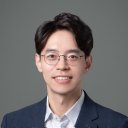
 Dongwoo Kim
· 5 previous affiliations
- Associate Professor · Since 2024
- Current
- Assistant Professor · 2019–2024
- Australian National University2015–2019
- Lecturer · 2019
- Postdoc · 2015–2019
- Postdoctoral Fellow · 2015–2018
- Doctor of Philosophy (Ph.D.), Computer Science · 2011–2015
- Master of Science (MS), Computer Science · 2009–2011
- Research Intern · 2013
- Microsoft Research Asia (China)2012–2013
- Research Intern · 2012–2013
Research Overview
Dongwoo Kim focuses on the geometric structure of datasets and models, particularly advancing graph neural networks, geometric deep learning, and generative modeling. His trajectory spans from foundational work in Bayesian nonparametrics and mutual information estimation to scalable architectures for complex graph topologies. Currently, he investigates trustworthy AI, multi-objective molecular design, and the personalization of large language models.
Research Trajectory
He began by exploring scalable inference for Bayesian nonparametric models. In Dirichlet Process with Mixed Random Measures: A Nonparametric Topic Model for Labeled Data (2012), he introduced a model allowing labels to associate with an unbounded number of topics for document classification and image segmentation. Later, his research incorporated information-theoretic perspectives into deep learning. With collaborators, he investigated the area of Neural Networks as Mutual Information Estimators, demonstrating in Rethinking Softmax with Cross-Entropy: Neural Network Classifier as Mutual Information Estimator (2019) that standard classifiers function as mutual information estimators, a finding applied to handle imbalanced data and object localization.
A major theme in his trajectory is advancing Graph Neural Networks (GNNs), particularly for complex topologies. To address heterophilic graphs—where connected nodes often have different labels—he developed methods in the direction of Adaptive Spectral Filtering for Heterophilic Graph Neural Networks. In Restructuring Graph for Higher Homophily via Adaptive Spectral Clustering (2023), he proposed rewiring edges based on spectral alignment with node labels, enabling classical GNNs to perform well on heterophilic data. He continued this focus by introducing a reverse message-passing framework to mitigate oversmoothing in Mitigating Oversmoothing Through Reverse Process of GNNs for Heterophilic Graphs (2024) and Distinguishing Neighborhood Representations Through Reverse Process of GNNs for Heterophilic Graphs (2024). Further contributing to the broader area of Overcoming the Homophily Assumption in Graph Neural Networks, his group developed "Posterior Label Smoothing" in Posterior Label Smoothing for Node Classification (2025) to adapt soft labels across varying graph homophily levels.
Concurrently, he explored the research direction of The Weisfeiler Lehman Expressivity Bottleneck. He participated in developing "Local Vertex Colouring" in Local Vertex Colouring Graph Neural Networks (2023), leveraging search algorithms to capture richer graph properties. He also led work on model interpretability and robustness, introducing a novel influence function for non-convex GNNs in Influence Functions for Edge Edits in Non-Convex Graph Neural Networks (2025) to predict the impact of edge modifications without retraining.
Another significant arc involves scalable graph generation. Contributing to the area of Tree Linearization for Neural Sequence Models, he introduced the HGGT framework in Hierarchical Graph Generation with K2-trees (2023). This approach represents graphs as pruned, tokenized sequences and utilizes techniques from the direction of Tree Based Positional Encodings for Hierarchical Data to achieve faster inference. He further refined these sequence-based generation methods with collaborators in Graph Generation with K2-trees (2024).
In 2025, his research expanded into diverse applications of geometric and generative modeling. For structure-based drug design, he directed the development of a multi-reward optimization framework in Enhancing Ligand Validity and Affinity in Structure-Based Drug Design with Multi-Reward Optimization to balance binding affinity with physical realism. In computer vision, he oversaw the creation of a geometric vision-language model in GeoDANO: Geometric VLM with Domain Agnostic Vision Encoder to improve the recognition of visual geometric features. Additionally, he guided research into personalizing large language models through graph-based collaborative filtering in CoPL: Collaborative Preference Learning for Personalizing LLMs.
Current Directions
The most recent papers in the evidence address the control, refinement, and safety of generative models. Recent work investigates concept unlearning in diffusion models, proposing closed-form methods that operate on internal cross-attention activations to erase copyrighted or unsafe content without retraining (Concept Unlearning via Cross-Attention Activation Projection for Diffusion Models). In the realm of large language models, his group is exploring more efficient human-AI collaboration paradigms, such as in-place feedback mechanisms that allow users to directly edit responses and reduce context pollution during multi-turn interactions (In-Place Feedback: Reliable Refinement for Multi-Turn Expert-LLM Collaboration). Additionally, he is advancing multi-objective generation by composing pre-trained Generative Flow Networks (GFlowNets) at inference time, enabling complex logical operations over rewards without the need for auxiliary classifiers (Routing by Reaching: Composition of Pre-trained GFlowNets for Multi-Objective Generation).
Profile updated
Loading new papers…
Other researchers whose papers cluster into the same research directions — a proxy for overlapping technical interests and shared intellectual neighborhoods.
See something wrong? Report a mistake