

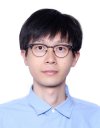
 Dongnan Liu
· 3 previous affiliations
- Ant Group (China)Since 2024
- Researcher · Since 2024
- The University of Sydney2017–2024
- Researcher · 2020–2024
- Researcher · 2021–2024
- Doctor of Philosophy - PhD, Computer Science · 2017–2021
- Shanghai Jiao Tong University2013–2017
- Bachelor of Engineering - BE, Electrical Engineering and Information Tecnology · 2013–2017
Research Overview
Dongnan Liu focuses on medical image analysis, unsupervised domain adaptation, and multimodal visual reasoning. His trajectory spans from developing specialized deep learning architectures for complex panoptic segmentation in histopathology to addressing data heterogeneity through federated learning and cross-domain adaptation. Recently, his work explores the integration of large language models with visual perception for advanced clinical reasoning and automated report generation.
Research Trajectory
Liu’s early research concentrated on improving deep learning architectures for complex medical image segmentation. In 2018, he proposed the 3D Large Kernel Anisotropic Network for Brain Tumor Segmentation, which addressed the limitations of traditional 3D convolutional networks by expanding valid receptive fields to capture global details while managing computational costs. He subsequently expanded this focus to histopathology, introducing Nuclei Segmentation via a Deep Panoptic Model with Semantic Feature Fusion in 2019. This work integrated global semantic features with local instance features to better handle the high variability and overlapping nature of nuclei in medical imagery.
Recognizing the annotation burden and domain shifts inherent in microscopy, Liu shifted toward unsupervised domain adaptation (UDA). In 2020, he developed Unsupervised Instance Segmentation in Microscopy Images via Panoptic Domain Adaptation and Task Re-Weighting, utilizing a cycle-consistency architecture to learn from fluorescence images and synthesize histopathology data. He continued to refine instance segmentation paradigms with the 2021 publication of Panoptic Feature Fusion Net: A Novel Instance Segmentation Paradigm for Biomedical and Biological Images, contributing to the broader area of Resolving Instance Boundaries in Crowded Scenes by unifying proposal-based and proposal-free feature extraction. That same year, he introduced PDAM: A Panoptic-Level Feature Alignment Framework for Unsupervised Domain Adaptive Instance Segmentation in Microscopy Images, which bridged domain gaps at both the image and contextual semantic levels.
As his research progressed, Liu began addressing broader challenges of data heterogeneity and multi-institutional collaboration. In 2022, he presented MS Lesion Segmentation: Revisiting Weighting Mechanisms for Federated Learning. This framework dynamically re-weighted model aggregation and local training losses based on lesion volume, advancing work in the research directions of Deep Learning for Spatially Sparse Target Segmentation and Adaptive Aggregation Weights for Heterogeneous Federated Learning. He further tackled institutional discrepancies in 2023 with Taxonomy Adaptive Cross-Domain Adaptation in Medical Imaging via Optimization Trajectory Distillation, which provided a solution for taxonomic inconsistency when different clinical sites use varying classification systems.
In 2024, Liu’s work in domain adaptation and medical imaging grew increasingly sophisticated. He explicitly modeled hidden dataset heterogeneity, such as varying cancer types, in Learning to Generalize over Subpartitions for Heterogeneity-Aware Domain Adaptive Nuclei Segmentation, employing a progressive clustering strategy to disentangle image content from style. He also moved beyond individual cell morphology to model neighborhood contexts in Revisiting Adaptive Cellular Recognition Under Domain Shifts: A Contextual Correspondence View. To handle extreme class imbalances and discover rare cell types, he developed Seeing Unseen: Discover Novel Biomedical Concepts via Geometry-Constrained Probabilistic Modeling, which modeled data as probabilistic distributions on a hypersphere to separate known classes from novel ones. Concurrently, he applied his expertise in spatial perception to autonomous driving contexts, addressing foreground sparsity in Alleviating Foreground Sparsity for Semi-Supervised Monocular 3D Object Detection through occupancy-guided distillation from LiDAR data.
Most recently, Liu has integrated visual perception with large language models (LLMs) to enhance clinical and general reasoning. He contributed to the area of Grounding Clinical Models with Structured Knowledge Graphs with Complex Organ Mask Guided Radiology Report Generation (2024), which utilized pixel-level segmentation masks to align specific organ regions with disease priors. He also developed an inference-only pipeline to bridge visual perception and high-level reasoning in Enhancing Advanced Visual Reasoning Ability of Large Language Models. Continuing his theoretical work on domain adaptation, he published On the Theory of Conditional Feature Alignment for Unsupervised Domain-Adaptive Counting in 2025, proposing a framework that preserves task-relevant density information while aligning environmental styles. In 2026, he participated in collaborative research on LLM efficiency, co-authoring MoL: Adaptive Mixture-of-Length Reasoning for Efficient Question Answering with Context, which introduced an information-theoretic difficulty metric to dynamically adapt reasoning length and reduce token usage.
Current Directions
The most recent papers in the evidence indicate a dual focus on the theoretical foundations of domain adaptation and the efficiency of multimodal reasoning systems. Liu is actively investigating conditional feature alignment to solve complex dense-prediction tasks, such as object counting, where standard domain adaptation techniques often discard critical density variations. Simultaneously, his recent collaborative work explores adaptive reasoning in large language models, developing frameworks that allow models to dynamically adjust their computational expenditure based on the complexity of the input context. This intersection of robust visual perception and efficient, context-aware language modeling represents his primary ongoing research trajectory.
Profile updated
Loading new papers…
Other researchers whose papers cluster into the same research directions — a proxy for overlapping technical interests and shared intellectual neighborhoods.
See something wrong? Report a mistake