

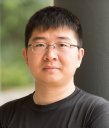
 Dongliang Chang
· 5 previous affiliations
- Associate Researcher · Since 2025
- PhD student · 2019–2023
- Current
- Tsinghua University2023–2025
- Postdoc · 2023–2025
- Lanzhou University of Technology2016–2019
- MS student · 2016–2019
- Zhoukou Normal University2012–2016
- Undergrad student · 2012–2016
Research Overview
Dongliang Chang focuses on computer vision and machine learning, with a primary emphasis on fine-grained visual classification and feature representation. His trajectory spans from foundational ensemble methods and attention mechanisms to advanced frameworks for few-shot learning, domain adaptation, and novel category discovery. Recently, his work investigates the application of generative diffusion models to discriminative tasks and accessible high-resolution image generation.
Research Trajectory
Dongliang Chang’s early research addressed fundamental challenges in neural network optimization and feature extraction. In 2018, he introduced SSE: A New Selective Initialization Strategy for Snapshot Ensembling, a method designed to reduce variance in small-sample classification tasks by discarding poor parameter initializations. This focus on extracting robust, discriminative features naturally extended into the research direction of Discriminating Categories with Low Inter-Class Variance. Working in this area, he collaborated on Fine-Grained Vehicle Classification With Channel Max Pooling Modified CNNs (2019), which proposed a channel max pooling scheme to improve the generalization ability of convolutional neural networks by learning discriminative features with fewer feature maps.
To address the core challenge of large intra-class variance and inter-class similarity in fine-grained recognition, Chang developed methods to isolate minute, discriminative regions. He proposed a top-down spatial attention loss in Fine-Grained Visual Classification via Simultaneously Learning of Multi-regional Multi-grained Features (2021), contributing to the broader area of Suppressing Salient Features for Robust Representation Learning. This work emphasized mining multi-regional features rather than relying solely on complex model architectures. He further explored this theme with collaborators in Progressive Learning of Category-Consistent Multi-Granularity Features for Fine-Grained Visual Classification (2022), demonstrating that explicit part-driven operations are less critical than progressively fusing features across different granularities. Recognizing the gap between algorithmic performance and real-world utility, he also led the development of a Complex Scenario-Oriented Fine-Grained Visual Classification Platform (2022) to facilitate the deployment of these models in diverse environments.
By 2023, Chang’s work expanded to address the scalability and interpretability of fine-grained models. He investigated cross-dataset generalization in An Erudite Fine-Grained Visual Classification Model, proposing a joint training approach across multiple label spaces while managing the co-occurrence of positive and negative transfer. Concurrently, he explored human-AI interaction in Making a Bird AI Expert Work for You and Me, examining how transferable knowledge from trained classification models can be used to improve human domain expertise. His research also moved beyond closed-set assumptions; with collaborators, he addressed On-the-Fly Category Discovery, shifting away from offline transductive learning to enable models to instantaneously cognize novel category samples.
In 2024, Chang continued to push the boundaries of fine-grained recognition into data-scarce and open-set paradigms. He addressed open set domain adaptation in Mind the Gap: Open Set Domain Adaptation via Mutual-to-Separate Framework, focusing on maintaining performance across large domain shifts where unknown classes are present. For scenarios with limited annotations, he contributed to Bi-Directional Ensemble Feature Reconstruction Network for Few-Shot Fine-Grained Classification, which utilizes a support set to reconstruct query images bi-directionally, and Semi-Supervised Learning for FGVC With Out-of-Category Data, which leverages unaligned, out-of-category unlabeled data to train fine-grained models. He also extended fine-grained methodologies to non-mesh sequences in Class-Aware Contrastive Learning for Fine-Grained Skeleton-Based Action Recognition, refining negative sample selection in graph convolutional networks to capture subtle motion differences.
Beyond traditional classification, his 2024 work expanded into the capabilities of large-scale generative models. He explored the adaptation of text-to-image diffusion models for discriminative tasks in Hierarchical Prompting for Diffusion Classifiers, introducing a hierarchical evaluation strategy to accelerate zero-shot recognition. Additionally, he contributed to DemoFusion: Democratising High-Resolution Image Generation With No $$$, demonstrating how open-source latent diffusion models can be extended for high-resolution outputs via progressive upscaling and dilated sampling.
Current Directions
The most recent work in the evidence indicates a strategic expansion into the applications and efficiencies of large-scale generative models. While maintaining a strong foundation in fine-grained visual classification and open-set recognition, recent research investigates how advanced text-to-image diffusion models can be adapted for high-speed discriminative tasks, such as zero-shot recognition. Concurrently, there is a focus on democratizing high-resolution image generation by developing frameworks that extend the capabilities of open-source latent diffusion models without requiring prohibitive computational investments. This dual focus highlights an ongoing interest in bridging the gap between resource-intensive generative artificial intelligence and accessible, practical deployment.
Profile updated
Loading new papers…
Other researchers whose papers cluster into the same research directions — a proxy for overlapping technical interests and shared intellectual neighborhoods.
See something wrong? Report a mistake