

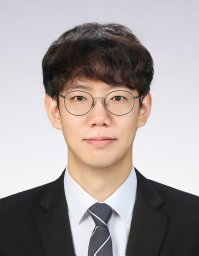
 Dongkeun Kim
· 7 previous affiliations
- Postdoc · Since 2025
- Current
- PhD student · 2019–2025
- 한동대학교Since 2026
- 조교수 · Since 2026
- 포항공과대학교2019–2026
- 박사후연구원 · 2025–2026
- 박사, Computer Science and Engineering · 2019–2024
- Carnegie Mellon University2019–2020
- Visiting Student, Language Technologies Institute · 2019–2020
- Lecturer · 2018
- SIMNET Co.,Ltd2015–2018
- Developer · 2015–2018
- MS student · 2013–2015
- Undergrad student · 2008–2013
Research Overview
Dongkeun Kim focuses on computer vision, group activity recognition, and temporal action localization. His early work explored medical image synthesis and segmentation, while his subsequent research developed compositional reasoning approaches for understanding complex multiperson videos. His current focus centers on fine-grained social interaction detection and online temporal reasoning for streaming video applications.
Research Trajectory
Kim's early research addressed challenges in medical image analysis, particularly within the research direction of Non-Contrast Medical Imaging via Endogenous Signals and Synthesis. He contributed to Neural Contrast Enhancement of CT Image, developing a two-stage neural network framework designed to generate contrast-enhanced computed tomography (CT) images from non-enhanced counterparts. This work navigated the difficulties of unaligned training data caused by internal organ movement, intersecting with the broader area of Scaling Generative Models for High-Fidelity Medical Image Synthesis and the field of Segmentation of Morphologically Diverse Pathological Structures. During this period, he also participated in research on United adversarial learning for liver tumor segmentation and detection of multi-modality non-contrast MRI, which integrated multiple MRI sequences to simultaneously segment and detect tumors without relying on contrast agents.
Transitioning to video understanding and human activity analysis, Kim introduced novel methods for modeling multiperson contexts. He developed Detector-Free Weakly Supervised Group Activity Recognition, proposing a Transformer-based architecture that localizes and encodes partial contexts of group activities. This approach removed the traditional reliance on ground-truth bounding box labels or off-the-shelf object detectors during testing, instead representing video clips as aggregated sets of partial context embeddings.
In 2024, his work expanded to address the practical constraints of real-time video analysis and complex group dynamics. He authored Online Temporal Action Localization with Memory-Augmented Transformer, which advanced the research area of Efficient Temporal Reasoning via Feature Caching and Memory Banks. This framework, MATR, identifies actions in streaming video as they happen by utilizing a memory queue for past features and a decoupled decoding strategy that detects the end of an action before looking back to find its start. Concurrently, he addressed limitations in existing group activity datasets by introducing Towards More Practical Group Activity Detection: A New Benchmark and Model. This work presented the Café dataset to provide more realistic scenarios and proposed a model capable of handling an unknown number of groups and latent group members in a scene.
Continuing his focus on detailed human interactions, Kim developed Part-Aware Bottom-Up Group Reasoning for Fine-Grained Social Interaction Detection. This research shifted away from holistic person detection toward a part-aware, bottom-up approach that allows group structures to emerge from individual relationships, contributing to the broader direction of Resolving Static Pose Ambiguity with Temporal Context. Additionally, his research portfolio includes participation in hardware-oriented AI optimization, as seen in his involvement with 16.3 An on-Device Generative AI Focused Neural Processing Unit in 4nm Flagship Mobile SoC with Fan-Out Wafer-Level Package, which explores the deployment of generative AI models on mobile system-on-chip architectures.
Current Directions
The most recent papers in the evidence indicate a strong focus on compositional reasoning for complex video understanding. Recent work investigates fine-grained social interaction detection by modeling relationships between specific body parts rather than relying on holistic bounding boxes. This bottom-up approach allows for more nuanced modeling of how individual behaviors coalesce into group activities. Furthermore, ongoing research addresses online temporal reasoning, developing memory-augmented architectures that can efficiently process streaming video to localize actions in real time without requiring access to future frames.
Profile updated
Loading new papers…
Other researchers whose papers cluster into the same research directions — a proxy for overlapping technical interests and shared intellectual neighborhoods.
See something wrong? Report a mistake