

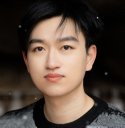
 Dongjie Chen
· 3 previous affiliations
- Dropbox (United States)Since 2025
- Machine Learning Engineer II · Since 2025
- Machine Learning Engineer · 2022
- University of California, Davis2019–2024
- Graduate Student Researcher · 2020–2024
- Doctor of Philosophy - PhD, Eletrical and Computer Engineering · 2019–2022
- Teaching Assistant · 2021
- Deloitte (United States)2020–2024
- PhD student · 2020–2024
Research Overview
Dongjie Chen focuses on privacy-preserving machine learning, generative modeling, and domain adaptation. His early work addresses the stability and quality of differentially private synthetic data generation by leveraging latent space representations and novel sampling mechanisms. More recently, his research investigates knowledge distillation from multimodal large language models and the generation of realistic human mobility trajectories.
Research Trajectory
Chen’s research trajectory begins with a strong focus on the intersection of differential privacy (DP) and deep generative models. A central challenge in this domain is that standard mechanisms for ensuring differential privacy often introduce noise that destabilizes the training of Generative Adversarial Networks (GANs) and degrades the quality of the resulting synthetic data. To address this, he introduced Differentially Private Generative Adversarial Networks with Model Inversion in 2021. This work proposed Differentially Private Model Inversion (DPMI), a framework that circumvents direct noise injection in high-dimensional spaces. By utilizing a public generator to map private data into a lower-dimensional latent space, the approach allows for the training of a smaller, more stable DP-GAN on these compressed representations. This contribution directly advanced the research area of Stabilizing Generative Models Under Differential Privacy and established foundational techniques in the direction of Private Generative Modeling in Compressed Latent Spaces.
Building on these privacy-preserving methodologies, Chen continued to explore alternative mechanisms for secure data synthesis. In collaborative work, he helped develop He-Gan: Differentially Private Gan Using Hamiltonian Monte Carlo Based Exponential Mechanism. Recognizing that typical Laplacian or Gaussian noise additions lead to convergence issues, this research proposed a framework that eliminates additive noise entirely. Instead, HE-GAN employs the Exponential Mechanism on a privacy-factor-adjusted posterior predictive distribution of a classifier trained on private data, preventing DP noise from corrupting the generative process. Following this, Chen further refined his latent space optimization techniques in DPGOMI: Differentially Private Data Publishing with Gaussian Optimized Model Inversion. This method extended the model inversion paradigm to better handle high-dimensional datasets, demonstrating improved performance over standard baselines on complex visual data distributions.
By 2024, Chen’s research expanded to incorporate the capabilities of large foundation models, applying them to complex adaptation and generation tasks. He led the development of Empowering Source-Free Domain Adaptation with MLLM-driven Curriculum Learning, which addresses the challenge of adapting models to new domains without access to the original source data. The paper introduces Reliability-based Curriculum Learning (RCL), a framework that utilizes multiple Multimodal Large Language Models (MLLMs) as teachers to distill knowledge into a more efficient, compact student model through a staged curriculum. This work spans several broader research areas, including Compressing Large Foundation Models via Knowledge Distillation and Test Time Adaptation for Distribution Shift, while also contributing to methodological areas like Replacing Abstract Labels with Natural Language Descriptions and Agreement Filtering for Robust Pseudo-Labeling.
Concurrently, Chen has investigated the application of generative pre-trained transformer architectures to specialized, non-linguistic domains. With collaborators, he explored the generation of realistic human movement patterns in MobilityGPT: Enhanced Human Mobility Modeling with a GPT model. This framework adapts GPT models to synthesize mobility trajectories by integrating strict geospatial constraints—such as gravity models and road connectivity matrices—and refining the outputs through reinforcement learning to ensure semantic realism and accuracy.
Current Directions
The most recent papers in the evidence indicate a strategic shift toward harnessing large-scale foundation models for specialized downstream applications. While his earlier work concentrated heavily on the mathematical and architectural stability of privacy-preserving GANs, his current focus investigates how the reasoning and generative power of multimodal large language models can be distilled and adapted. Active research themes include source-free domain adaptation, where MLLMs serve as robust teachers for compact student models, and the adaptation of transformer architectures to model complex, constrained physical systems like human mobility networks. These directions highlight an ongoing interest in making massive, generalized models both efficient and applicable to highly specific, real-world data distributions.
Profile updated
Loading new papers…
Other researchers whose papers cluster into the same research directions — a proxy for overlapping technical interests and shared intellectual neighborhoods.
See something wrong? Report a mistake