

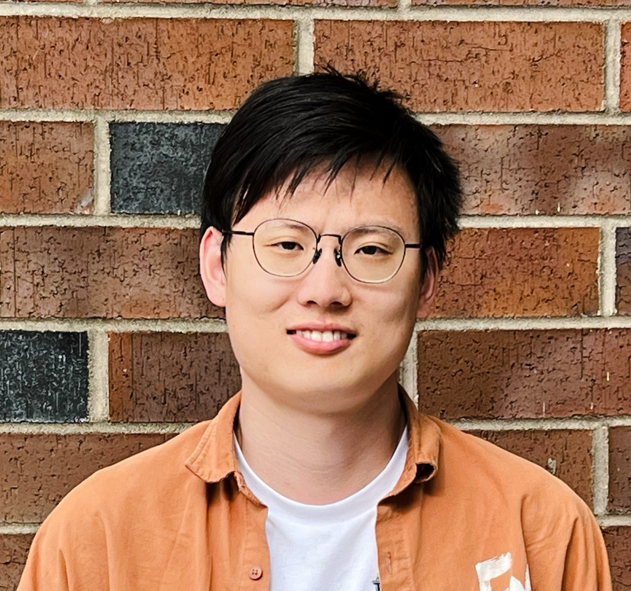
 Dongfu Jiang
· 6 previous affiliations
- University of WaterlooCurrent
- Current
- PhD student · 2023–2026
- Nvidia (United States)2025–2026
- Intern · 2025–2026
- Sea AI Lab (SAIL)2024–2025
- Research Associate · 2024–2025
- Research Intern · 2024
- Zhejiang University2019–2023
- Undergrad student · 2019–2023
- University of Southern California2022–2023
- Research Assistant · 2022–2023
Research Overview
Dongfu Jiang focuses on the post-training of large language and vision-language models, multimodal evaluation, and agentic systems. His trajectory spans from early work on ensembling and reranking text generation to developing comprehensive benchmarks and explainable metrics for generative models. Currently, he investigates reinforcement learning frameworks for tool-using agents and automated evaluation of reasoning capabilities.
Research Trajectory
Jiang’s early research focused on improving natural language generation through advanced decoding and selection strategies. In 2022, he introduced PairReranker: Pairwise Reranking for Natural Language Generation, a method utilizing a single encoder and pairwise loss to select optimal outputs from multiple decoding methods across summarization and translation tasks. This interest in combining model outputs evolved into broader work in the research direction of Ensembling and Collaborative Inference for Robust Neural Committees. The following year, his work yielded LLM-Blender: Ensembling Large Language Models with Pairwise Ranking and Generative Fusion, which established techniques for ensembling multiple large language models to improve overall generation quality, touching on areas such as Leveraging Specialized Expertise via LLM Routing.
By 2024, Jiang's focus expanded significantly into the evaluation of generative models, addressing the limitations of traditional automated metrics. He built GenAI Arena: An Open Evaluation Platform for Generative Models, a platform leveraging collective user feedback to assess image and video generation. Concurrently, he contributed to the broader area of Open Source Evaluator Models for Reliable Benchmarking with TIGERScore: Towards Building Explainable Metric for All Text Generation Tasks. TIGERScore provided an instruction-guided, reference-free metric that outputs natural language error analyses rather than opaque numerical scores.
During this period, Jiang also investigated multimodal understanding and the specific challenges of evaluating vision-language models. He participated in a large-scale collaborative effort to create MMMU: A Massive Multi-Discipline Multimodal Understanding and Reasoning Benchmark for Expert AGI, which highlighted significant performance deficits in frontier models on college-level problems, emphasizing the research direction of The Perception Reasoning Gap in Multimodal Models. To address some of these multimodal reasoning bottlenecks, he proposed Mantis: Interleaved Multi-Image Instruction Tuning, a family of models trained on a meticulously constructed dataset of multi-image instructions to improve complex visual-language tasks, contributing to the area of Performance Parity in Open Source Multimodal Models.
Jiang's work in automated evaluation subsequently extended to video generation, addressing the research direction of The Perception Gap in Multimodal Automated Evaluation. He developed VideoScore: Building Automatic Metrics to Simulate Fine-grained Human Feedback for Video Generation, utilizing a large-scale dataset of human-annotated videos to create multi-aspect ratings that better correlate with human judgment. In 2025, he advanced this paradigm with VideoScore2: Think before You Score in Generative Video Evaluation, which applied reinforcement learning to generate interpretable, multi-dimensional feedback and rationales for AI-generated videos.
Alongside evaluation, Jiang has worked on the systemic efficiency of multimodal models. He presented QuickVideo: Real-Time Long Video Understanding with System Algorithm Co-Design, which accelerated long video processing for Video Large Language Models by parallelizing decoding and pruning memory-intensive caches. He also continued to benchmark specific generative capabilities, as seen in StructEval: Benchmarking LLMs' Capabilities to Generate Structural Outputs, which tested the structural fidelity of models generating formats like JSON, HTML, and SVG.
In 2026, Jiang's trajectory incorporated reinforcement learning and agentic systems. He collaborated on Critique-Coder: Enhancing Coder Models by Critique Reinforcement Learning, which rewarded models for correctly judging the validity of question-solution pairs to improve transferable logical reasoning. He then introduced VerlTool: Towards Holistic Agentic Reinforcement Learning with Tool Use, a unified and modular framework designed to overcome the fragmentation and synchronous execution bottlenecks of existing multi-turn tool interaction systems. Additionally, he participated in the development of FabScore: Fine-Grained Evaluation of Fabrications in Automated AI Research, an automated framework for auditing the integrity of AI-generated research papers by cross-referencing claims against underlying code.
Current Directions
Recent work investigates the intersection of reinforcement learning, agentic tool use, and the rigorous verification of model outputs. The most recent papers in the evidence address the development of unified frameworks for agentic reinforcement learning, enabling multi-turn tool interactions without the bottlenecks of synchronous execution. Additionally, this work explores "critique" reinforcement learning paradigms, where models are explicitly trained to evaluate and verify reasoning chains and code solutions rather than merely generating them. A parallel focus involves auditing the integrity of AI systems themselves, developing automated frameworks to detect fabrications and ensure structural fidelity in complex, long-horizon generation tasks.
Profile updated
Loading new papers…
Other researchers whose papers cluster into the same research directions — a proxy for overlapping technical interests and shared intellectual neighborhoods.
See something wrong? Report a mistake