

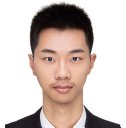
 Dongdong Chen
1 previous affiliation
- Shanghai Jiao Tong University2021–2025
- PhD student · 2021–2025
3 other authors named Dongdong Chen: Dongdong Chen (Microsoft (United States) · Microsoft AI Super Intelligence · 237 papers), Dongdong Chen (Heriot-Watt University · University of Edinburgh · 52 papers), Dongdong Chen (5 papers)
Research Overview
Dongdong Chen focuses on the intersection of graph representation learning and medical image analysis, with a particular emphasis on modeling complex biological networks and improving the robustness of diagnostic systems. His work frequently utilizes graph neural networks (GNNs) and self-supervised learning to extract meaningful patterns from high-dimensional medical data, such as functional brain networks and histopathology slides. By integrating spatio-temporal modeling with domain generalization techniques, Chen addresses fundamental challenges in the reliability and interpretability of automated clinical diagnosis.
Research Trajectory
Chen’s research trajectory is characterized by a progression from specialized neuroimaging analysis toward broader applications in digital pathology and fundamental graph theory. In 2023, his work was primarily centered on the application of GNNs to functional brain networks. During this period, he addressed the inherent heterogeneity of brain states, developing methods to capture the continuous stream of cognitive activities that traditional static models often overlook. This phase also included foundational work on graph matching and traumatic brain segmentation, establishing a methodological base in structural and functional connectivity.
In 2024, Chen’s focus shifted toward more sophisticated representation learning techniques. He began addressing the limitations of conventional functional connectivity measures, such as Pearson correlation, which often fail to capture non-linear statistical dependencies. This period saw the introduction of affinity learning and self-supervised frameworks designed to improve the generalizability of models across different datasets, a critical requirement for clinical deployment. His work also expanded into affective computing, applying hierarchical encoding to classify subtypes of depression.
By 2025 and 2026, Chen’s research expanded into the domain of digital pathology and mammography, while simultaneously contributing to the theory of temporal networks. This recent work emphasizes Test-Time Adaptation for Robust Inference and domain generalization, specifically targeting the variability introduced by different imaging vendors and staining protocols. His latest contributions involve reasoning-based segmentation in pathology and the inductive learning of temporal pattern subgraphs, moving toward models that can reason about rare morphologies and evolve alongside dynamic systems.
Representative Work
In Learnable Subdivision Graph Neural Network for Functional Brain Network Analysis and Interpretable Cognitive Disorder Diagnosis, Chen addressed the challenge of heterogeneity in functional brain networks. Recognizing that distinct "brain states" reflect different cognitive activities, he developed a GNN-based method that moves beyond treating brain networks as uniform structures. The approach focuses on extracting information from these varying functional configurations to improve the accuracy and interpretability of brain disorder diagnoses.
Addressing the limitations of traditional connectivity measures, Affinity Learning Based Brain Function Representation for Disease Diagnosis proposes a framework for modeling functional connectivity through affinity learning. Chen argued that standard measures like Pearson correlation are insufficient for capturing the intricate functional dynamics of the brain. By leveraging a pre-training model to encode randomly sampled patches, the framework generates more informative region-based representations, enhancing the diagnostic potential of resting-state functional MRI (rs-fMRI).
Chen’s work in digital pathology is exemplified by Whole slide cervical cancer classification via graph attention networks and contrastive learning. This research targets the automatic diagnosis of whole slide images (WSIs), which is often hampered by the neglect of intrinsic relationships between cervical cells and their surrounding contextual information. By employing graph attention networks and contrastive learning, Chen developed a method to capture these cellular relationships and suspicious contextual areas, thereby improving the efficiency of cytological screening for cervical cancer.
To combat the performance degradation caused by variations in imaging equipment, Chen developed Domain generalization for mammographic image analysis with contrastive learning. Deep learning models in mammography frequently struggle with "vendor style" variations. Chen’s approach utilizes a multi-style and multi-view unsupervised self-learning scheme to seek robust feature embeddings. This work demonstrates significant improvements in model generalizability, ensuring that diagnostic tools remain effective across diverse clinical environments and equipment types.
In the area of temporal network theory, Inductive Representation Learning of Temporal Pattern Subgraphs in Temporal Networks addresses the difficulty of encoding high-level structural features in dynamic systems. Chen observed that previous methods often failed to capture temporal patterns—such as triadic closure laws—or suffered from prohibitive time complexity. He proposed a method for the inductive representation learning of these patterns, allowing the model to apply learned structural features to nodes that were not present during the training phase, which is essential for real-world dynamic networks.
Chen also contributed to the development of reasoning-based models in pathology as a second author in PathChat-SegR1: Reasoning Segmentation in Pathology via SO-GRPO. This work addresses the "Where's Waldo" problem in clinical pathology: the identification of rare and high-stakes tissue morphologies. While traditional segmentation models often fail when encountering new diseases or different staining protocols, this research explores the use of reasoning-based segmentation to improve the identification of rare morphologies, providing a more robust tool for high-stakes clinical decision-making.
Current Directions
Chen’s current work continues to bridge the gap between theoretical graph learning and practical medical challenges. A major focus is the development of models that can handle the inherent noise and variability of clinical data without requiring exhaustive retraining for every new site or device. This involves further exploration of self-supervised learning and domain adaptation techniques that can extract invariant biological signals from varying imaging modalities.
Additionally, his recent interest in temporal networks suggests a move toward modeling the longitudinal evolution of diseases. By capturing how biological networks change over time, Chen aims to develop more predictive models for disease progression and treatment response. This direction aligns with his broader goal of creating AI systems that are not only accurate but also capable of reasoning about the complex, dynamic structures found in human biology and clinical pathology.
Profile updated
Loading new papers…
Other researchers whose papers cluster into the same research directions — a proxy for overlapping technical interests and shared intellectual neighborhoods.
See something wrong? Report a mistake