

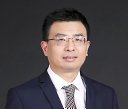
 Dong Yu
· 6 previous affiliations
- Capital One (United States)Since 2026
- VP, AI Foundations · Since 2026
- TranssionSince 2026
- Chief Scientific Advisor · Since 2026
- Tencent (China)2017–2026
- Chief Scientist and Vice General Manager, Tencent Cloud AI · 2021–2026
- Distinguished Scientist · 2017–2026
- Microsoft (United States)2002–2017
- Principal Researcher · 2013–2017
- researcher/senior researcher/principal researcher · 2002–2017
- Senior Researcher · 2012–2013
- Researcher · 2006–2012
- Ph.D, Computer Science
- M.S, Computer Science
2 other authors named Dong Yu: Dong Yu (4 papers), Dong Yu (1 paper)
Research Overview
Dong Yu focuses on speech processing, natural language processing, and the application of deep learning to complex reasoning tasks. His early work pioneered the integration of deep neural networks into large-vocabulary speech recognition and multi-talker separation systems. More recently, his research investigates large language models, emphasizing reinforcement learning and self-evolving frameworks to advance automated theorem proving and mathematical reasoning.
Research Trajectory
In the early 2010s, Yu's research explored the foundational integration of deep learning into signal processing. He provided an early synthesis of these emerging methods in Deep Learning and Its Applications to Signal and Information Processing and subsequently co-authored the monograph Deep Learning: Methods and Applications.
A major focus during this period was advancing large-vocabulary speech recognition. He developed context-dependent models to improve transcription accuracy, as detailed in Conversational Speech Transcription Using Context-Dependent Deep Neural Networks. With collaborators, he introduced a pre-trained hybrid architecture in Context-Dependent Pre-Trained Deep Neural Networks for Large-Vocabulary Speech Recognition. This system utilized deep belief networks to produce distributions over tied triphone states, which improved optimization and reduced generalization error. This trajectory in speech recognition culminated in significant accuracy milestones; he was part of the team that developed a system matching professional human transcribers on the challenging NIST 2000 task, as reported in Achieving Human Parity in Conversational Speech Recognition.
Concurrently, Yu addressed the "cocktail-party problem" of multi-talker speech separation. He introduced a novel training criterion in Permutation invariant training of deep models for speaker-independent multi-talker speech separation. By directly minimizing the separation error, this approach resolved the label permutation problem that had previously hindered deep learning applications in this domain. This work aligns with his broader contributions to areas such as Scaling Multi-Talker Speech Processing Beyond Binary Mixtures and the area of Neural Speech Processing with Variable Speaker Cardinality.
In 2017, Yu joined Tencent AI Lab as a distinguished scientist. His research expanded into robust target speech separation and neural beamforming. To address numerical instability in traditional methods, he developed an "all deep learning" framework in ADL-MVDR: All deep learning MVDR beamformer for target speech separation, which replaced matrix inversion steps with recurrent neural networks to lower distortion and improve automatic speech recognition accuracy. He extended this framework in Multi-Channel Multi-Frame ADL-MVDR for Target Speech Separation, leveraging spatial and temporal information to reduce residual noise. These contributions advanced the research direction of Mitigating Algorithmic Artifacts in Robust Speech Recognition. His work on spatial audio also encompasses the area of Spatial Feature Integration for Multichannel Speech Processing.
Beyond separation, Yu investigated speech synthesis and diarization. He contributed to FastDiff: A Fast Conditional Diffusion Model for High-Quality Speech Synthesis, which optimized the denoising process to achieve high-quality audio generation significantly faster than real-time, contributing to the broader area of Learnable Forward Processes for Diffusion Models. He also explored clustering techniques for speaker identification in Towards end-to-end Speaker Diarization with Generalized Neural Speaker Clustering, reflecting his interest in the area of Maintaining Temporal Consistency in Multi-Talker Speech Processing.
In recent years, Yu's focus has shifted significantly toward large language models (LLMs) and complex reasoning. He has developed systems for automated theorem proving, such as MPS-Prover: Advancing Stepwise Theorem Proving by Multi-Perspective Search and Data Curation, which combines multi-perspective search algorithms with rigorous data pruning to generate accurate and diverse proofs.
His recent work heavily emphasizes reinforcement learning (RL) to enhance LLM reasoning capabilities. To provide rigorous environments for RL, his team introduced DeepMath-103K: A Large-Scale, Challenging, Decontaminated, and Verifiable Mathematical Dataset for Advancing Reasoning. He also explored divergent thinking in LLMs with Parallel-R1: Towards Parallel Thinking via Reinforcement Learning, enabling models to explore multiple possibilities before converging on a solution. Further advancing autonomous learning, he developed R-Zero: Self-Evolving Reasoning LLM from Zero Data, a framework where internal model roles co-evolve to generate curricula without human-curated labels. To optimize the RL training process itself, he introduced adversarial controllers in Group Distributionally Robust Optimization-Driven RL for LLM Reasoning, dynamically adjusting data weights and compute distribution to focus on the model's learning frontier.
Current Directions
Recent work investigates the intersection of reinforcement learning and large language models, with a specific focus on complex mathematical reasoning and automated theorem proving. The most recent papers in the evidence address the limitations of static training datasets by developing self-evolving frameworks and dynamic curricula. This includes creating co-evolutionary loops where models generate their own reasoning tasks from zero human-curated data, as well as designing adversarial controllers that dynamically redistribute training compute to the model's learning frontier. Additionally, current research explores methods to induce divergent, parallel thinking in LLMs, enabling them to explore multiple solution paths natively during complex problem-solving.
Profile updated
Loading new papers…
Other researchers whose papers cluster into the same research directions — a proxy for overlapping technical interests and shared intellectual neighborhoods.
See something wrong? Report a mistake