

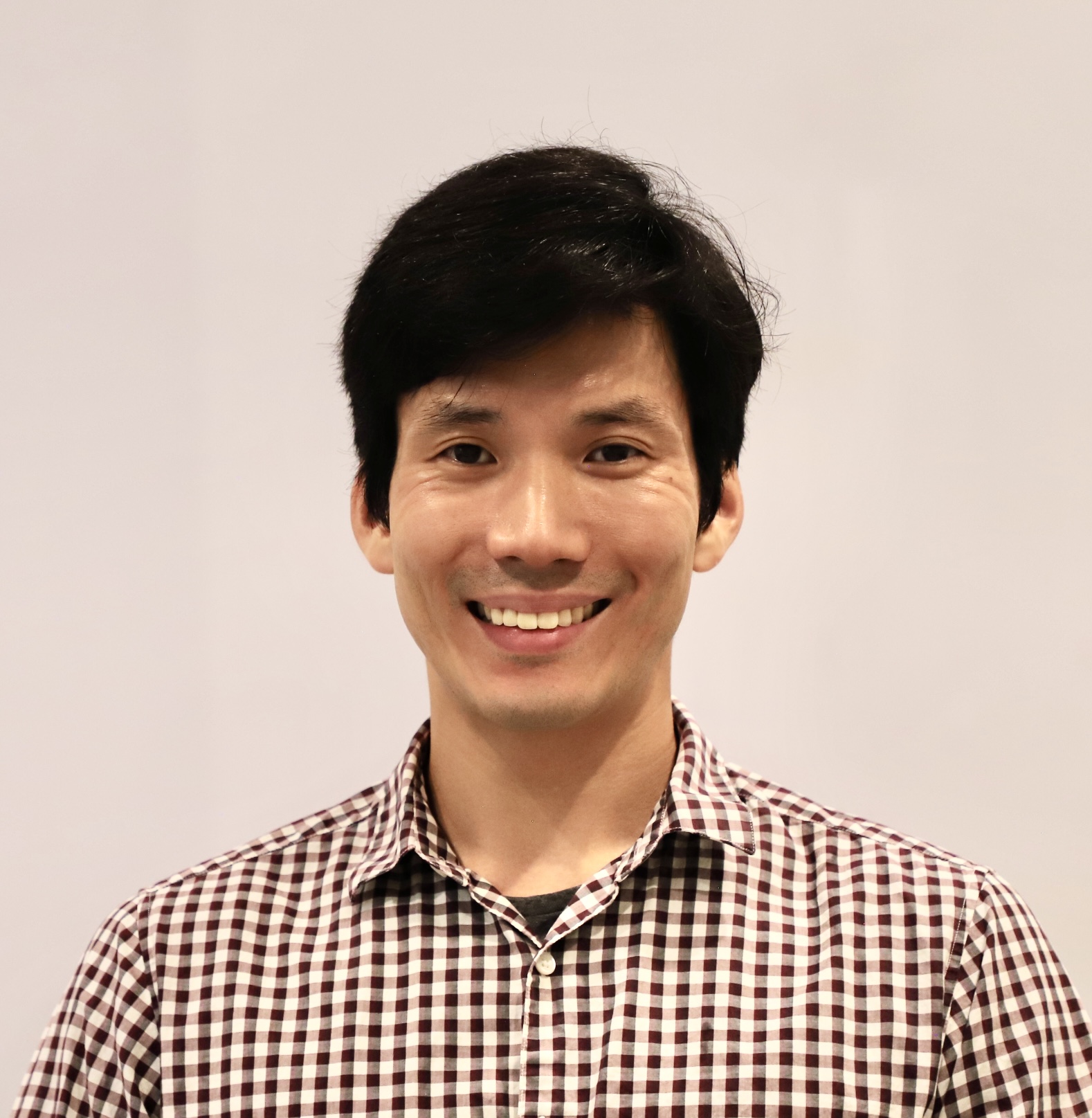
 Dogyoon Song
· 5 previous affiliations
- Deloitte (United States)Since 2024
- Assistant Professor · Since 2024
- University of California, DavisSince 2024
- Assistant Professor · Since 2024
- University of Michigan2021–2024
- Postdoc · 2021–2024
- Research Assistant · 2014–2021
- Seoul National University2005–2013
- Bachelor of Science (B.S.), Electrical and Computer Engineering, Mathematics, Physics, and Economics · 2005–2013
Research Overview
Dogyoon Song focuses on the intersection of optimization, high-dimensional statistics, and machine learning, developing theoretical foundations and efficient algorithms for data-assisted decision making. His trajectory spans from robust matrix completion and principal component regression to the geometry of low-complexity models. Currently, he investigates finite-sample causal inference, sequential change detection, and the scaling laws of modern optimization algorithms.
Research Trajectory
Early in his career, his research addressed the challenges of latent variable models and incomplete data. In 2016, he introduced a framework for recommendation systems in Blind Regression: Nonparametric Regression for Latent Variable Models via Collaborative Filtering. This work tackled the problem of predicting unobserved user-movie ratings when the underlying features of both users and movies are hidden, framing it as a non-parametric statistical challenge requiring collaborative filtering techniques.
He subsequently advanced the theoretical understanding of high-dimensional regression, particularly in settings where covariates admit a low-dimensional representation. In On Robustness of Principal Component Regression (2019), he and his collaborators demonstrated the effectiveness of Principal Component Regression (PCR) when the number of samples scales favorably relative to the intrinsic dimension of the data, rather than the ambient dimension. That same year, he provided a rigorous theoretical foundation for PCR's empirical success in messy, real-world conditions with Model Agnostic High-Dimensional Error-in-Variable Regression. This research proved that PCR is mathematically equivalent to pre-processing data with Hard Singular Value Thresholding (HSVT), rendering the approach model-agnostic and highly robust to noisy, missing, and mixed-valued features without requiring prior knowledge of the noise distribution.
This dual focus on incomplete information and computational efficiency was formalized in his 2021 overview, Addressing Missing Data and Scalable Optimization for Data-driven Decision Making, which explored the fundamental bottlenecks of building models from contaminated datasets using resource-intensive optimization procedures.
Investigating the geometric constraints of scalable optimization, he analyzed the structural limits of semidefinite programming in On approximations of the PSD cone by a polynomial number of smaller-sized PSD cones (2023). This work proved that approximating the cone of positive semidefinite (PSD) matrices requires an exponentially large number of smaller PSD constraints if the constraint size is significantly smaller than the matrix size, highlighting fundamental barriers to scalability.
Expanding his regression frameworks to complex, non-Euclidean data types, he developed new estimation methods in Errors-in-variables Fréchet Regression with Low-rank Covariate Approximation (2023). By integrating principal component analysis into the Fréchet regression model, he provided a robust method for predicting complex responses—such as probability distributions or networks—even when the high-dimensional input data is noisy and redundant. This contribution advanced the broader area of Regression and Inference in Metric Spaces.
In parallel, he addressed predictive uncertainty in machine learning models. With Minimum-Risk Recalibration of Classifiers (2023), he introduced a principled framework that balances the accuracy of probability estimates with their predictive power. The work provided a theoretical optimum for the number of bins in histogram-based recalibration and demonstrated a two-stage method to adapt classifiers to new data distributions efficiently, contributing to research areas such as Correcting Label Distribution Shift with Unlabeled Data and the research direction The Calibration Sharpness Tradeoff.
Continuing his exploration of optimization landscapes, he examined the non-convex properties of clustering algorithms in Local Minima Structures in Gaussian Mixture Models (2024). This analysis revealed that the spurious local minima in Gaussian Mixture Models are not entirely random but can be decomposed into simpler "one-fits-many" or "many-fit-one" configurations, offering a more structured and optimistic view of GMM optimization.
Current Directions
The most recent papers in the evidence address high-dimensional inference, sequential detection, and the theoretical properties of modern optimization algorithms.
Recent work investigates the detection of distribution shifts in expanding feature spaces. In High-Dimensional Sequential Change Detection (2025), he tackles the challenge of identifying changes in data streams where the number of variables grows alongside the observation window. This research introduces the Normalized High-Dimensional Kullback-Leibler divergence (NHDKL) to characterize detection performance and proposes an estimation strategy designed for these complex scenarios.
Another active focus involves the scaling behavior of gradient-based optimizers. The 2026 paper Scaling Laws of SignSGD in Linear Regression: When Does It Outperform SGD? derives theoretical scaling laws for sign-based gradient methods within a power-law random features model. The analysis identifies specific noise-bottleneck regimes where signSGD—acting as a simplified proxy for the Adam optimizer—achieves a steeper compute-optimal scaling slope than standard stochastic gradient descent.
Finally, his recent research extends into causal inference and experimental design. In Design-Based Finite-Sample Analysis for Regression Adjustment (2026), he introduces a non-asymptotic framework for analyzing regression adjustment in randomized experiments. By developing variance-adaptive concentration bounds, this work provides valid finite-sample confidence intervals for treatment effect estimates even when the number of covariates exceeds the sample size, offering a robust approach to causal inference in high-dimensional settings.
Profile updated
Loading new papers…
Other researchers whose papers cluster into the same research directions — a proxy for overlapping technical interests and shared intellectual neighborhoods.
See something wrong? Report a mistake