

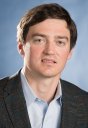
 Dmitry V. Dylov
· 6 previous affiliations
- Applied AI InstituteSince 2025
- Associate Professor · Since 2025
- Associate Professor · 2020–2025
- Full Professor · 2018–2025
- Assistant Professor · 2017–2020
- General Electric (India)2010–2017
- Principal Researcher · 2010–2017
- GE Global Research (United States)2010–2017
- Lead Scientist · 2010–2017
- Princeton University2005–2010
- PhD student · 2005–2010
- Master of Science - MS, Applied Physics / Applied Mathematics · 2000–2006
Research Overview
Dmitry V. Dylov focuses on medical image analysis, optimal transport theory, and the development of behavioral foundation models. His trajectory spans from physics-informed deep learning for accelerated magnetic resonance imaging to the creation of robust image quality assessment metrics. Most recently, his work addresses the zero-shot adaptation of behavioral models and Hamiltonian frameworks for optimal transport on complex manifolds.
Research Trajectory
In 2022, Dylov's research spanned fundamental statistical theory and applied medical image analysis. On the theoretical front, he contributed to high-dimensional statistical inference with Strong Gaussian Approximation for the Sum of Random Vectors, which derived a new approximation bound for independent random vectors using optimal transport theory to yield explicit dependence on dimensionality. Concurrently, his work heavily emphasized robust visual learning and medical imaging, addressing the practical challenges of deploying deep learning models in clinical settings. To tackle domain shifts caused by varying hardware—where a model trained in one clinic fails in another—he introduced Feather-Light Fourier Domain Adaptation in Magnetic Resonance Imaging. This test-time adaptation technique substitutes low-frequency Fourier components to match target image styles using an optimal style donor selection method. In the domain of anatomical localization, he developed Bi-directional Encoding for Explicit Centerline Segmentation by Fully-Convolutional Networks, offering a point-based approach to segmenting tube-shaped objects like blood vessels in chest X-rays and coronary angiography without relying on autoregressive blocks.
A major theme of this period involved improving image reconstruction and denoising without relying on perfect reference data, aligning with the broader research direction of No Reference Image Quality Assessment. This was demonstrated in Self-supervised Physics-based Denoising for Computed Tomography, which leveraged the physics of CT noise and adjacent projections to achieve high-fidelity denoising from low-dose scans. Similarly, to address motion artifacts in MRI, he proposed Autofocusing+: Noise-Resilient Motion Correction in Magnetic Resonance Imaging, combining classic optimization-based autofocusing with a neural network regularization term to penalize unrealistic restorations and accelerate convergence.
His work also explored how upstream image acquisition affects downstream clinical tasks, contributing to the area of Physics Informed Deep Learning for Accelerated MRI Reconstruction. In Optimal MRI Undersampling Patterns for Pathology Localization, he introduced Iterative Gradient Sampling to optimize k-space undersampling specifically for the performance of segmentation and classification models rather than mere visual quality. This focus on task-specific utility highlighted the challenges within the research direction of Metric Discordance in AI Assisted Medical Imaging, where standard perceptual metrics often fail to capture diagnostic value. To provide better tools for the community, he released PyTorch Image Quality: Metrics for Image Quality Assessment, a comprehensive GPU-accelerated library of IQA algorithms. He subsequently applied these tools in 2023 with Image Quality Assessment for Magnetic Resonance Imaging, conducting an extensive evaluation with expert radiologists to identify which metrics most reliably correlate with human clinical judgment for accelerated and denoised MRI scans.
By 2024, Dylov's focus expanded back toward the mathematical foundations of machine learning, specifically in the area of The Iterative Optimization Bottleneck of Optimal Transport. He addressed the computational bottlenecks of training neural networks for generative modeling and domain adaptation in Expectile Regularization for Fast and Accurate Training of Neural Optimal Transport, proposing a regularization method to bypass restrictive architectures and slow optimization loops.
In 2026, his trajectory shifted toward complex motion synthesis and advanced optimal transport on non-Euclidean manifolds. He explored the generation of realistic human motion from text descriptions in Plan, Don’t Pose: Long Composite Motion Generation with Text-Aligned BFM, which decoupled high-level semantic planning from low-level execution using pretrained Behavioral Foundation Models (BFMs) and a text-aligned bottleneck. To make these models more robust to changing physical environments, he developed Zero-Shot Adaptation of Behavioral Foundation Models to Unseen Dynamics, introducing a transformer-based belief estimator to identify environment dynamics on the fly and partition the policy space to prevent representation interference. Finally, he returned to optimal transport theory with HOTA: Hamiltonian framework for Optimal Transport Advection. This work reformulated the Generalized Schrödinger Bridge problem using Hamilton-Jacobi-Bellman equations and reinforcement learning techniques, providing a highly efficient solver for probability flows across complex manifolds.
Current Directions
The most recent papers in the evidence, published in 2026, indicate a dual focus on Behavioral Foundation Models (BFMs) and advanced optimal transport frameworks. In the domain of motion synthesis and reinforcement learning, current work investigates how to adapt foundation models to complex, unseen physical dynamics. This involves developing transformer-based belief estimators that allow policies to adjust zero-shot to changing environment layouts without suffering from representation interference, as well as decoupling semantic planning from low-level execution for long-horizon text-to-motion generation. Concurrently, ongoing theoretical research addresses optimal transport on non-Euclidean manifolds. By leveraging Hamilton-Jacobi-Bellman equations and stability techniques inspired by reinforcement learning, this work seeks to solve the Generalized Schrödinger Bridge problem for high-dimensional data and non-smooth costs more efficiently than prior solvers.
Profile updated
Loading new papers…
Other researchers whose papers cluster into the same research directions — a proxy for overlapping technical interests and shared intellectual neighborhoods.
See something wrong? Report a mistake