

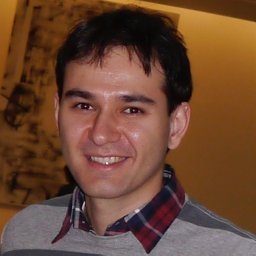
 Dmitry Krotov
· 6 previous affiliations
- Dynamical MindCurrent
- Current
- IBM2018–2026
- Research Staff Member · 2018–2026
- Researcher · 2018–2026
- Researcher · 2018–2026
- Institute for Advanced Study2014–2018
- Starr Foundation Member · 2017–2018
- Martin A. and Helen Chooljian Member · 2016–2017
- Postdoc · 2014–2016
- Princeton University2008–2014
- Graduate Student · 2008–2014
Research Overview
Dmitry Krotov focuses on the theoretical foundations of artificial neural networks, associative memory models, and brain-inspired artificial intelligence. His trajectory bridges physics and machine learning to develop algorithms that process information with the efficiency of biological systems. His most recent work investigates energy-based models and the unification of modern architectures like transformers and diffusion models through the lens of energy minimization.
Research Trajectory
Krotov's early work established foundational connections between biological memory and artificial neural networks. In 2016, he introduced Dense Associative Memory for Pattern Recognition, proposing a model that significantly increases the storage capacity of classical Hopfield networks. This work demonstrated a duality between dense associative memory and feedforward neural networks, contributing to the broader research area of Scaling Associative Memory with Higher Order Interactions and laying the groundwork for the field of Attention as Energy Minimization in Modern Hopfield Networks. Building on the goal of biological plausibility, he subsequently developed Unsupervised learning by competing hidden units (2019), an algorithm that learns weights in a completely unsupervised manner using local learning rules, avoiding the non-biological aspects of backpropagation.
In 2021, Krotov expanded on the biological implementation of these high-capacity networks. With Large Associative Memory Problem in Neurobiology and Machine Learning, he showed that dense associative memories can be effectively described by a microscopic theory requiring only two-body interactions between neurons, advancing work in the area of Lyapunov Stability and Energy Landscapes in Neural Networks. That same year, his research group explored biological network motifs in Can a Fruit Fly Learn Word Embeddings?. By mathematically formalizing the mushroom body of the fruit fly brain, the team demonstrated how sparse, high-dimensional representations could learn semantic word structures, contributing to the research direction of Sparse Neural Coding via Competitive Activation.
Moving toward modern deep learning architectures, Krotov and collaborators developed the Energy Transformer in 2023. This model reimagines the transformer block as a dynamical system designed to minimize a global energy function, a significant step in the area of Deep Networks as Unrolled Optimization Algorithms. In 2024, he continued to bridge neurobiology and machine learning with Neuron-Astrocyte Associative Memory, demonstrating how astrocyte morphology naturally leads to a dynamic associative memory system. Simultaneously, his team addressed the parameter scaling challenges of modern Hopfield networks in Dense Associative Memory Through the Lens of Random Features, introducing a method to compress memories into a fixed-size tensor using random features.
In 2025, Krotov synthesized the evolution of this field in Modern Methods in Associative Memory, a comprehensive overview that unifies architectures like transformers and diffusion models through the lens of energy minimization. He further explored this unification in Memorization to Generalization: Emergence of Diffusion Models from Associative Memory Networks, conceptualizing the training phase of diffusion models as memory encoding within an associative memory framework.
Most recently, in 2026, his research has expanded into hardware implementations and novel training paradigms. He guided the development of Dense Associative Memories with Analog Circuits, proposing an analog circuit implementation that leverages physical dynamics for continuous-time computation. He also participated in developing a sampling-free training method in Energy Minimization for Training Dense Associative Memory. Finally, his team introduced NRGPT: An Energy-based Alternative for GPT, which reframes the forward pass of generative pre-trained transformers as a dynamical descent on an energy landscape, advancing the research direction of Inference as Gradient Descent on Learned Energy Landscapes.
Current Directions
The most recent papers in the evidence address the unification of modern generative AI architectures with energy-based associative memory models. Recent work investigates how the principles of dense associative memory can be applied to both diffusion models and large language models, reframing processes like the forward pass in transformers as dynamical descent on an energy landscape. Additionally, current research explores physical implementations of these theoretical models, specifically designing analog circuits that leverage continuous-time physical dynamics for efficient computation, alongside novel sampling-free training methods that directly minimize energy functions.
Profile updated
Loading new papers…
Other researchers whose papers cluster into the same research directions — a proxy for overlapping technical interests and shared intellectual neighborhoods.
See something wrong? Report a mistake