

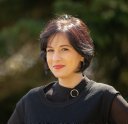
 Djamila Aouada
· 7 previous affiliations
- Full Professor | Chief Scientist · Since 2026
- Deputy Director · Since 2025
- Head of Research Group | CVI2 · Since 2020
- University of LuxembourgSince 2009
- Associate Professor · Since 2025
- Current
- Senior Research Scientist · 2020–2025
- Research Scientist · 2013–2020
- Researcher · 2009–2013
- Mitsubishi Motors (Japan)2014–2015
- Consultant · 2014–2015
- North Carolina State University2005–2009
- Graduate Research Assistant · 2005–2009
- Alcatel-Lucent Bell Laboratories2008
- Consultant · 2008
- Research Intern · 2007
- Polytechnic School of Algiers2000–2005
- State Engineer, Electronics, Signal Processing · 2000–2005
Research Overview
Djamila Aouada focuses on computer vision, 3D scene understanding, and applied machine learning. Her trajectory spans early work in 3D shape modeling and predictive analytics to advanced architectures for parametric CAD reconstruction and robust pose estimation. Currently, her research emphasizes deepfake detection, multi-modal anomaly detection, and space situational awareness.
Research Trajectory
Djamila Aouada's early research focused on 3D shape modeling and depth enhancement. She introduced Squigraphs for Fine and Compact Modeling of 3-D Shapes, establishing foundational techniques for geometric representation. Building on this, she developed a real-time pipeline in Real-time hybrid ToF multi-camera rig fusion system for depth map enhancement. This system utilized precomputed Look-Up Tables to handle distance-dependent disparity, fusing low-resolution Time-of-Flight data with high-resolution 2D video to resolve fine geometric details in noisy depth maps.
In the mid-2010s, her work expanded into applied machine learning and predictive modeling. She introduced frameworks that integrate real-world financial metrics directly into classification pipelines, as detailed in A novel cost-sensitive framework for customer churn predictive modeling. This approach significantly increased cost savings over traditional statistical methods, advancing the research direction of The Economic Value of Predictive Models. During this period, she also collaborated on Feature engineering strategies for credit card fraud detection, contributing to the broader area of Elastic Temporal Alignment for Non-Linear Sequences.
Moving into the 2020s, Aouada's research group at the University of Luxembourg significantly advanced 3D scene understanding and CAD reconstruction. With collaborators, she developed PvDeConv: Point-Voxel Deconvolution for Autoencoding CAD Construction in 3D, introducing a hybrid architecture to reconstruct high-resolution geometry from noisy scans. This work contributed to the broader area of Hybrid Point-Voxel Architectures for 3D Scene Understanding. Her team further pushed the boundaries of the research direction Neural Synthesis of Parametric CAD Programs with MiCADangelo: Fine-Grained Reconstruction of Constrained CAD Models from 3D Scans. This framework automatically infers geometric constraints like tangency and parallelism to produce production-ready parametric models. This trajectory in CAD modeling also includes feed-forward frameworks like PICASSO: A Feed-Forward Framework for Parametric Inference of CAD Sketches via Rendering Self-Supervision, which leverages differentiable rendering to convert 2D sketches into editable primitives without relying on paired 3D supervision.
In parallel, Aouada has addressed challenges in domain adaptation and industrial computer vision. She led the development of Discriminator-free Unsupervised Domain Adaptation for Multi-label Image Classification, which utilizes Gaussian Mixture Models to align source and target distributions, advancing the direction of Discriminator Free Domain Adaptation via Task Classifier Feedback. More recently, she explored unified industrial anomaly detection through VLMDiff: Leveraging Vision-Language Models for Multi-Class Anomaly Detection with Diffusion, integrating latent diffusion models with textual descriptions to robustly define normal visual representations.
A major recent focus of her lab involves efficient 6DoF pose estimation, particularly for space situational awareness. Her group introduced FPG-NAS: FLOPs-Aware Gated Differentiable Neural Architecture Search for Efficient 6DoF Pose Estimation, discovering lightweight architectures for resource-constrained environments. To address the synthetic-to-real domain gap in autonomous space operations, she led work on Bridging the Synthetic-Real Gap: Supervised Domain Adaptation for Robust Spacecraft 6-DoF Pose Estimation. Additionally, her team developed Uncertainty-Aware Knowledge Distillation for Compact and Efficient 6DoF Pose Estimation, utilizing teacher uncertainty to train highly compact models while maintaining accuracy.
Finally, Aouada has established a robust research program in media forensics, focusing on spatio-temporal inconsistencies in synthetic media. Her team proposed Audio-visual Deepfake Detection With Local Temporal Inconsistencies to capture fine-grained misalignments between modalities. Investigating the limitations of Vision Transformers in this domain, they developed FakeFormer: Efficient Vulnerability-Driven Transformers for Generalisable Deepfake Detection to better model localized forgery artifacts. This line of inquiry culminated in Vulnerability-Aware Spatio-Temporal Learning for Generalizable Deepfake Video Detection, a multi-task learning framework that explicitly models subtle artifacts, advancing the research direction of Exploiting Temporal Inconsistencies to Detect Synthetic Video.
Current Directions
The most recent work in Aouada's group addresses several distinct but interconnected challenges in applied computer vision and machine intelligence. A primary focus is media forensics, specifically the detection of highly sophisticated deepfakes. This research investigates both audio-visual misalignments and subtle spatio-temporal artifacts, exploring how architectures like Vision Transformers can be adapted to better capture localized forgeries and generalize to unseen generation methods.
In parallel, her team is actively advancing space situational awareness through robust 6DoF object pose estimation. This work emphasizes operational efficiency and reliability in resource-constrained environments, utilizing techniques such as differentiable neural architecture search and uncertainty-aware knowledge distillation to create highly compact models. A critical component of this research involves bridging the synthetic-to-real domain gap to ensure models trained on synthetic data perform reliably in actual space operations.
Additionally, her recent research continues to push the boundaries of 3D scene understanding and industrial computer vision. This includes developing feed-forward frameworks that convert raw 3D scans and 2D sketches into fully editable, constrained parametric CAD models. Her group is also exploring the intersection of generative AI and industrial inspection, leveraging vision-language models and latent diffusion to establish robust, unsupervised pipelines for multi-class anomaly detection.
Profile updated
Loading new papers…
Other researchers whose papers cluster into the same research directions — a proxy for overlapping technical interests and shared intellectual neighborhoods.
See something wrong? Report a mistake