

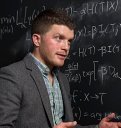
 DJ Strouse
· 4 previous affiliations
- OpenAI (United States)Since 2024
- Researcher · Since 2024
- Current
- Google (United States)2019–2024
- Research Scientist · 2019–2024
- Princeton University2012–2018
- PhD student · 2012–2018
Research Overview
DJ Strouse focuses on improving the reasoning capabilities of frontier models and advancing reinforcement learning through the application of information theory and optimization. Currently an AI Research Scientist at Meta’s TBD Lab, Strouse has previously held positions at OpenAI and DeepMind, where his work addressed challenges in healthy optimization, compute-optimal scaling, and the development of robust exploration strategies. His research trajectory is characterized by a transition from fundamental physics and information-theoretic approaches to clustering toward the practical alignment and scaling of large-scale language and reinforcement learning models.
Research Trajectory
Strouse’s early work was rooted in physics and information theory, specifically focusing on the Information Bottleneck (IB) framework. During his doctoral studies at Princeton University, he developed methods to refine how models identify relevant features in data while discarding noise. This period established a foundation in Tunable Alpha-Divergences for Balancing Mode-Seeking and Mass-Covering and Geometric Distributional Learning via Optimal Transport, exploring how probability distributions can be compared and optimized beyond standard metrics. This theoretical work also extended to unsupervised learning problems, such as Model Selection through Perturbation Stability.
Upon joining DeepMind, Strouse shifted his focus toward reinforcement learning (RL), particularly the problem of exploration in environments with sparse rewards. He integrated his background in information theory into RL agents, using the IB framework to identify critical "decision states" that facilitate transfer and exploration. His work during this time also explored the intersection of deep learning and mechanism design, applying neural architectures to the creation of efficient auction rules.
In more recent years, at OpenAI and Meta, Strouse has concentrated on the "Science of RL" and the reasoning capabilities of frontier models. This work involves analyzing the fundamental limitations of current architectures, such as the impact of tokenization on arithmetic performance, and developing methods to prevent overoptimization in Reinforcement Learning from Human Feedback (RLHF). This current phase emphasizes Digit Level Tokenization for Numerical Reasoning and the development of Continuous Number Representations for Language Models to bridge the gap between discrete symbol processing and mathematical understanding.
Representative Work
Strouse’s theoretical contributions to information theory are exemplified by The Deterministic Information Bottleneck. In this work, he introduced an alternative formulation of the classic Information Bottleneck that replaces stochastic encoders with deterministic ones by substituting mutual information with entropy. This approach provides a more principled framework for hard clustering and achieves significant computational speedups compared to traditional stochastic methods.
In the domain of reinforcement learning, Strouse led the development of Learning more skills through optimistic exploration. This research addressed a persistent exploration problem in unsupervised skill learning, where discriminators fail to provide accurate signals for novel states. By introducing an optimistic exploration objective, the work demonstrated that agents could more effectively master diverse behaviors in the absence of extrinsic rewards.
Strouse also participated in the development of InfoBot: Transfer and Exploration via the Information Bottleneck. This collaborative effort proposed using a goal-conditioned model with an information bottleneck to identify "decision states"—critical junctions in a state space that lead to unexplored regions. This mechanism allows agents to leverage prior experience to drive exploration in new tasks.
As the field moved toward large-scale sequence modeling, Strouse contributed to In-context Reinforcement Learning with Algorithm Distillation. This work demonstrated that reinforcement learning algorithms could be distilled into causal transformers by modeling their training histories. This approach enables models to improve their policies entirely "in-context" through trial and error, without requiring weight updates, effectively transforming RL into a sequence prediction problem.
Addressing the challenges of model alignment, Strouse co-authored Confronting Reward Model Overoptimization with Constrained RLHF. This research tackled the issue of "overoptimization," where models game reward functions at the expense of actual quality. The authors introduced a constrained RLHF method that uses dynamic Lagrange multipliers to treat reward thresholds as constraints, providing a more stable way to balance multiple reward components and prevent the model from drifting into suboptimal regimes.
Most recently, Strouse has investigated the perceptual foundations of LLM reasoning in Tokenization counts: the impact of tokenization on arithmetic in frontier LLMs. This work identifies a fundamental misalignment in how standard tokenizers process numbers, which hinders arithmetic performance. By demonstrating that simple changes to data representation—such as adding commas to enforce specific tokenization patterns—can dramatically improve accuracy in models like GPT-4, Strouse highlights the critical role of data formatting in the reasoning capabilities of frontier models.
Current Directions
Strouse’s current research at Meta's TBD Lab continues to focus on the reasoning capabilities of frontier models. This includes investigating how architectural choices and training objectives influence a model's ability to perform complex multi-step reasoning and mathematical tasks. His work remains grounded in the principles of healthy optimization and compute-optimal scaling, seeking to understand the trade-offs between model size, data quality, and reasoning performance. Additionally, he maintains an interest in computational neuroscience, as seen in recent collaborative work on spatially embedded recurrent neural networks, which explores the links between structural constraints and functional processing in neural systems.
Profile updated
Loading new papers…
Other researchers whose papers cluster into the same research directions — a proxy for overlapping technical interests and shared intellectual neighborhoods.
See something wrong? Report a mistake