

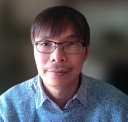
 Dinh Phung
· 7 previous affiliations
- Monash UniversitySince 2018
- Full Professor · Since 2018
- Professor, Head of Data Science and AI Department · 2024–2025
- Research Director, Dept of Data Science and AI · 2020–2023
- Qualcomm (United States)Since 2025
- Consultant · Since 2025
- VinAI Research2021–2025
- Senior Consultant/Principal Scientist/VP (Research) · 2021–2025
- Trusting Social2017–2020
- AI Chief Scientist · 2017–2020
- Deakin University2012–2018
- Full Professor · 2017–2018
- Associate Professor · 2012–2016
- PTTH Lê Khiet
Research Overview
Dinh Phung focuses on probabilistic graphical models, optimal transport, and the optimization of generative AI systems. His trajectory spans early work in temporal sequence modeling and scalable kernel methods to recent advancements in diffusion models and large language model alignment. His current research addresses parameter-efficient fine-tuning, concept erasure, and personalization in foundation models.
Research Trajectory
Phung's early research explored probabilistic modeling for complex temporal data. In 2005, he contributed to the development of switching hidden semi-Markov models for human activity recognition, addressing challenges in hierarchical event representation and explicit duration modeling for temporal sequences with Activity Recognition and Abnormality Detection with the Switching Hidden Semi-Markov Model. This interest in temporal dependencies extended into healthcare applications, where he collaborated on DeepCare: A Deep Dynamic Memory Model for Predictive Medicine (2016). By introducing time parameterizations to Long Short-Term Memory (LSTM) networks, this work modeled patient health trajectories to handle the irregular timing of electronic medical records.
By 2017, his focus expanded to scalable machine learning and geometric data analysis. To address the computational bottlenecks of online kernel learning, his group introduced reparameterized random features in Large-scale Online Kernel Learning with Random Feature Reparameterization. This work advanced the research direction of Scaling Kernel Methods with Random Fourier Features by allowing models to be maintained in a fixed-dimensional space, keeping model size constant relative to data volume. Concurrently, he explored the area of Hierarchical Optimal Transport for Structured Distribution Alignment, proposing a novel multilevel clustering approach in Multilevel Clustering via Wasserstein Means to simultaneously partition data and discover grouping patterns across hierarchical structures.
Optimal transport continued to inform his later work, as seen in Parameter Estimation in DAGs from Incomplete Data via Optimal Transport (2024), which applied these geometric principles to directed acyclic graphs. During this period, Phung also addressed robust representation learning across diverse domains. In software security, his lab developed Deep Domain Adaptation With Max-Margin Principle for Cross-Project Imbalanced Software Vulnerability Detection to tackle the scarcity of labeled vulnerability datasets. In distributed systems, he addressed catastrophic forgetting and data privacy through generative replay for data-free continual learning, introducing the LANDER framework in Text-Enhanced Data-Free Approach for Federated Class-Incremental Learning. His work in computer vision also advanced with Bridging Global Context Interactions for High-Fidelity Pluralistic Image Completion, which utilized a code-shared codebook and transformer architecture to achieve diverse, high-quality image inpainting with significantly faster inference speeds.
In 2025, Phung's research heavily emphasized the optimization, personalization, and safety of generative foundation models, contributing to the broader area of Reconciling Structural Fidelity and Sample Diversity in Generative Models. To improve text-to-image personalization, he introduced a parameter rank reduction approach in PaRa: Personalizing Text-to-Image Diffusion via Parameter Rank Reduction, which sculpted the generation space with fewer learnable parameters than traditional low-rank adaptations. He also tackled model safety and copyright issues through selective knowledge erasure. In Fantastic Targets for Concept Erasure in Diffusion Models and Where To Find Them, his team modeled the concept space as a graph to dynamically select replacement targets, minimizing collateral damage to benign concepts. A complementary approach was proposed in Hiding and Recovering Knowledge in Text-to-Image Diffusion Models via Learnable Prompts, which secured undesirable concepts behind a secret key rather than permanently degrading model performance. To further enhance model fine-tuning, he developed Geometry-Aware Collaborative Multi-Solutions Optimizer for Model Fine-Tuning with Parameter Efficiency, a framework combining gradient flow theory with geometric awareness to generate diverse, high-performing parameter ensembles.
The most recent phase of his trajectory focuses on the alignment and efficiency of large-scale models. In the context of large language models, he collaborated on Sharpness-Aware Minimization in Logit Space Efficiently Enhances Direct Preference Optimization (2026). This research addressed the "squeezing effect" in Direct Preference Optimization by applying sharpness-aware minimization exclusively to the output layer, smoothing the optimization landscape with minimal overhead. Returning to generative personalization, his group identified the semantic collapsing problem in text-to-image models and proposed a training-free solution in Mitigating Semantic Collapse in Generative Personalization with Test-Time Embedding Adjustment to realign embeddings at inference time. Additionally, he contributed to the area of efficient generative AI for resource-constrained edge devices with Beyond Uniformity: Sample and Frequency Meta Weighting for Post-Training Quantization of Diffusion Models, which introduced a meta-learning framework to optimize calibration samples and image frequencies for low-bit-width compression. Continuing this work on foundation model alignment and safety in 2026, Phung senior-authored MATO: Multi-objective Personalized Alignment with Test-time Optimization for Large Language Models, presenting a training-free framework that balances multifaceted user preferences via dynamic weight optimization during decoding. In multi-agent systems, Phung directed the design of A Responsibility-Centered Coordination Mechanism for Decentralized Multi-Agent Systems, introducing recursive commitment delegation to ensure accountability across decentralized agent networks. They also co-developed Model Immunization Beyond Condition Numbers: The Importance of Plateau Regions, extending immunization theory to plateau regions to safeguard models against harmful fine-tuning, and contributed to PAVE: Prefill-Conditioned Activation Editing for Hallucination Mitigation in LVLMs, which edits intermediate hidden states using prefill visual bases to curb hallucinations in vision-language models.
Current Directions
The most recent papers in the evidence indicate a strong focus on the optimization, alignment, and safety of foundation models. A primary current direction involves refining text-to-image diffusion models, specifically addressing how to personalize generation without suffering from semantic collapse, and how to efficiently compress these models for resource-constrained environments using post-training quantization.
Additionally, recent work investigates model safety and concept erasure, developing techniques to selectively hide or unlearn copyrighted and harmful content while preserving the integrity of unrelated concepts. Finally, ongoing research addresses the alignment, robustness, and coordination of foundation models, ranging from test-time multi-objective preference steering and decentralized multi-agent coordination to model immunization against adversarial fine-tuning and activation editing for hallucination mitigation.
Profile updated
Loading new papers…
Other researchers whose papers cluster into the same research directions — a proxy for overlapping technical interests and shared intellectual neighborhoods.
See something wrong? Report a mistake