

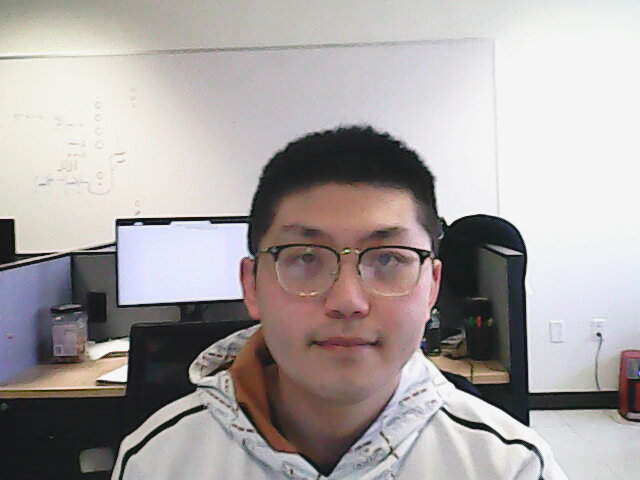
 Dingrong Wang
· 4 previous affiliations
- Rochester Institute of TechnologySince 2020
- Graduate Research Assistant · Since 2020
- PhD student · 2020–2026
- Applied Scientist · 2025
- 亚马逊网2024
- Applied Scientist · 2024
- Dalian University of Technology2016–2020
- Bachelor's degree, Computer Science · 2016–2020
Research Overview
Dingrong Wang focuses on reinforcement learning, evidential deep learning, and model compression, applying these techniques to complex real-world domains like recommender systems, medical diagnostics, and computer vision. His trajectory spans the development of uncertainty-aware algorithms that balance exploration with safety, while his recent work emphasizes conservative evidential learning and robust neural architecture search.
Research Trajectory
Wang's early research explored the intersection of reinforcement learning (RL) and computer vision. In 2021, he introduced Deep Reinforced Attention Regression for Partial Sketch Based Image Retrieval, a framework designed to retrieve specific images from large galleries using only incomplete or noisy query sketches. By framing the retrieval process through a deep reinforcement learning lens, this work addressed the practical challenge of on-the-fly sketch recognition where only a few strokes are available to the system.
By 2023, his focus expanded significantly into evidential deep learning, particularly for modeling uncertainty in dynamic environments. He developed Deep Evidential Reinforcement Learning for Dynamic Recommendations, which integrated expected reward optimization with evidence-based uncertainty to capture evolving user preferences. This architecture utilized an evidential-actor-critic module to conduct evidence-aware exploration, locating items of future interest more effectively than traditional methods.
Applying these evidential RL principles to clinical and behavioral data, Wang subsequently designed Deep Temporal Sets with Evidential Reinforced Attentions for Unique Behavioral Pattern Discovery. This framework identified subtle behavioral signatures in multimodal data to differentiate children with Autism Spectrum Disorder from typically developing peers. By combining set-based temporal modeling with uncertainty-aware RL, the system generated interpretable visual heatmaps for clinicians. This contribution advanced the broader area of Representing Irregular Time Series as Unordered Sets and pushed forward methods in the field of Interpretable Machine Learning for Clinical Decision Making.
Concurrently, Wang investigated the reliability of highly compressed neural networks. He participated in the development of Distributionally Robust Ensemble of Lottery Tickets Towards Calibrated Sparse Network Training. This research addressed the phenomenon where pruned "winning ticket" networks, while computationally efficient, often become overconfident and poorly calibrated compared to their dense counterparts. The work contributed to several critical research directions, including Uncertainty and Calibration in Sparse Neural Networks, the broader challenge of Confidence Calibration for Robust Deep Learning, and techniques for Tuning Ambiguity Sets in Distributionally Robust Optimization.
In 2024, Wang continued to refine reinforcement learning applications for complex visual and structural tasks. He proposed Adaptive Important Region Selection with Reinforced Hierarchical Search for Dense Object Detection, an RL framework utilizing "Evidential Q-learning" to perform top-down hierarchical searches in complex scenes. By mimicking human visual attention to focus on promising or highly uncertain regions, the method drastically reduced false positives while maintaining high recall, directly addressing challenges in the area of The Scale Sensitivity Trade-off in Object Detection.
That same year, he extended his work on network efficiency with Reinforced Compressive Neural Architecture Search for Versatile Adversarial Robustness. This paper moved beyond heuristic rules for neural architecture search, defining novel task settings to discover lightweight, adversarially robust sub-networks within larger teacher models. Additionally, his collaborative efforts in medical imaging included LIBR+: Improving Intraoperative Liver Registration by Learning the Residual of Biomechanics-Based Deformable Registration, which focused on learning residuals to enhance biomechanics-based deformable registration during surgical procedures.
Most recently, Wang has synthesized his expertise in evidential learning and recommender systems. In 2025, he published Looking into User’s Long-term Interests through the Lens of Conservative Evidential Learning. This research introduced the Evidential Conservative Q-Learning (ECQL) framework, which systematically explores new item categories where data is lacking (vacuity) while employing a conservative safety net to ensure recommendations remain grounded in established user preferences.
Current Directions
Wang's most recent work investigates the intersection of safe exploration, evidential uncertainty, and robust model architecture. A primary focus is conservative evidential learning, where reinforcement learning agents are designed to explore unknown data regions—such as long-term user interests in recommender systems—without compromising the reliability of their immediate outputs. Concurrently, he is addressing the safety and alignment of compressed models, utilizing reinforced neural architecture search to guarantee that lightweight networks maintain versatile adversarial robustness against diverse attacks. Across these domains, his research consistently seeks to quantify and leverage uncertainty to make machine learning systems more interpretable, calibrated, and safe for real-world deployment.
Profile updated
Loading new papers…
Other researchers whose papers cluster into the same research directions — a proxy for overlapping technical interests and shared intellectual neighborhoods.
See something wrong? Report a mistake