

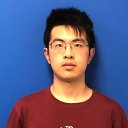
 Dinghuai Zhang
· 4 previous affiliations
- Microsoft Research Asia (China)Since 2024
- Researcher · Since 2024
- Microsoft (United States)Current
- Current
- PhD student · 2020–2024
- Peking University2016–2020
- Undergrad student · 2016–2020
Research Overview
Dinghuai Zhang focuses on generative modeling, probabilistic inference, and the alignment of large-scale AI systems. His trajectory spans early work in adversarial robustness and out-of-distribution generalization to foundational contributions in Generative Flow Networks (GFlowNets). Most recently, he develops methods for stabilizing reinforcement learning in language models and aligning multimodal diffusion models while preserving sample diversity.
Research Trajectory
Zhang’s early research addressed the vulnerabilities and generalization bottlenecks of deep neural networks. He introduced You Only Propagate Once: Accelerating Adversarial Training via Maximal Principle, a framework that significantly reduces the computational overhead of generating adversarial examples, contributing to the area of efficient methods for robust neural network optimization. He also collaborated on Out-of-Distribution Generalization via Risk Extrapolation (REx), which forces models to achieve equal performance across training environments to ignore spurious correlations, advancing the research direction of robust generalization via risk variance penalties.
During his doctoral studies at Mila, Zhang became deeply involved in the development of Generative Flow Networks (GFlowNets). He led the development of Generative Flow Networks for Discrete Probabilistic Modeling, introducing Energy-Based GFlowNets (EB-GFN) to model high-dimensional discrete data. By treating data generation as a sequential construction process, this work overcame traditional MCMC mode-mixing issues. He subsequently participated in expanding this paradigm beyond discrete spaces in A theory of continuous generative flow networks, which derived continuous versions of standard training objectives for complex, multi-modal distributions. Further solidifying the mathematical grounding of these models, he co-authored GFlowNets and variational inference, which established formal equivalences between hierarchical variational inference and GFlowNets. This work served as a key contribution to the research direction of The Variational Foundations of Generative Flow Networks and the area of Stabilizing Off-Policy Learning via Importance Sampling Control.
Building on these foundations, Zhang explored how GFlowNets could address risk and credit assignment. He developed Distributional GFlowNets with Quantile Flows, advancing the area of risk-sensitive reinforcement learning for tail risk management. To tackle the credit assignment problem in high-dimensional sampling, he introduced Diffusion Generative Flow Samplers: Improving learning signals through partial trajectory optimization. By parameterizing an additional flow function, this method allows models to learn from short trajectory segments, a significant step in the research direction of Subtrajectory Balance for Generative Flow Networks. He also applied energy-based modeling to offline black-box optimization in Latent Energy-Based Odyssey: Black-Box Optimization via Expanded Exploration in the Energy-Based Latent Space, mapping complex design spaces into a compressed latent space to enable MCMC-free exploration.
A major theme in Zhang's recent trajectory is the alignment of generative models—particularly diffusion models—with human preferences and specific rewards without sacrificing sample diversity. He proposed Improving GFlowNets for Text-to-Image Diffusion Alignment, which treats the denoising process as a GFlowNet to mitigate mode collapse, contributing to the area of Noise-Aware Step-Wise Reward Modeling for Diffusion Alignment. As a principal investigator, he further refined this approach in Efficient Diversity-Preserving Diffusion Alignment via Gradient-Informed GFlowNets, incorporating reward gradients directly into the objective to achieve a superior Pareto trade-off between high reward and the preservation of the original model's creative prior. This work is central to the broader area of Reward Proportional Sampling with Generative Flow Networks.
In parallel, his group explored optimal control frameworks for alignment, introducing Value Gradient Guidance for Flow Matching Alignment to match a model's velocity field to the gradient of a value function. He also contributed to architectural innovations in visual generation, co-authoring Denoising Autoregressive Transformers for Scalable Text-to-Image Generation, which breaks the Markovian constraint of traditional diffusion to leverage full generation trajectories, advancing the research direction of Autoregressive Visual Generation with Continuous Tokens. Expanding diffusion models to new domains, he oversaw Coevolutionary Continuous Discrete Diffusion: Make Your Diffusion Language Model a Latent Reasoner, which demonstrated that continuous diffusion models possess stronger theoretical expressivity for latent reasoning than their discrete counterparts.
Most recently, Zhang has investigated the stability and efficiency of reinforcement learning systems for large language models. He collaborated on On the Rollout-Training Mismatch in Modern RL Systems, identifying how discrepancies between rollout engines and training models break on-policy assumptions, and proposing Truncated Importance Sampling to stabilize training. He also participated in FlowRL: Matching Reward Distributions for LLM Reasoning, which adapts GFlowNet principles to shift the RL objective from maximizing rewards to matching the full reward distribution, mitigating mode collapse in complex math and coding tasks. Additionally, he co-authored ``Noisier'’ Noise Contrastive Estimation is (Almost) Maximum Likelihood, revealing that increasing the noise in NCE causes its learning path to mirror Maximum Likelihood Estimation, bridging discriminative and generative learning paradigms.
Current Directions
The most recent papers in the evidence indicate a strong focus on the intersection of reinforcement learning, generative modeling, and large language model reasoning. Recent work investigates how to align diffusion models and flow matching models with human preferences while strictly preserving sample diversity, largely by adapting principles from Generative Flow Networks. Additionally, Zhang is exploring the systemic stability of RL fine-tuning for LLMs, addressing practical challenges like rollout-training mismatches and theoretical problems such as mode collapse in reasoning tasks. His recent contributions also continue to probe the foundational mechanics of probabilistic estimation, seeking unified frameworks that bridge contrastive learning and maximum likelihood estimation.
Profile updated
Loading new papers…
Other researchers whose papers cluster into the same research directions — a proxy for overlapping technical interests and shared intellectual neighborhoods.
See something wrong? Report a mistake