

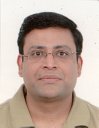
 Dinesh Garg
· 5 previous affiliations
- IBM ResearchSince 2022
- Senior Technical Staff Member (STSM) · Since 2022
- IBM (India)2011–2021
- Research Scientist, IBM Research · 2011–2021
- Associate Professor, IIT Gandhinagar · 2016–2018
- Yahoo (Spain)2009–2011
- Scientist, Yahoo! Labs, Bangalore · 2009–2011
- Research Scholar, IISc Bangalore · 2000–2006
- Doctor of Philosophy - PhD, Computer Science · 2002–2004
- M.Sc. (Engg), Computer Science · 2000–2002
Research Overview
Dinesh Garg focuses on neuro-symbolic artificial intelligence, multi-modal reasoning, and mechanism design for networked systems. His early work explored resource optimization and incentive structures in crowdsourcing environments. More recently, his research centers on weakly supervised neuro-symbolic approaches for complex, multi-hop image manipulation driven by natural language instructions.
Research Trajectory
Garg's documented research trajectory begins with algorithmic approaches to networked systems and mechanism design. In 2012, he participated in research on incentive structures for distributed task execution. This work, detailed in Threats and Trade-Offs in Resource Critical Crowdsourcing Tasks Over Networks, examined how planners can optimize crowdsourcing mechanisms under strict cost and time constraints while attempting to maintain formal fairness properties across the network.
Over the subsequent decade, Garg's research footprint expanded to include foundational machine learning optimization and natural language processing. His contributions during this period intersect with several distinct methodological themes, including the research direction Matrix-Free Second-Order Optimization for Large-Scale Models and work in the broader area of Deep AUC Maximization for Imbalanced Learning. By the early 2020s, his focus increasingly incorporated natural language interfaces, engaging with the area of Semantic Parsing with Limited Supervision and the research direction Schema Linking for Text-to-SQL Generation.
In recent years, Garg has taken a senior leadership role in developing neuro-symbolic architectures for multi-modal reasoning. A major focus of this phase has been the challenge of manipulating images using complex natural language instructions. In 2022, as senior author, he guided the development of NeuroSIM, a system introduced in Image Manipulation via Neuro-Symbolic Networks. This work extended the Neuro-Symbolic Concept Learner (NSCL)—originally designed for visual question answering—into the domain of image manipulation. By leveraging a neuro-symbolic architecture, the system achieved better modularity and interpretability, enabling it to perform multi-hop reasoning over scenes with multiple objects rather than being limited to simple, single-object instructions.
Garg and his collaborators subsequently refined this architecture to reduce its reliance on heavily annotated training data. In Weakly Supervised Neuro-Symbolic Image Manipulation via Multi-Hop Complex Instructions, he oversaw the adaptation of NeuroSIM to operate under weak supervision, demonstrating that complex image manipulation could be achieved without requiring ground-truth manipulated images during training. He further contributed to the expansion of this research program in Image Manipulation via Multi-Hop Instructions - A New Dataset and Weakly-Supervised Neuro-Symbolic Approach, which introduced a novel dataset and formalized the parsing of natural language instructions into a domain-specific language (DSL) of object attributes and manipulation operations.
Current Directions
The most recent papers in the evidence indicate a sustained focus on neuro-symbolic integration for multi-modal artificial intelligence. Garg's current work investigates how structured, symbolic reasoning can be combined with deep neural networks to interpret and execute complex natural language instructions in visual domains. A central open problem in this agenda is reducing the annotation burden required for multi-hop reasoning tasks. By leveraging weak supervision and domain-specific languages, this research aims to build more interpretable, modular, and generalizable systems for automated image manipulation and visual reasoning.
Profile updated
Loading new papers…
Other researchers whose papers cluster into the same research directions — a proxy for overlapping technical interests and shared intellectual neighborhoods.
See something wrong? Report a mistake