

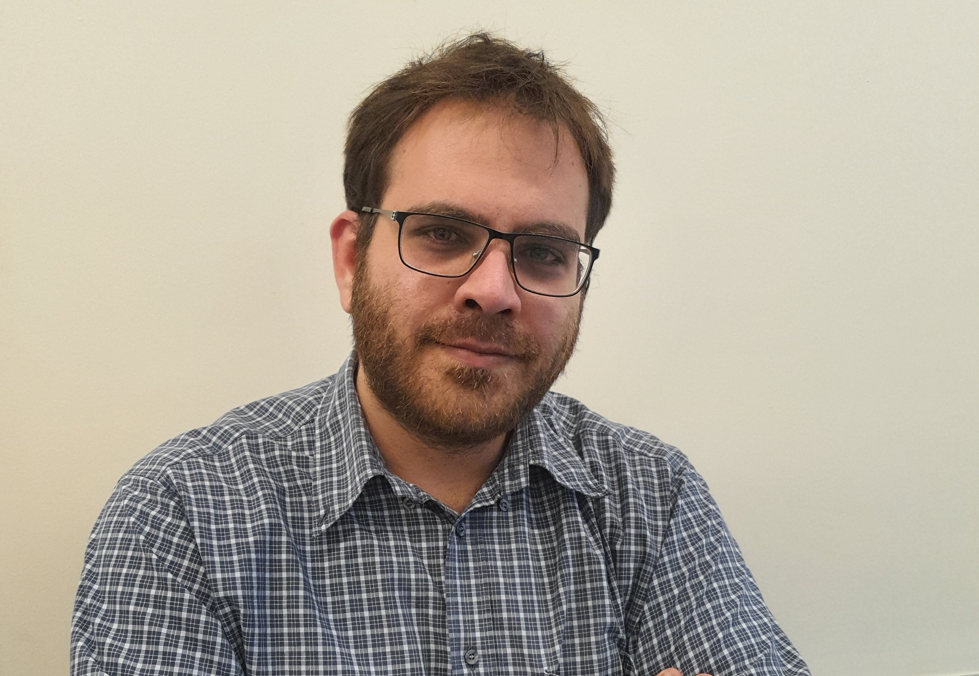
 Dimos Tsouros
· 2 previous affiliations
- University of Western MacedoniaSince 2025
- Lecturer · Since 2025
- PhD student · 2018–2022
- KU Leuven2022–2025
- Postdoc · 2022–2025
Research Overview
Dimos Tsouros focuses on constraint programming, machine learning, and combinatorial optimization, with a specific emphasis on interactive constraint acquisition. His early work developed efficient methods for learning constraint networks from user interactions to alleviate the modeling bottleneck in artificial intelligence. Recently, his research investigates the integration of large language models for the auto-formulation of complex optimization problems.
Research Trajectory
His early research focused on improving the efficiency of constraint acquisition systems, which are designed to help non-expert users model complex combinatorial problems by classifying partial or complete examples as positive or negative. In Efficient Methods for Constraint Acquisition and its journal extension Efficient multiple constraint acquisition, he developed algorithmic and heuristic methods to reduce the large number of queries and high CPU times required by algorithms like QuAcq and MultiAcq to reach convergence. He continued to refine these interactive systems, later exploring how to learn constraints more effectively from incomplete user feedback in Learning constraints through partial queries.
Parallel to his work in acquisition, he has contributed to the research direction of Neural Heuristics for Combinatorial Optimization. He investigated facility location challenges, introducing hybrid approaches for the p-dispersion problem, a practical variant where facilities must maintain minimum separation distances. This work began with The p-Dispersion Problem with Distance Constraints, where he and his collaborators demonstrated that heuristic constraint programming methods could efficiently solve complex, large-scale instances where traditional integer linear programming struggled. This approach was subsequently enhanced with local search techniques to improve bound estimations in A CP/LS Heuristic Method for Maxmin and Minmax Location Problems with Distance Constraints, significantly boosting the effectiveness of incomplete solvers.
A central theme of his trajectory is the broader area of Overcoming the Modeling Bottleneck in Constraint Programming. To this end, he began investigating the integration of modern AI techniques to automate the formalization of discrete combinatorial problems. In Holy Grail 2.0: From Natural Language to Constraint Models, he proposed a modular framework leveraging large language models to translate natural language descriptions into executable constraint models. By decomposing the modeling process into entity extraction, relationship mapping, formalization, and code generation, this work contributes to the area of Closing the Loop in LLM Code Generation.
Returning to core constraint acquisition, his 2024 research addressed a fundamental limitation of existing methods: their inability to generalize learned constraints beyond single, specific problem instances. He introduced the GenCon approach in Generalizing Constraint Models in Constraint Acquisition, utilizing statistical learning at the individual constraint level to learn parameterized models applicable to varying instances of the same problem. He further expanded on adaptive acquisition techniques in Learning to Learn in Interactive Constraint Acquisition.
Current Directions
Recent work investigates hybrid frameworks that combine passive data mining with active learning to build robust constraint models. A primary focus is mitigating over-fitting when deriving constraints from pre-labeled sets of solutions or non-solutions. In Addressing Over-fitting in Passive Constraint Acquisition through Active Learning, he and his collaborators explored engaging domain experts or software systems through targeted queries to classify newly proposed assignments. He formalized this approach with the Hybrid Constraint Acquisition with Refinement (HCAR) framework in Overcoming Over-Fitting in Constraint Acquisition via Query-Driven Interactive Refinement. This work, which aligns with the research area of Robust Interactive Learning under Imperfect Human Guidance, uses machine learning priors and Bayesian updates to systematically identify and repair over-fitted global constraints, achieving high model accuracy from very few examples.
Additionally, he continues to advance the area of Auto-Formulation of Optimization Models with Large Language Models. Recognizing that translating human-language problem descriptions into the rigid formal code required by solvers remains a critical bottleneck for domains like scheduling and logistics, his most recent papers evaluate the capabilities of modern AI in this space. In CP-Bench: Evaluating Large Language Models for Constraint Modelling, he introduced benchmarks to systematically assess how well large language models can handle the complex mathematical formalization required to solve discrete combinatorial problems.
Profile updated
Loading new papers…
Other researchers whose papers cluster into the same research directions — a proxy for overlapping technical interests and shared intellectual neighborhoods.
See something wrong? Report a mistake