

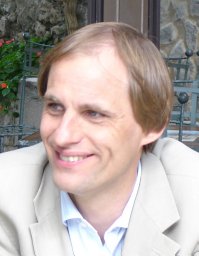
 Dick B.M. Botteldooren
· 2 previous affiliations
- Ghent UniversitySince 1982
- Full Professor · Since 2000
- Professor · Since 1994
- Associate Professor · 1990–2000
- PhD, Engineering · 1986–1990
- Master of science in engineering, electronics · 1982–1986
- EAA European Acoustics AssociationSince 2022
- President · Since 2022
Research Overview
Dick B.M. Botteldooren focuses on the intersection of computational acoustics, urban soundscape design, and bio-inspired artificial intelligence. His work explores how physical wave propagation, human perception, and machine learning can be integrated to model and improve the acoustic environment. Currently, his research emphasizes the development of spiking neural networks and recurrent architectures that embed physical principles to solve complex spatiotemporal problems in sensing and audio analysis.
Research Trajectory
The evolution of Botteldooren’s research reflects a transition from fundamental computational physics to the applied social and psychological dimensions of acoustics, and finally to the integration of these domains through advanced artificial intelligence.
In the early 1990s, his work was primarily concerned with the development of numerical methods for wave propagation. This period focused on the refinement of Finite-Difference Time-Domain (FDTD) approximations to solve acoustical field problems. A significant contribution during this phase involved adapting these methods to non-uniform and quasi-Cartesian grids, which allowed for more accurate modeling of complex geometries like curved or tilted boundaries without the computational overhead of traditional analytical grids.
By the mid-2000s, Botteldooren’s focus shifted toward the environmental and social impact of sound, particularly in urban contexts. He moved beyond traditional noise mapping—which often relies on energy-averaged metrics—to investigate the qualitative aspects of the "soundscape." This work involved the acoustical classification of road infrastructures and the application of hierarchical clustering to understand the temporal patterns of traffic noise. During this period, he began advocating for an integrated approach to urban planning that considers sound as a functional component of the urban fabric rather than merely a pollutant to be remediated.
In the 2010s, this interest in urban soundscapes matured into a rigorous investigation of "green" mitigation strategies. Botteldooren explored the efficacy of vegetated noise barriers and green roofs, using full-wave numerical simulations (FDTD, PSTD, and BEM) to validate their performance. This era was characterized by a dual focus on physical validation and human perception, examining how low-height barriers could reduce physical sound levels while simultaneously improving the perceived quality of public spaces. He also led efforts to document and reproduce urban acoustic environments globally, creating immersive audio-visual databases to assist architects and urban designers.
In the current decade, his research has increasingly converged with artificial intelligence and neuro-inspired computing. This shift is marked by the application of deep learning to acoustic monitoring and the development of novel neural network architectures. He has explored the use of spiking neural networks (SNNs) to simulate biological information propagation, specifically focusing on axonal delay as a mechanism for short-term memory. His most recent work involves Accelerating Physical Simulations with Neural Surrogates, where recurrent networks are designed to implement physical wave equations directly. This trajectory represents a synthesis of his early expertise in wave physics with modern computational paradigms, aiming to bridge the "trust gap" in scientific machine learning through Physics-Based Validation of Machine Learning via Feature Attribution.
Current Directions
Botteldooren’s current research program is organized around three primary pillars: bio-inspired AI, affective soundscape analysis, and personalized acoustic interventions.
A major current focus is the development of "BioRNN" architectures, which integrate neuromodulation and wave propagation dynamics into recurrent neural networks. By embedding finite-difference schemes with learnable damping into neural grids, this work seeks to exploit resonance and frequency selectivity for modeling complex spatiotemporal dependencies. This direction aims to overcome the numerical instabilities typically associated with training networks that implement physical equations.
In the domain of soundscape analysis, he is moving toward Event Based Modeling of Urban Soundscape Annoyance. This involves moving away from objective classification (e.g., identifying a sound as "traffic") toward understanding the affective qualities of sound. By utilizing Large Language Models (LLMs) and affective quality networks, his team is developing automated soundscape captioning tools that generate context-aware descriptions of how acoustic environments influence human emotion.
Finally, he is exploring the application of these technologies to health and ecological monitoring. This includes the use of underwater acoustics to assess the health of marine ecosystems and the development of personalized, augmented soundscapes to support individuals with dementia. These projects apply his long-standing expertise in soundscape design to specific clinical and environmental challenges, using AI to tailor acoustic environments to individual needs or ecological indicators.
Representative Work
Acoustical finite-difference time-domain simulation in a quasi-Cartesian grid This early work established a foundational method for numerical acoustics. By deriving FDTD equations for non-uniform grids, the paper addressed a major limitation of the method—the difficulty of describing curved boundaries. This contribution improved the accuracy-to-CPU ratio for complex simulations, laying the groundwork for subsequent full-wave modeling of urban environments.
Road traffic noise reduction by vegetated low noise barriers in urban streets In this study, Botteldooren utilized a suite of numerical methods, including FDTD and the pseudo-spectral time-domain (PSTD) method, to evaluate the effectiveness of green noise barriers in street canyons. The work is significant for its cross-validation of wave-based methods against energy-based ray models, highlighting the limitations of the latter in complex urban geometries.
Urban soundscapes of the world: selection and reproduction of urban acoustic environments with soundscape in mind This paper details the creation of a comprehensive reference database of immersive audio-visual recordings. It reflects a shift toward "design by example," providing architects with high-quality auralizations of global urban sites to inform the acoustic design of future cities.
Axonal Delay As a Short-Term Memory for Feed Forward Deep Spiking Neural Networks As a senior author, Botteldooren here explores the biological plausibility of artificial networks. The research demonstrates that configuring precise timing through axonal delays—rather than just adjusting synaptic weights—can significantly improve the transmission of temporal information in spiking neural networks, offering a more efficient paradigm for temporal data processing.
Soundscape Captioning using Sound Affective Quality Network and Large Language Model This work introduces the task of soundscape captioning, using AI to bridge the gap between objective sound detection and subjective human experience. By generating context-aware descriptions that capture the emotions evoked by an environment, the research provides a tool for automated soundscape analysis that avoids the labor-intensive nature of traditional surveys.
BioRNN: Bio-Inspired Synergistic Integration of Neuromodulation and Wave Propagation in Recurrent Networks This recent paper introduces a recurrent architecture that embeds 2D wave propagation dynamics directly into a neural grid. By incorporating a frequency-modulation stage inspired by biological systems, the model achieves stable training and exploits resonance, representing a significant step in merging physical simulation with gradient-based deep learning.
Profile updated
| Paper | Venue | Year |
|---|---|---|
| Delay learning based on temporal coding in Spiking Neural NetworksGitHubsunpengfei1122/ | Neural Networks | 2024 |
Loading new papers…
Other researchers whose papers cluster into the same research directions — a proxy for overlapping technical interests and shared intellectual neighborhoods.
See something wrong? Report a mistake