

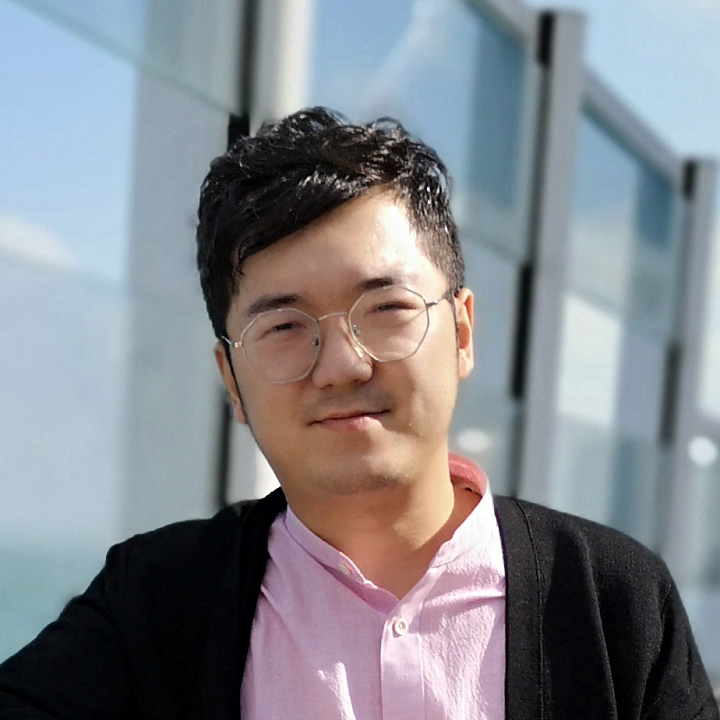
 Dian Shen
1 previous affiliation
- Southeast University2006–2026
- Associate Professor · 2021–2026
- Assistant Professor · 2018–2021
- PhD student · 2012–2018
- MS student · 2010–2012
- Undergrad student · 2006–2010
Research Overview
Dian Shen focuses on cloud computing infrastructure, network resource scheduling, and distributed systems. His early work addressed energy efficiency and application-aware bandwidth allocation in virtualized data centers, later expanding to optimize remote direct memory access and multipath protocols. Recently, his research has broadened to include hardware acceleration for network functions, federated learning frameworks, and spatial control in generative AI models.
Research Trajectory
Shen’s early research addressed the operational efficiency of large-scale cloud data centers. He investigated the trade-offs between energy consumption and service-level agreements, proposing methods to dynamically power down idle servers in Doing Better Business: Trading a Little Execution Time for High Energy Saving under SLA Constraints. This led to the development of a stochastic right-sizing model based on queueing theory for OpenStack environments in Stochastic modeling of dynamic right-sizing for energy-efficiency in cloud data centers.
To manage communication-intensive applications, he introduced frameworks for application-aware bandwidth allocation. In AppBag: Application-Aware Bandwidth Allocation for Virtual Machines in Cloud Environment, he developed a system to guarantee bandwidth based on the temporal and spatial variability of virtual machines. He further refined this approach by utilizing predictive traffic modeling in Facilitating Application-Aware Bandwidth Allocation in the Cloud with One-Step-Ahead Traffic Information.
As data center networks evolved, Shen focused on the performance and fairness of Remote Direct Memory Access (RDMA). He identified that traditional Network Utility Maximization (NUM) models were inadequate for RDMA due to coupling variables and on-board resource constraints. He addressed these challenges in Distributed and Optimal RDMA Resource Scheduling in Shared Data Center Networks, later expanding the theoretical modeling and implementation in Enabling Distributed and Optimal RDMA Resource Sharing in Large-Scale Data Center Networks: Modeling, Analysis, and Implementation. Parallel to his RDMA research, he investigated tail latency in virtualized networks, demonstrating how the dual role of CPUs in communication and computation causes interference, and proposed a multipath data plane solution in Last-mile Matters: Mitigating the Tail Latency of Virtualized Networks with Multipath Data Plane. He also contributed to multipath transport protocols by developing a modular framework to safely extend Multipath TCP in eMPTCP: A Framework to Fully Extend Multipath TCP. In the domain of low-power wide-area networks, his group explored mobile approaches to minimize energy consumption for remote IoT nodes in LoRaDrone: Enabling Low-Power LoRa Data Transmission via a Mobile Approach.
By 2024, Shen’s collaborative work expanded into distributed machine learning and statistical estimation. He participated in developing adaptive frameworks for federated learning, such as the system detailed in Adaptive Group Personalization for Federated Mutual Transfer Learning. This work intersects with broader research areas such as hierarchical parameter decomposition for personalized learning and privacy-preserving similarity metrics for distributed data. He also contributed to meta-learning frameworks for small-sample settings, helping to design a fast meta-estimator for precision matrix learning in FasMe: Fast and Sample-efficient Meta Estimator for Precision Matrix Learning in Small Sample Settings, which addresses challenges in statistical learning with heavy-tailed distributions and statistical inference for high-dimensional singular covariance. To accelerate nonparametric statistics, he co-developed a high-throughput unified accelerator targeting rank-based operations in Hynify: A High-throughput and Unified Accelerator for Multi-Mode Nonparametric Statistics.
Moving into 2025, Shen’s research continued to bridge hardware, systems, and advanced algorithms. His group developed an adaptive range filter with lightweight hybrid encoding in Hourglass: An Adaptive Range Filter with Lightweight Hybrid Encoding. In the realm of software network functions, he collaborated on frameworks to implement high-performance, composable data structures using eBPF in HyperCom: Enabling High Performance and Composable Data Structures for Software Network Functions with eBPF. He also led work on FPGA acceleration for sparse triangular solve (SpTRSV) operations, exploring inter-tile parallelism and fine-grained dependency graphs in HiSpTRSV: Exploring Tile-Level Parallelism for SpTRSV Acceleration on FPGAs. Most recently, his research has expanded into generative AI; his group introduced a training-free framework for text-to-image diffusion models that uses potential field guidance to generate content within irregular shapes in AnyCanvas: Potential Field Guidance for Training-Free Spatial Control in Text-to-Image Diffusion. This contribution advances areas such as training-free spatial control via attention steering and layout-guided diffusion.
Current Directions
The most recent papers in the evidence indicate a dual focus on high-performance systems acceleration and applied generative AI. In the systems domain, recent work investigates hardware and software co-design, specifically optimizing data structures for eBPF in modern network infrastructures and exploring tile-level parallelism for sparse matrix operations on FPGAs. Concurrently, Shen is addressing spatial control in generative AI, developing training-free methods to guide text-to-image diffusion models using differentiable potential fields to constrain generation within complex, user-defined geometries.
Profile updated
Loading new papers…
Other researchers whose papers cluster into the same research directions — a proxy for overlapping technical interests and shared intellectual neighborhoods.
See something wrong? Report a mistake