

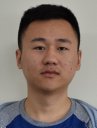
 Di Kang
· 3 previous affiliations
- Tencent (China)Since 2019
- Researcher · Since 2019
- City University of Hong Kong2014–2019
- PhD student · 2014–2019
- Undergrad student · 2010–2014
Research Overview
Di Kang focuses on computer vision and 3D graphics, with specific emphasis on crowd analysis, neural rendering, and digital human reconstruction. His early trajectory centered on adaptive convolutional networks and multi-scale density estimation for dense crowd counting. More recently, his focus has shifted toward 3D scene editing, parametric hand modeling, and generative frameworks for high-fidelity human digitization.
Research Trajectory
Kang's initial research concentrated on visual counting and crowd analysis in complex environments. He introduced adaptive convolutional neural networks (ACNNs) to address scale variations caused by camera perspective. This architecture was detailed in Crowd Counting by Adapting Convolutional Neural Networks with Side Information, which contributed to the research direction of Resolving Perspective Induced Scale Variation in Visual Counting. He expanded on this framework in Incorporating Side Information by Adaptive Convolution and its subsequent journal version, Incorporating Side Information by Adaptive Convolution, demonstrating how filter weights could dynamically adapt to scene context using side information such as camera angle and height.
To further handle heavy occlusion and extreme scale differences in dense crowds, he developed an image pyramid approach in Crowd Counting by Adaptively Fusing Predictions from an Image Pyramid.. This work advanced several areas, including Multi-Scale Density Estimation for Dense Crowd Counting and Pixel-wise Scale Attention for Multi-Resolution Vision, while also navigating the broader area of The Algorithmic Frontier of Accuracy and Computational Efficiency. Kang also explored how these density maps could be utilized beyond simple counting. In Fusing Crowd Density Maps and Visual Object Trackers for People Tracking in Crowd Scenes, he collaborated on a framework that combined a sparse kernelized correlation filter with CNN-estimated density maps to improve people tracking in dense environments. He later formalized the evaluation of these maps in Beyond Counting: Comparisons of Density Maps for Crowd Analysis Tasks - Counting, Detection, and Tracking, demonstrating that while low-resolution maps suffice for counting, original-resolution maps are necessary for precise object localization.
Around 2021, Kang's trajectory expanded into 3D computer vision and neural rendering. He contributed to NeRFReN: Neural Radiance Fields with Reflections, which addressed a key limitation in standard NeRF models by splitting scenes to accurately model complex reflections from glass and mirrors. His work in 3D reconstruction also encompassed rigorous evaluation methodologies, as seen in his participation in REALY: Rethinking the Evaluation of 3D Face Reconstruction, which proposed a benchmark utilizing region-wise shape alignment for more accurate bidirectional correspondences.
A significant portion of his subsequent work focuses on the digital reconstruction of human bodies and hands. He collaborated on Consistent 3D Hand Reconstruction in Video via Self-Supervised Learning, which leveraged continuous hand motion and 2D keypoints to jointly estimate pose, shape, and texture without requiring 3D annotations. He further advanced hand modeling in Phrit: Parametric hand representation with implicit template, proposing a method that combines parametric meshes with signed distance fields (SDFs) to enable high-fidelity, infinite-resolution hand reconstruction driven by skeleton and shape latent codes.
Kang has also developed novel frameworks for 3D generation and editing. He co-developed TIP-Editor: An Accurate 3D Editor Following Both Text-Prompts And Image-Prompts, which allows users to specify editing regions with 3D bounding boxes and control appearance using both text and image prompts. In the domain of surface reconstruction, he contributed to SSP: Semi-signed prioritized neural fitting for surface reconstruction from unoriented point clouds, introducing a semi-signed supervision approach to prevent "ghost" surfaces when fitting SDFs to complex objects. His generative work extends to motion synthesis, as demonstrated in Audio2Gestures: Generating Diverse Gestures From Audio, which explicitly models the one-to-many mapping of speech to physical movement by separating cross-modal latent codes.
In 2024, Kang's research intersected with medical imaging in Free-SurGS: SfM-Free 3D Gaussian Splatting for Surgical Scene Reconstruction. This work introduced a method for reconstructing surgical environments without relying on Structure-from-Motion, advancing the broader area of Dynamic 4D Reconstruction of Deformable Tissues. Most recently, he co-authored Get3DHuman: Lifting StyleGAN-Human into a 3D Generative Model using Pixel-aligned Reconstruction Priors, a 2025 framework that generates diverse, high-fidelity 3D clothed human models by leveraging priors from 2D generators.
Current Directions
The most recent papers in the evidence indicate a strong focus on advanced 3D generative models and dynamic scene reconstruction. Recent work investigates the generation of high-fidelity digital humans, leveraging 2D generative priors to synthesize diverse, fully clothed 3D human models even when 3D ground truth data is limited.
Additionally, Kang is exploring the application of novel rendering techniques, such as 3D Gaussian Splatting, to complex, deformable environments like surgical scenes. This includes developing methods that bypass traditional Structure-from-Motion pipelines to jointly optimize camera poses and neural geometry. A parallel theme in his current research involves multimodal generation and editing, where he addresses challenges such as one-to-many audio-to-gesture mapping and precise 3D scene manipulation using combined text and image prompts.
Profile updated
Loading new papers…
Other researchers whose papers cluster into the same research directions — a proxy for overlapping technical interests and shared intellectual neighborhoods.
See something wrong? Report a mistake