

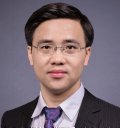
 Deqing Yang
· 1 previous affiliation
- Fudan UniversitySince 2015
- Associate Professor · Since 2015
Research Overview
Deqing Yang focuses on large language models, recommender systems, and knowledge-augmented reasoning. His early work developed advanced representation techniques for personalized recommendation and graph-based information retrieval. More recently, his research investigates the design of autonomous language agents, exploring multi-agent workflows, logical consistency in retrieval, and the calibration of uncertainty in generative models.
Research Trajectory
Deqing Yang’s early research concentrated on improving recommender systems by integrating external knowledge and modeling complex user behaviors. In 2014, he developed Tag propagation based recommendation across diverse social media, which utilized local tag propagation and Chinese knowledge graphs to enable accurate cross-domain recommendations. Recognizing the limitations of representing users as fixed points in a latent space, he later introduced Convolutional Gaussian Embeddings for Personalized Recommendation with Uncertainty (2019). This work modeled users with diverse and sometimes conflicting tastes, contributing to the area of Multi-Vector Embeddings for Multifaceted User Preferences. He further advanced session-based recommendation with Incorporating User Micro-behaviors and Item Knowledge into Multi-task Learning for Session-based Recommendation (2020), a multi-task learning framework that leveraged specific user actions and knowledge graph embeddings to address cold-start challenges.
As his focus expanded to broader graph algorithms and information retrieval, he collaborated on methods to accelerate computations on massive networks. This included participation in developing Faster Local Solvers for Graph Diffusion Equations (2024), which localized graph diffusion solvers to achieve significant speedups. He also contributed to Accelerated Evolving Set Processes for Local PageRank Computation (2025), introducing a framework that improved the error dependence of local solvers. Both of these efforts explored the research direction of Strongly Local Graph Clustering.
In the domain of information retrieval, his group addressed the persistent challenge of negative constraints in dense retrieval models. By translating queries and documents into First-Order Logic, he introduced Logical Consistency is Vital: Neural-Symbolic Information Retrieval for Negative-Constraint Queries (2025). To systematically evaluate these capabilities, his team released ComLQ: Benchmarking Complex Logical Queries in Information Retrieval (2025), revealing significant blind spots in existing systems. Together, these papers advanced the broader area of Logical Constraints in Dense Retrieval.
With the rapid advancement of large language models (LLMs), Yang’s research trajectory shifted toward optimizing LLMs for recommendation, factuality, and autonomous agency. To address the high computational cost of fine-tuning LLMs for recommendation tasks, he led the development of GORACS: Group-level Optimal Transport-guided Coreset Selection for LLM-based Recommender Systems (2025). He also explored advanced reinforcement learning techniques for recommendation, presenting ProRL: Effective Reinforcement Learning for Proactive Recommendation via Rectified Policy Gradient Estimation (2026) to guide users toward new interests while maintaining engagement.
A significant portion of his recent work addresses the reliability and calibration of LLMs. His group developed LoGU: Long-form Generation with Uncertainty Expressions (2025), a framework that trains models to explicitly weave fine-grained uncertainty into their narratives, touching on the area of Granular Verification via Atomic Fact Decomposition. To measure this capability, they introduced UNCLE: Benchmarking Uncertainty Expressions in Long-Form Generation (2025), which identified and mitigated the "alignment gap" where models fail to admit ignorance in extended text.
Most recently, Yang has focused extensively on the architecture and optimization of LLM-based agents. His research introduced SELFGOAL: Your Language Agents Already Know How to Achieve High-level Goals (2024), an approach that allows agents to adaptively break down high-level objectives into practical subgoals. He further enhanced agent training with The Lighthouse of Language: Enhancing LLM Agents via Critique-Guided Improvement (2025), which replaced numerical rewards with structured natural language feedback. Expanding into multi-agent systems, his team created BOOKWORLD: From Novels to Interactive Agent Societies for Story Creation (2025), transforming static literary works into dynamic environments for AI agents. He also led the development of EvoAgent: Towards Automatic Multi-Agent Generation via Evolutionary Algorithms (2025), contributing to the research direction of Automated Discovery of Multi-Agent Workflows by iteratively evolving specialized agent populations. Finally, he contributed to research on agent efficiency with Think Fast and Slow: Step-Level Cognitive Depth Adaptation for LLM Agents (2026), advancing the area of Complexity Aware Dynamic Routing for Adaptive Reasoning by enabling agents to dynamically adjust their reasoning depth based on task complexity.
Current Directions
The most recent papers in the evidence indicate a strong focus on the design, optimization, and evaluation of autonomous language agents. This includes developing frameworks for dynamic cognitive routing, where agents adapt their reasoning depth step-by-step to balance computational efficiency with accuracy. Additionally, ongoing work investigates the automated generation of multi-agent workflows using evolutionary algorithms, allowing systems to self-organize into specialized, collaborative populations. Parallel to his work on agents, Yang continues to explore the intersection of reinforcement learning and recommender systems, focusing on proactive architectures that can safely guide user exploration in complex information landscapes.
Profile updated
Loading new papers…
Other researchers whose papers cluster into the same research directions — a proxy for overlapping technical interests and shared intellectual neighborhoods.
See something wrong? Report a mistake