

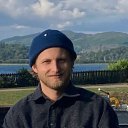
 Dennis Duncan
· 3 previous affiliations
- CIRSince 2025
- PhD student · Since 2025
- MS student · 2019–2023
- University of Augsburg2015–2019
- Undergrad student · 2015–2019
Research Overview
Dennis Duncan focuses on the development of high-precision instrumentation for solar physics and the application of computational methods to complex physical systems. His work spans the design of space-based imaging systems, the analysis of solar atmospheric dynamics, and more recently, the integration of physical models with machine learning architectures. Duncan’s trajectory reflects an evolution from nuclear engineering and radiation shielding toward the engineering of sophisticated remote sensing instruments and the refinement of generative models for high-dimensional data.
Research Trajectory
Duncan’s early research, dating back to the late 1950s, centered on nuclear engineering and the validation of predictive models for radiation environments. This work involved developing methods for calculating gamma-ray heating in structural materials within reactor shields, specifically focusing on achieving high agreement between theoretical predictions and experimental data from facilities like the Bulk Shielding Reactor. This early emphasis on predictive accuracy and model validation established a foundation for his subsequent work in complex physical measurements.
By the early 1980s, Duncan’s focus shifted toward solar physics and the technical challenges of space-based observation. He was instrumental in the development and operation of the Solar Optical Universal Polarimeter (SOUP) on Spacelab 2. This period of his career was defined by addressing the mechanical and optical requirements for diffraction-limited imaging in space. His work on SOUP involved the implementation of image motion compensation systems to mitigate jitter and ensure the stability required for sub-arcsecond resolution. These technical advancements enabled the collection of high-fidelity time sequences of solar granulation, allowing for the first distortion-free measurements of p-mode oscillations and the determination of granule lifetimes in both quiet and magnetic regions of the Sun.
In the 2000s and 2010s, Duncan participated in several major international solar missions, including STEREO, Hinode, and the Solar Dynamics Observatory (SDO). During this phase, his work transitioned from individual instrument components to a broader systems approach to spacecraft electronics and sensor design. He contributed to the development of the Sun Earth Connection Coronal and Heliospheric Investigation (SECCHI) suite and the Hinode Spectro-Polarimeter, the latter of which provided the first high-resolution, three-dimensional views of solar magnetic fields from space. His work on SDO focused on the optimization of CCD sensors and readout electronics, emphasizing lower drive voltages and simplified camera architectures to support high-cadence, high-resolution imaging across multiple wavelengths.
Current Directions
Duncan’s recent work marks a shift toward the intersection of physical modeling and computational intelligence. He has moved from the hardware-centric challenges of solar imaging to the algorithmic challenges of forecasting complex, chaotic systems. This research explores hybrid reservoir computing, where data-driven machine learning models are augmented with physical models to improve predictive performance in spatiotemporal systems.
Furthermore, Duncan has contributed to the development of novel regularization techniques in generative AI. This research addresses the trade-off between sample quality and generalization in flow-matching models. By incorporating geometric principles—specifically spatially varying, anisotropic noise—this work aims to prevent models from memorizing training data, instead encouraging the generation of novel samples that adhere to the underlying manifold of the data.
Representative Work
Duncan’s early contributions to radiation physics are exemplified by The Calculation of Gamma-Ray Heating in Target Samples Located in the BSR Shield, which validated a simplified method for predicting heat generation in reactor environments with high accuracy. This work demonstrated an early proficiency in reconciling complex radiation sources with experimental observations.
During the Spacelab 2 mission, Duncan addressed the critical problem of platform stability in Image motion compensation on the Spacelab 2 Solar Optical Universal Polarimeter /SL2 SOUP/. This research detailed the fine guider systems necessary to remove residual jitter from instrument pointing systems, a prerequisite for the diffraction-limited imaging that would later define solar granulation studies. The scientific output of this instrumentation is further seen in Correlation lifetimes of quiet and magnetic granulation from the SOUP instrument on Spacelab 2, where Duncan and his colleagues used these stable image sequences to measure transverse velocities and determine that granule lifetimes are significantly influenced by nearby solar explosions.
In the realm of advanced solar instrumentation, Duncan contributed to The Hinode Spectro-Polarimeter, a significant technical overview of the first space-borne instrument capable of measuring the full state of light polarization to map solar magnetic fields in three dimensions. His expertise in the hardware-software interface is further detailed in Systems approach to the design of the CCD sensors and camera electronics for the AIA and HMI instruments on solar dynamics observatory, which describes the innovative design of 16-million-pixel sensors shared across multiple remote sensing instruments.
Duncan’s more recent shift into generative modeling is represented by Carré du champ flow matching: better quality-generalisation tradeoff in generative models. In this work, he participated in the development of a geometric solution to the memorization problem in AI, proposing a method that uses spatially varying noise to improve the generalization capabilities of generative models.
Profile updated
Loading new papers…
Other researchers whose papers cluster into the same research directions — a proxy for overlapping technical interests and shared intellectual neighborhoods.
See something wrong? Report a mistake