

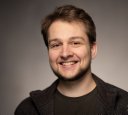
 Denis Zavadski
· 4 previous affiliations
- Apple (United States)Since 2026
- ML Research Intern · Since 2026
- Heidelberg UniversitySince 2017
- PHD Candidate · Since 2023
- Master of Science - MS, Data and Computer Science · 2020–2022
- Bachelor of Science - BS, Data and Computer Science · 2017–2020
- Zuse School ELIZASince 2023
- ELIZA Ph.D. Scholarship Holder · Since 2023
- Technische Universität DarmstadtSince 2026
- Visiting PhD Candidate · Since 2026
Research Overview
Denis Zavadski focuses on computer vision, generative image synthesis, and efficient depth estimation. His early work explores the adaptation of large-scale diffusion models for dense prediction tasks and spatial control mechanisms. More recently, he investigates discrete latent representations and temporally consistent video processing for real-time applications.
Research Trajectory
Denis Zavadski’s research initially centered on adapting large-scale text-to-image foundation models for dense prediction and controlled image synthesis. In 2024, he addressed the computational bottlenecks associated with using models like Stable Diffusion for zero-shot monocular depth estimation. Because the iterative denoising process of standard diffusion models is highly inefficient at test time, he developed PrimeDepth: Efficient Monocular Depth Estimation with a Stable Diffusion Preimage. By leveraging a Stable Diffusion preimage, this work reformulated the extraction of rich, generic image representations from foundation models. This approach enabled the prediction of highly detailed depth maps while avoiding the prohibitive computational overhead typically associated with iterative sampling. Concurrently, he investigated how spatial guidance—such as depth maps—can be integrated into text-to-image diffusion models. In ControlNet-XS: Rethinking the Control of Text-to-Image Diffusion Models as Feedback-Control Systems, he analyzed the interaction between pre-trained image generation networks and separate controlling models. By framing this process from a control-theory perspective, he demonstrated that these architectures function as feedback-control systems. In this setup, the control module processes feedback from the core generation pipeline to issue precise corrective signals, offering a more rigorous understanding of spatial guidance in generative AI.
Building on his expertise in generative models, his focus expanded in 2025 to the practical applications of diffusion models in creating synthetic datasets. He introduced A Framework for Low-Effort Training Data Generation for Urban Semantic Segmentation, which decoupled geometric modeling from visual appearance. This source-agnostic framework utilized diffusion models to transform basic, easily constructed 3D layouts—often created in a single day—into high-fidelity training data. By demonstrating that AI-generated realism could rival laboriously crafted simulations and improve semantic segmentation accuracy, this work contributed to the broader research direction of Generative Simulation for Scaling Embodied AI.
In 2026, his research advanced the fundamental architectures of latent image representations. He proposed PQGAN: Product-Quantised Image Representation for High-Quality Image Synthesis, which integrated Product Quantization into latent spaces to overcome the structural bottlenecks typical of standard vector-quantized models. By factorizing latent vectors into independent subspaces, this approach significantly improved reconstruction fidelity. Consequently, it enabled pre-trained diffusion models to operate faster and at higher resolutions without sacrificing visual quality, advancing the research area of Scaling Discrete Latent Representations Beyond the Codebook Bottleneck. Alongside his core work on generative representations, he collaborated on efficient architectures for edge devices. He participated in the development of Online Video Depth Anything: Temporally-Consistent Depth Prediction with Low Memory Consumption, an online monocular video depth estimation method. By adapting sequence-modeling techniques originally designed for large language models, this project achieved real-time, temporally consistent depth prediction with significantly reduced memory requirements. This effort provided crucial optimizations for robotics and augmented reality, contributing to the broader field of Enforcing Temporal Causality with Causal Attention Masking.
Current Directions
The most recent papers in the evidence, published in 2026, indicate a dual focus on optimizing latent representations for generative models and improving the efficiency of video processing architectures. In the domain of image synthesis, current work investigates how advanced quantization techniques—specifically product quantization and subspace factorization—can resolve the structural bottlenecks of discrete latent spaces. This allows diffusion models to scale to higher resolutions while maintaining high reconstruction fidelity and computational speed. Simultaneously, in the realm of dense prediction, recent collaborative efforts address the challenges of real-time video depth estimation on memory-constrained edge devices. This involves adapting sequence-modeling techniques from natural language processing to ensure temporal consistency and low memory consumption in continuous video streams.
Profile updated
Loading new papers…
Other researchers whose papers cluster into the same research directions — a proxy for overlapping technical interests and shared intellectual neighborhoods.
See something wrong? Report a mistake