

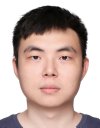
 Deliang Wei
· 2 previous affiliations
- Johns Hopkins UniversitySince 2025
- Postdoc · 2025–2027
- East China Normal University2015–2025
- PhD student · 2021–2025
- MS student · 2019–2021
- Undergrad student · 2015–2019
Research Overview
Deliang Wei focuses on computational imaging, plug-and-play methods, and the theoretical foundations of deep learning for inverse problems. His work bridges rigorous mathematical convergence guarantees with advanced neural priors, such as diffusion and score-based models. Recently, he has investigated accelerated optimization techniques and conservative vector fields to improve image reconstruction from noisy or incomplete data.
Research Trajectory
Deliang Wei’s research trajectory is defined by a consistent effort to reconcile the empirical power of deep learning with the rigorous mathematical guarantees required for reliable computational imaging and optimization. His early work addressed specific noise distributions and the stability of complex training dynamics. In 2023, he introduced a deep neural network approach in Nonconvex Rician noise removal via convergent plug-and-play framework. This work established a plug-and-play (PnP) framework tailored to Rician noise, providing mathematical proofs for the method's convergence properties. Concurrently, he investigated the optimization challenges inherent in training generative adversarial networks (GANs). Because GAN training is often formulated as a differential game, standard gradient descent on multiple objectives frequently fails to reach stable fixed points. To address this, he developed Efficient second-order optimization with predictions in differential games, an approach that updates only a portion of the Hessian matrix in each iteration, thereby improving learning dynamics while circumventing the enormous computational cost typically associated with full second-order methods.
Moving into 2024, his focus deepened on relaxing the restrictive constraints traditionally required to guarantee convergence in PnP methods. Historically, PnP frameworks force denoisers to be strictly non-expansive, which often sacrifices image restoration quality. He addressed this limitation by proposing Learning Pseudo-Contractive Denoisers for Inverse Problems. By introducing pseudo-contractive denoisers—a mathematically weaker constraint—and employing a training strategy based on complex analysis alongside the Ishikawa iteration process, he demonstrated that it is possible to preserve theoretical convergence while significantly boosting performance in tasks like deblurring and super-resolution. This contribution advanced the research direction of Provably Convergent Deep Learning for Inverse Problems. That same year, he contributed to DeepSPIM: Deep Semi-Proximal Iterative Method for Sparse-View CT Reconstruction with Convergence Guarantee. This work tackled the challenge of sparse-view computed tomography, where traditional model-based iterative reconstruction is computationally inefficient and standard learning-based methods lack interpretability. By introducing a carefully designed semi-proximal term to handle the CT system matrix, the DeepSPIM algorithm provided a highly efficient reconstruction pathway backed by formal convergence guarantees.
In 2025, he extended his work on constrained denoisers to handle signal-dependent noise models. He developed Learning Cocoercive Conservative Denoisers via Helmholtz Decomposition for Poisson Imaging Inverse Problems, introducing a novel class of "CoCo" denoisers. Poisson inverse problems, common in low-light and medical imaging, present tricky mathematical challenges. By utilizing Helmholtz Decomposition to strip away non-essential components of the denoiser, this approach relaxed strict non-expansiveness constraints while maintaining theoretical stability, contributing significantly to the broader area of Provably Convergent Learned Regularizers for Inverse Problems.
Most recently, in 2026, his research has expanded into accelerating these iterative processes. With collaborators, he developed the Restarted Inertia with Score-based Priors (RISP) framework in Provably Accelerated Imaging with Restarted Inertia and Score-based Image Priors. This research combines momentum (inertia) with a restart mechanism to achieve provably faster convergence rates—yielding substantial speedups—even when utilizing complex, non-convex deep learning models as image priors. This publication spans several interconnected research areas, including Accelerated Gradient Methods for Nonconvex Landscapes, Adaptive Momentum Resets for Accelerated Gradient Methods, Integrating Deep Neural Priors into Iterative Optimization, and Provable Acceleration of Momentum in Neural Optimization.
Current Directions
The most recent papers in the evidence address the intersection of accelerated optimization and generative priors for computational imaging. Recent work investigates how to systematically speed up iterative reconstruction algorithms without sacrificing theoretical guarantees, particularly when employing highly non-convex score-based or diffusion models as image priors. A major focus involves designing adaptive momentum and restart mechanisms that can navigate complex loss landscapes efficiently. Additionally, ongoing research explores specialized denoiser architectures—such as those leveraging Helmholtz decomposition—to handle signal-dependent noise models like Poisson distributions. Ultimately, these directions aim to bridge the gap between the empirical success of deep neural priors and the rigorous convergence requirements of classical inverse problem solvers.
Profile updated
| Title | Venue | Year |
|---|---|---|
| Provably Accelerated Imaging with Restarted Inertia and Score-based Image PriorsGitHub resource | ICLR | 2026 |
| Learning Cocoercive Conservative Denoisers via Helmholtz Decomposition for Poisson Imaging Inverse Problems | NeurIPS | 2025 |
| Low-Rank and Deep Plug-and-Play Priors for Missing Traffic Data Imputation | IEEE Trans. ITS | 2025 |
| DeepSPIM: Deep Semi-Proximal Iterative Method for Sparse-View CT Reconstruction with Convergence Guarantee | Csiam | 2024 |
| Spatiotemporal traffic data completion with truncated minimax-concave penalty | Transportation Research Part C: Emerging Technologies | 2024 |
| Learning Pseudo-Contractive Denoisers for Inverse ProblemsGitHub resourceGitHub resource | ICML | 2024 |
| Nonconvex Rician noise removal via convergent plug-and-play framework | Applied Mathematical Modelling | 2023 |
| Efficient second-order optimization with predictions in differential games | Optim. Methods Softw | 2023 |
| Cauchy Noise Removal via Convergent Plug-and-Play Framework with Outliers Detection | J. Sci. Comput | 2023 |
Loading new papers…
Other researchers whose papers cluster into the same research directions — a proxy for overlapping technical interests and shared intellectual neighborhoods.
See something wrong? Report a mistake