

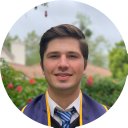
 Dekel Galor
· 6 previous affiliations
- U.S. National Science FoundationSince 2023
- Graduate Research Fellow · Since 2023
- University of California, BerkeleySince 2020
- PhD, Electrical Engineering and Computer Science · 2023–2028
- Graduate Research Assistant · Since 2023
- Current
- Research Staff · 2022–2023
- Undergraduate Research Assistant · 2021–2023
- Bachelor of Science - BS, Electrical Engineering and Computer Science · 2020–2022
- Graduate Research Fellow · Since 2024
- International Computer Science InstituteSince 2020
- PhD student · 2023–2028
- Researcher · 2022–2023
- Undergrad student · 2020–2022
- Research Intern · 2025
- Software Engineering Intern - Computational Biology · 2022
Research Overview
Dekel Galor focuses on computational imaging, neuromorphic computing, and the intersection of biological and artificial perception. His work bridges principles from neuroscience with modern machine learning to develop more efficient, brain-like inference algorithms and novel sensing systems. Currently, he investigates spiking neural networks and event-based vision to improve how autonomous systems interpret complex, dynamic environments.
Research Trajectory
Galor’s research trajectory bridges computational imaging and neuromorphic perception, exploring how insights from biological vision can inform artificial systems. His early computational work addressed human visual sensitivity in display engineering. In BiPMAP: a toolbox for predicting perceived motion artifacts on modern displays, he developed an interactive software toolbox to help designers model and mitigate issues like judder and flicker by incorporating parameters of human visual perception.
Expanding into novel sensor paradigms, Galor has investigated event-based vision systems. Event cameras excel at capturing fast motion but traditionally struggle with static scenes. To address this limitation, he contributed to Noise2Image: noise-enabled static scene recovery for event cameras, a method that leverages the inherent photon fluctuation noise in event sensors to reconstruct static scene intensity without requiring hardware modifications.
A major theme of Galor’s recent work is the unification of machine learning objectives with biological brain function. He has explored how the Evidence Lower Bound (ELBO)—equivalent to variational free energy in neuroscience—can guide the design of spiking neural networks. In A prescriptive theory for brain-like inference, he and his collaborators demonstrated that maximizing ELBO under Poisson assumptions leads to networks capable of Bayesian inference. This theoretical foundation was applied in the Poisson Variational Autoencoder, an architecture that combines predictive coding with a VAE to encode inputs into discrete spike counts, introducing a metabolic cost term analogous to biological systems.
Building on these principles, Galor introduced the FOND framework, which derives neural circuit dynamics directly from the first principles of variational inference. Detailed in the preprint Brain-like Variational Inference, this framework was used to develop the iterative Poisson Variational Autoencoder (iP-VAE). This model advances the research direction of Iterative Weight Sharing for Deep Recursive Refinement and explores the area of Training Neural Networks with Spatially Local Learning Rules. The iP-VAE achieves high sparsity and strong out-of-distribution generalization while remaining hardware-efficient. A subsequent peer-reviewed version, also titled Brain-like Variational Inference, further situated this work within the broader areas of Sparse Neural Coding via Competitive Activation and Divisive Normalization for Probabilistic Inference in Neural Circuits.
Most recently, Galor has combined his expertise in event-based cameras with computational sensing to extract high-fidelity audio from visual data. He developed Event2Audio: Event-Based Optical Vibration Sensing, a system that tracks laser speckle patterns with microsecond precision to reconstruct audio from microscopic surface vibrations. This contribution to the field of Optical Vibrometry for Contactless Sound and Signal Recovery enables near real-time audio recovery even in challenging underwater or echoing environments.
Current Directions
The most recent papers in the evidence indicate a dual focus on biologically plausible machine learning and advanced computational imaging. Galor continues to investigate how principles of variational inference can be mapped onto spiking neural networks to create highly efficient, sparse, and adaptive models that mirror biological perception. Concurrently, his work in event-based vision explores new modalities for passive and active sensing, such as using optical vibrometry to recover audio signals from visual data. Together, these directions aim to close the gap between how biological brains and artificial systems perceive and process complex environments.
Profile updated
Loading new papers…
Other researchers whose papers cluster into the same research directions — a proxy for overlapping technical interests and shared intellectual neighborhoods.
See something wrong? Report a mistake