

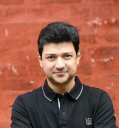
 Debdoot Mukherjee
6 previous affiliations
- Meesho2022–2025
- Principal Researcher · 2022–2025
- ShareChat2019–2022
- Vice President, AI · 2019–2022
- Hike messenger2015–2019
- Head of AI · 2015–2019
- Myntra2014–2015
- Lead Data Scientist, Manager · 2015
- Data Scientist · 2014–2015
- Researcher · 2008–2014
- Indian Institute of Technology Delhi2006–2008
- MS student · 2006–2008
- M.Tech., Computer Science & Engg.
Research Overview
Debdoot Mukherjee focuses on the intersection of information extraction, business process management, and the computational analysis of complex social networks. His work has evolved from developing structured models for enterprise document management to addressing fundamental challenges in global optimization and the multimodal analysis of social media platforms. Currently, his research involves modeling information diffusion and emotional contagion within dynamic, large-scale social graphs.
Research Trajectory
The early phase of Mukherjee’s research, spanning approximately 2009 to 2011, was primarily concerned with the challenges of Business Process Management (BPM) and the lifecycle of enterprise documentation. During this period, he addressed the difficulty of reconciling numerous and often fragmented process representations within large organizations. In Organizing Documented Processes, Mukherjee explored methods for grouping documented information into clusters based on inter-process similarity, a technique intended to facilitate search and transformation decisions in "as-is" or "to-be" business states.
This focus on structured representation led to the development of tools designed to automate the extraction of semantic data from unstructured enterprise assets. As the lead author of AHA: Asset Harvester Assistant, Mukherjee presented a system for extracting XML models from service delivery documents. This work highlighted the limitations of standard information extraction techniques when applied to the specific constraints of enterprise schemas and emphasized the need for model-based approaches to increase the reuse of information in asset repositories. This line of inquiry was further extended in From Model Extraction to Model-based Reuse of Enterprise Documents, which bridged the gap between initial data extraction and the practical application of those models in business environments.
Around 2020, Mukherjee’s research interests expanded into the theoretical and algorithmic foundations of search and network exploration. This transition involved addressing the "local optimum" problem in complex optimization landscapes. His work in Heavy-Tailed Stochastic Exploration for Global Optimization investigated methods to move beyond local peaks by utilizing search strategies that can navigate larger, more complex mountain ranges of data. Parallel to this, he explored the structural limitations of standard network traversal. In the context of Overcoming Locality Bias in Graph Exploration, he examined how traditional random walks often become trapped in dense local clusters, failing to capture the global architecture of massive networks like social graphs or web crawls.
Most recently, Mukherjee has applied these graph-theoretic and optimization principles to the domain of social media analytics. His work now encompasses the study of Cross Layer Random Walks in Multiplex Networks, recognizing that real-world systems consist of multiple, distinct layers of interaction rather than single-type connections. This perspective is central to his recent participation in large-scale studies of user behavior on short-video platforms, where he contributes to the modeling of affective states and information diffusion.
Current Directions
Mukherjee’s current work focuses on the computational estimation of social phenomena, such as emotion contagion, using deep learning and social network analysis. This research treats the spread of emotional states as a diffusion process within dynamic graphs, accounting for variables such as causality and homophily. A significant portion of his recent output involves the creation and analysis of large-scale, multimodal datasets that capture the complexity of modern social media content.
His participation in the development of the 3MASSIV: Multilingual, Multimodal and Multi-Aspect dataset of Social Media Short Videos reflects a shift toward understanding diverse audio-visual formats, including reaction videos and lip-synching, across multiple languages. This work provides a foundation for semantic understanding in contexts where traditional text-based analysis is insufficient.
Representative Work
In AHA: Asset Harvester Assistant, Mukherjee served as the primary author, establishing a framework for transforming unstructured enterprise documents into structured XML models. The paper identifies the specific hurdles of service enterprise documentation—such as the need for strict adherence to target schemas—and proposes an automated tool to facilitate the harvesting of these assets for future reuse.
The paper Organizing Documented Processes represents a key contribution to the field of Business Process Management. As the second author, Mukherjee developed methods to reconcile disparate process documentations, allowing enterprises to identify similarities across vast requirement sets. This work was foundational for subsequent efforts in From Model Extraction to Model-based Reuse of Enterprise Documents, where he continued to refine the pipeline from raw document extraction to the implementation of reusable business models.
Mukherjee also contributed to the development of collaborative systems for requirements gathering. In Consultant assistant: a tool for collaborative requirements gathering and business process documentation, he participated in the design of a web-based tool that allowed consultants to reuse components from industry-specific hierarchies and collaboratively author requirements. This work emphasized the practical application of model-based approaches in professional consulting environments.
In the more recent Estimating Emotion Contagion on Social Media via Localized Diffusion in Dynamic Graphs, Mukherjee participated in a study that combined psychology literature with computational modeling. The research estimates the degree to which a perceiver's emotional state aligns with an expressor's content on a short-video platform. By modeling this as a diffusion process, the work addresses complex social factors like interference and homophily in a dynamic network environment.
Finally, his involvement in the 3MASSIV: Multilingual, Multimodal and Multi-Aspect dataset of Social Media Short Videos project demonstrates a commitment to building the infrastructure necessary for modern social media research. The dataset, comprising 50,000 expertly annotated short videos in 11 languages, enables the study of affective states and media types in unique audio-visual formats, reflecting the current complexity of global digital communication.
Profile updated
Loading new papers…
Other researchers whose papers cluster into the same research directions — a proxy for overlapping technical interests and shared intellectual neighborhoods.
See something wrong? Report a mistake