

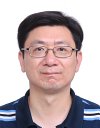
 Daxin Jiang
· 4 previous affiliations
- StepFun AI (China)Since 2023
- CEO · Since 2023
- Current
- Microsoft (United States)2007–2023
- Researcher/Scientist · 2007–2023
- Nanyang Technological University2005–2006
- Assistant Professor · 2005–2006
- PhD student · 2000–2005
Research Overview
Daxin Jiang focuses on multimodal representation learning, large language model architecture, and information retrieval. His trajectory spans early work in data mining and query suggestion to extensive contributions in cross-lingual and cross-modal pre-training. Recently, his research addresses the scaling, reinforcement learning, and reasoning capabilities of generative models, alongside advanced visual synthesis and web information extraction.
Research Trajectory
Jiang’s early research focused on data mining and search engine optimization. He developed methods for extracting patterns from complex datasets, such as Mining coherent gene clusters from gene-sample-time microarray data (2004), which identified subsets of genes and samples that remain coherent over time. Shifting toward web search, he contributed to Context-aware query suggestion by mining click-through and session data (2008), proposing a model that leverages immediately preceding queries and concept sequence suffix trees to improve search engine usability and address data sparseness.
By 2019, his focus had shifted to large-scale representation learning across languages and modalities. In the area of Hierarchical Alignment for Cross-Lingual Representation Learning, he participated in the development of Unicoder: A Universal Language Encoder by Pre-training with Multiple Cross-lingual Tasks (2019), advancing the broader direction of Cross-Lingual Transfer for Low-Resource Language Adaptation. Extending this universal encoding approach to vision, he led work on Unicoder-VL: A Universal Encoder for Vision and Language by Cross-Modal Pre-Training (2020), which treats image regions as visual tokens to achieve joint representations, contributing to the field of Cross-Modal Masked Reconstruction. Concurrently, he explored the intersection of natural and programming languages. He was part of the team that introduced CodeBERT: A Pre-Trained Model for Programming and Natural Languages (2020), a model in the direction of Aligning Code Semantics Through Intermediate Representations. This was followed by GraphCodeBERT: Pre-training Code Representations with Data Flow (2021), which incorporated semantic-level data flow structures to enhance code understanding rather than relying solely on syntactic abstract syntax trees.
His research then expanded into conversational systems, visual synthesis, and advanced retrieval architectures. In the domain of Unified Models for Conversational Recommendation, he co-authored RecInDial: A Unified Framework for Conversational Recommendation with Pretrained Language Models (2022), integrating item recommendation directly into dialogue generation using vocabulary pointers. In visual synthesis, he contributed to NÜWA: Visual Synthesis Pre-training for Neural visUal World creAtion (2022), a 3D transformer framework utilizing a nearby attention mechanism for both image and video manipulation. Returning to search architectures, he directed the development of LED: Lexicon-Enlightened Dense Retriever for Large-Scale Retrieval (2023), which injects keyword-matching precision into dense retrieval models via weakened knowledge distillation, advancing the area of Unified Dense-Sparse Hybrid Retrieval.
In recent years, Jiang's work has heavily emphasized multimodal agents, video generation, and the scaling of large language models. He oversaw the creation of GUI Exploration Lab: Enhancing Screen Navigation in Agents via Multi-Turn Reinforcement Learning (2025), a simulation engine that trains agents to navigate complex, unseen software interfaces. In generative media, he led the development of Step-Video-TI2V Technical Report: A State-of-the-Art Text-Driven Image-to-Video Generation Model (2025), a 30-billion parameter model featuring explicit motion score conditioning. He also guided research on STORYANCHORS: Generating Consistent Multi-Scene Story Frames for Long-Form Narratives (2025), which uses a bidirectional generator to maintain character identity across sequences, and Step1X-Edit: A Practical Framework for General Image Editing (2025), integrating multimodal large language models with diffusion transformers for high-fidelity image manipulation.
Addressing the fundamental mechanics of language models, he directed the formulation of Farseer: A Refined Scaling Law in Large Language Models (2025), which improves performance predictions by modeling the interplay between model size and data volume. He also led the design of StreamRL: Scalable, Heterogeneous, and Elastic RL for LLMs with Disaggregated Stream Generation (2025), an architecture that decouples generation and training to eliminate pipeline bottlenecks in reinforcement learning. Further investigating multimodal comprehension, his team introduced M-DocSum: Do LVLMs Genuinely Comprehend Interleaved Image-Text in Document Summarization? (2025), a benchmark and targeted training approach for complex document summarization.
In 2026, he participated in Random Policy Valuation is Enough for LLM Reasoning with Verifiable Rewards, which demonstrated that evaluating a fixed, uniform random policy can achieve strong performance and diversity in LLM math tasks without complex iterative loops. He also led a comparative study, Mixture-of-Experts Can Surpass Dense LLMs Under Strictly Equal Resource (2026), proving the architectural efficiency of MoEs under tight constraints. Finally, he directed WIERT: Web Information Extraction via Render Tree (2026), which leverages render trees combining DOM and CSS object models to efficiently exploit visual cues for web document understanding.
Current Directions
The most recent papers in the evidence highlight three primary research themes:
Scaling and Architecture of Large Language Models: Recent work investigates the fundamental scaling laws and architectural efficiencies of LLMs. This includes refining performance predictions by accounting for the interplay between model size and data volume, as well as demonstrating that Mixture-of-Experts (MoE) architectures can outperform dense models when total parameters, compute, and data are held strictly equal. Additional efforts focus on optimizing reinforcement learning for LLMs, such as disaggregating stream generation to eliminate pipeline bottlenecks and simplifying RL for reasoning tasks by using random policy valuation.
Advanced Multimodal Generation and Editing: Another major focus is high-fidelity visual synthesis. Recent projects address the generation of temporally consistent, multi-scene story frames for long-form narratives and the development of massive text-driven image-to-video models with explicit motion control. This extends to practical frameworks for general image editing that integrate multimodal language models with diffusion transformers to improve instruction following.
Complex Document and Interface Understanding: Recent research also addresses how models interact with complex visual and structural information. This involves training agents via multi-turn reinforcement learning to navigate unseen graphical user interfaces, evaluating the ability of large vision-language models to summarize multi-page documents with interleaved text and images, and extracting web information more efficiently by leveraging visual render trees.
Profile updated
Loading new papers…
Other researchers whose papers cluster into the same research directions — a proxy for overlapping technical interests and shared intellectual neighborhoods.
See something wrong? Report a mistake