

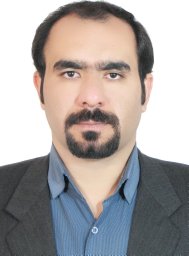
 Davood Hajinezhad
· 6 previous affiliations
- SAS Institute (United States)Since 2018
- Researcher · Since 2018
- Fidelity Investments (United States)Since 2022
- Data Science Director · Since 2022
- Current
- SAS2018–2022
- Machine Learning Scientist · 2018–2022
- Duke University2017–2018
- Postdoctoral Associate · 2018
- Postdoc · 2017–2018
- Iowa State University2013–2017
- Research Assistant · 2015–2017
- Doctor of Philosophy (PhD), Industrial Engineering · 2013–2017
- Graduate Teaching Assistant · 2013–2015
- Isfahan University of Technology2006–2009
- Master's degree, Applied Mathematics (Optimization) · 2006–2009
Research Overview
Davood Hajinezhad focuses on distributed nonconvex optimization, automated learning for medical applications, and reinforcement learning systems. His early trajectory centered on developing primal-dual splitting methods for large-scale stochastic optimization over networks. More recently, his focus has shifted toward applied machine learning, addressing complex domain-specific challenges such as radiation therapy dose distribution and urban traffic signal control.
Research Trajectory
Davood Hajinezhad’s research trajectory begins with foundational work in mathematical optimization, specifically addressing the algorithmic challenges of distributed and stochastic learning. In 2016, he was the lead author on NESTT: A Nonconvex Primal-Dual Splitting Method for Distributed and Stochastic Optimization. This work tackled complex objective functions comprising a sum of nonconvex smooth functions alongside a nonsmooth regularizer. By utilizing an augmented Lagrangian-based primal-dual scheme and introducing a specialized non-uniform sampling technique, the NESTT algorithm split the problem into manageable subproblems. This approach allowed the system to achieve an $\epsilon$-stationary solution with significantly fewer gradient evaluations than standard proximal gradient descent methods, demonstrating a Q-linear convergence rate under certain conditions.
Continuing this focus on distributed systems, Hajinezhad contributed to Prox-PDA: The Proximal Primal-Dual Algorithm for Fast Distributed Nonconvex Optimization and Learning Over Networks in 2017. This research provided mechanisms for network nodes to collaboratively solve nonconvex optimization problems without relying on a centralized parameter server. This era of his work aligns closely with the broader research direction of Decentralized Optimization for Heterogeneous Peer to Peer Networks, addressing the communication bottlenecks and structural challenges inherent in large-scale machine learning architectures. During this period, his research profile also intersected with themes such as Zeroth Order Stochastic Optimization, the related area of Memory Efficient Fine-Tuning via Zeroth-Order Optimization, and work in the area of Randomized Smoothing for Zeroth Order Optimization, reflecting a sustained interest in optimizing complex, resource-constrained systems where traditional gradient information may be unavailable or computationally prohibitive.
By 2021, Hajinezhad’s published work demonstrated a distinct shift toward applied machine learning, utilizing advanced neural architectures to solve highly specific, domain-intensive problems. He was the lead author on Automated Learning of Radiation Therapy Dose Distribution for Head and Neck Cancer, which addressed the computational and practical bottlenecks in external beam radiation therapy. Traditional 3D dose optimization requires iterative, time-intensive adjustments by expert human planners to maximize tumor prescription doses while strictly sparing surrounding healthy organs at risk. Hajinezhad’s work aimed to automate this procedure, reducing institutional variability and capturing expert heuristics through machine learning to generate practical clinical treatment plans more efficiently.
In the same year, he participated as a co-author in the development of AttendLight: Universal Attention-Based Reinforcement Learning Model for Traffic Signal Control. This work contributed to the research direction of Coordinating Interconnected Traffic Networks. Moving away from rigid, fixed-time heuristics that fail to adapt to the stochastic ebbs and flows of city traffic, the project proposed an end-to-end reinforcement learning algorithm capable of generalizing across different intersection structures. By incorporating dual attention models—one to handle varying numbers of roads and lanes, and another to enable decision-making across different traffic phases—the research provided a universal approach to traffic flow distribution that does not require retraining for every new intersection. This work also touches upon the broader area of Bridging the Value and Policy Divide in Reinforcement Learning, applying deep RL techniques to dynamic, real-world environments.
Current Directions
Based on the most recent papers in the evidence from 2021, Hajinezhad’s current research directions center on the practical deployment of deep learning and reinforcement learning in complex, real-world environments. Rather than focusing strictly on the theoretical optimization bounds and distributed algorithms of his earlier career, recent work investigates how automated systems can replace or augment human expertise in high-stakes physical domains.
A primary focus is the application of predictive modeling to healthcare, specifically in automating clinical treatment plans to improve efficiency and consistency in radiation therapy. Concurrently, his recent collaborative work explores adaptive, learning-based agents for urban infrastructure. By leveraging attention mechanisms within reinforcement learning frameworks, this direction seeks to create universal models that can dynamically adapt to the stochastic nature of city traffic without requiring intersection-specific retraining. Together, these areas highlight a broader interest in building robust, generalizable machine learning systems capable of handling the structural variability of physical-world tasks.
Profile updated
Loading new papers…
Other researchers whose papers cluster into the same research directions — a proxy for overlapping technical interests and shared intellectual neighborhoods.
See something wrong? Report a mistake