

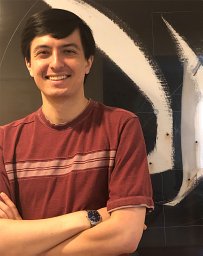
 Davis Wertheimer
· 6 previous affiliations
- Researcher · Since 2022
- IBMSince 2022
- AI Research Scientist · Since 2022
- Advisory Software Engineer · 2014
- Cornell University2016–2022
- Graduate Student Researcher · 2017–2022
- Doctor of Philosophy - PhD, Computer Science · 2016–2022
- Graduate Teaching Assistant · 2016
- Cornell Tech2016–2022
- PhD student · 2016–2022
- Stanford University2012–2016
- Undergrad student · 2012–2016
- Bill Lane Center for the American West2013–2014
- Research Assistant · 2013–2014
Research Overview
Davis Wertheimer focuses on efficient large language model architectures, few-shot visual understanding, and robust generalization under constrained data. His early work investigated how neural models adapt to new domains with limited supervision, particularly in fine-grained computer vision tasks. More recently, his research addresses the computational bottlenecks of deploying large-scale foundation models, emphasizing speculative decoding and context length extension.
Research Trajectory
Davis Wertheimer’s early research, conducted during his doctoral studies at Cornell University, centered on the challenge of training machine learning models to recognize novel concepts from very few examples. In 2019, he introduced Few-Shot Learning With Localization in Realistic Settings, which addressed the gap between artificial few-shot benchmarks and the heavy-tailed, cluttered distributions encountered in the real world. By evaluating models on a new "meta-iNat" benchmark, this work demonstrated that standard few-shot methods struggle in realistic conditions and proposed parameter-free improvements to localization and training procedures. This research contributed to the broader area of Prototype Based Classification in Embedding Spaces and the research direction of Overcoming the Uniformity Bias in Transductive Few-Shot Learning.
In 2020, he collaborated on Revisiting Pose-Normalization for Fine-Grained Few-Shot Recognition, demonstrating that localizing semantic parts provides critical invariance to pose, articulation, and background. With a minimal increase in model capacity, this pose-normalized representation yielded substantial accuracy improvements. This advanced research in areas such as Addressing Overfitting in Few-Shot Learning and the domain of Unsupervised Part Discovery for Fine-Grained Recognition, while also touching on the direction of Structural Inductive Biases for Data Efficient Learning.
Continuing the theme of data-efficient generalization, he developed Augmentation-Interpolative AutoEncoders for Unsupervised Few-Shot Image Generation (2020). This work leveraged the inherent generalization properties of autoencoders to synthesize realistic images of novel objects from minimal reference data, introducing a training procedure based on recovering images from data augmentations.
In 2021, he reformulated few-shot classification as a latent space reconstruction problem with Few-Shot Classification With Feature Map Reconstruction Networks. By regressing directly from support features to query features in closed form, this approach avoided the need for large-scale learnable parameters, improving both performance and computational efficiency across multiple fine-grained benchmarks. He further investigated the robustness of these systems in Diagnosing and Remedying Shot Sensitivity with Cosine Few-Shot Learners (2022). This paper identified and mitigated a critical flaw in deployment scenarios: the severe performance degradation that occurs when models trained for a specific number of examples encounter a different number of examples at test time.
Broadening his focus on robustness beyond computer vision, he participated in the development of SudokuSens: Enhancing Deep Learning Robustness for IoT Sensing Applications using a Generative Approach (2023). This framework generated synthetic training data to mimic unseen experimental configurations, improving model reliability in Internet-of-Things environments where data collection is expensive and object signatures are often entangled with dynamic environmental disturbances.
Transitioning to large-scale natural language processing, his subsequent work at IBM Watson Research Center began to address the computational constraints of deploying foundation models. In 2024, he introduced Accelerating Production LLMs with Combined Token/Embedding Speculators. This research developed an enhanced speculative decoding architecture featuring a multi-stage MLP speculator that conditions draft token predictions on both context vectors and previously sampled tokens. While achieving significant inference acceleration in production environments, the study also mapped the critical boundaries where these speedups diminish under heavy computational workloads and large batch sizes.
Current Directions
The most recent papers in the evidence address the architectural bottlenecks and context limitations of large language models, alongside scalable optimization techniques for modern hardware. A major focus is extending the effective context window of foundation models without requiring extensive retraining. In Frayed RoPE and Long Inputs: A Geometric Perspective (2026), he investigated the failure modes of Rotary Positional Embeddings (RoPE) on long sequences, revealing that standard RoPE destroys the geometric separation between key and query clusters. To resolve this, the work proposed a targeted high-frequency rotation modification that preserves attention sink mechanisms, allowing models to generalize to longer contexts out of the box.
He also contributed to research on emerging hybrid architectures in From Collapse to Control: Understanding and Extending Context Length in Emerging Hybrid Models via Universal Position Interpolation (2026). This work explores how interleaving the quadratic attention of Transformers with the linear recurrence of State-Space Models (SSMs) can maintain high performance while significantly reducing inference costs.
In parallel, he directs research on hardware-aware optimization algorithms. Guiding this line of inquiry, he oversaw the development of FlashSinkhorn: IO-Aware Entropic Optimal Transport on GPU (2026). Borrowing the IO-aware philosophy of FlashAttention, this solver reframes Sinkhorn updates as biased dot-product attention to achieve substantial speedups and linear memory scaling, making large-scale distribution matching practical on modern hardware.
Profile updated
Loading new papers…
Other researchers whose papers cluster into the same research directions — a proxy for overlapping technical interests and shared intellectual neighborhoods.
See something wrong? Report a mistake