

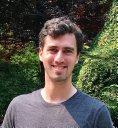
 David Wadden
· 5 previous affiliations
- Google (United States)Since 2024
- Researcher · Since 2024
- Research Intern · 2021
- Google DeepMind (United Kingdom)Since 2024
- Research Scientist · Since 2024
- Research Scientist · 2023–2024
- Research Intern · 2019–2020
- University of Washington2016–2023
- Graduate Research Assistant · 2016–2023
- Doctor of Philosophy (Ph.D.), Computer Science · 2016–2022
- Amherst College2006–2010
- Bachelor’s Degree, Physics · 2006–2010
Research Overview
David Wadden focuses on natural language processing, automated scientific fact-checking, and retrieval-augmented generation. His trajectory spans foundational work in information extraction to the development of specialized language models capable of synthesizing complex scientific literature. Currently, his research addresses instruction following and tool use in large language models to improve factual attribution and reasoning.
Research Trajectory
Early work concentrated on the area of Span Level Representations for Structured Information Extraction. He introduced the DYGIE framework in A general framework for information extraction using dynamic span graphs, which utilized dynamic span graphs to improve joint information extraction. This architecture was expanded in Entity, Relation, and Event Extraction with Contextualized Span Representations, further refining how models capture interdependent extraction tasks by leveraging contextualized span representations.
Transitioning into domain-specific natural language processing, he began addressing the verification of scientific claims. In Fact or Fiction: Verifying Scientific Claims, he established methods for assessing the veracity of statements against scientific literature. During this period, he also explored broader applications of text analysis, such as measuring the impact of community moderation on user engagement and psychological safety in The Effect of Moderation on Online Mental Health Conversations. Returning to scientific domains, he contributed to Scientific Language Models for Biomedical Knowledge Base Completion: An Empirical Study, which demonstrated how specialized language models could predict missing relationships in biomedical knowledge graphs, particularly for novel or emerging entities.
The focus on scientific verification deepened with a suite of systems designed to handle the complexity of academic literature. He participated in the development of MultiVerS: Improving scientific claim verification with weak supervision and full-document context, a multitask learning framework that leveraged long-document encoders to verify claims using full research abstracts rather than isolated sentences. Recognizing the limitations of closed-domain evaluation, he helped introduce a benchmark for open-domain verification in SciFact-Open: Towards open-domain scientific claim verification, highlighting the performance drop when models are applied to a large corpus of uncurated abstracts. To address the bottleneck of expensive expert annotations in this space, he developed CLAIMGEN and KBIN in Generating Scientific Claims for Zero-Shot Scientific Fact Checking, tools that automatically transform complex scientific sentences into verifiable claims to train fact-checking models without manual labels.
In parallel with his work on language models, he investigated the dynamics of scientific publishing. Contributing to the research direction of The Erosion of Double Blind Review by Preprints, he co-authored Estimating the Causal Effect of Early ArXiving on Paper Acceptance. This study applied techniques from the broader area of Empirical Calibration for Robust Observational Causal Inference to estimate how releasing a preprint before peer review impacts a paper's likelihood of acceptance. Simultaneously, his natural language processing research shifted toward improving the transparency of generative models. In Source-Aware Training Enables Knowledge Attribution in Language Models, he and his collaborators introduced a method that trains large language models to associate generated knowledge with specific document identifiers, enabling intrinsic source citation.
His recent trajectory emphasizes the evaluation and enhancement of large language models in expert domains. To systematically measure model errors, he participated in creating HALoGEN: Fantastic LLM Hallucinations and Where to Find Them, a comprehensive benchmark and verification suite for generative models across domains like programming and scientific attribution. Advancing work in the area of Iterative Clarification for Robust Instruction Following, he led the development of SciRIFF: A Resource to Enhance Language Model Instruction-Following over Scientific Literature. This dataset of expert-written instructions significantly improved the ability of models to handle complex, long-context tasks with structured outputs. Culminating this arc, he introduced OpenScholar in Synthesizing scientific literature with retrieval-augmented language models. This open-source retrieval-augmented generation system combines a massive data store with iterative self-feedback, contributing to the direction of Automated Knowledge Synthesis from Scientific Literature and addressing challenges in The Information Bottleneck of Scientific Abstracts by improving citation factuality and expert preference over proprietary models.
Current Directions
The most recent papers in the evidence indicate a strong focus on retrieval-augmented generation and the specialization of large language models for expert scientific tasks. Current work investigates how to ground generative models in authoritative literature to prevent hallucinations and ensure accurate, verifiable citations. This involves building large-scale, open-source systems that integrate massive academic data stores with iterative self-correction mechanisms. Additionally, ongoing research addresses the challenge of instruction following in highly technical domains, exploring how expert-annotated datasets can train models to synthesize complex, full-document contexts rather than relying solely on abstracts or general-domain knowledge.
Profile updated
Loading new papers…
Other researchers whose papers cluster into the same research directions — a proxy for overlapping technical interests and shared intellectual neighborhoods.
See something wrong? Report a mistake