

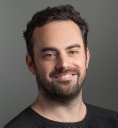
 David van Dijk
· 1 previous affiliation
- Yale UniversitySince 2019
- Assistant Professor · Since 2019
Research Overview
David van Dijk focuses on artificial intelligence for biomedicine, developing large-scale foundation models and neural operators to decode complex biological systems. His trajectory spans from single-cell transcriptomics and continuous dynamical systems to multimodal architectures for genomic and neural signals. Most recently, he investigates the theoretical foundations of reasoning and generative modeling in complex environments.
Research Trajectory
van Dijk's early work established foundational methods for analyzing complex biological data, particularly in single-cell transcriptomics. In 2020, he contributed to Disease state prediction from single-cell data using graph attention networks, applying graph-based architectures to clinical prediction. This interest in cellular dynamics led to TrajectoryNet: A Dynamic Optimal Transport Network for Modeling Cellular Dynamics, which advanced the research direction of Unbalanced Transport for Population Dynamics by modeling continuous latent trajectories of cross-sectional population measurements over time. Continuing to leverage graph structures for biomedical insights, he co-authored Gaining Insight into SARS-CoV-2 Infection and COVID-19 Severity Using Self-supervised Edge Features and Graph Neural Networks in 2021. This work utilized self-supervised edge features and Set Transformers to decode the molecular landscape of COVID-19, contributing to the broader area of Structural Attribution in Graph Neural Networks.
By 2023, his research expanded into continuous spatiotemporal systems and operator learning, bridging deep learning with numerical analysis. He directed the development of Operator Learning Meets Numerical Analysis: Improving Neural Networks through Iterative Methods, which provided a rigorous mathematical framework for iterative inference in neural networks. Concurrently, he introduced the Continuous Spatiotemporal Transformer, a model incorporating Sobolev space optimization to ensure smooth, continuous outputs for tasks ranging from fluid dynamics to brain imaging. This focus on continuous mathematics was further developed in Learning integral operators via neural integral equations (2024), which explored neural architectures for learning integral operators directly from data.
In 2024, van Dijk scaled these insights to build domain-specific foundation models for biology and neuroscience. He oversaw Cell2Sentence: Teaching Large Language Models the Language of Biology, a framework that transforms single-cell gene expression profiles into sequences that can be processed by standard language models for tasks like cell generation and annotation. Simultaneously, he led the creation of BrainLM: A foundation model for brain activity recordings. Trained on thousands of hours of fMRI data, this model predicts clinical variables and forecasts brain states without explicit supervision, advancing research areas such as Scaling Laws for Neural Foundation Models, Multimodal Foundation Models for Unified Brain Representation, and Masked Signal Reconstruction for Neural Foundation Models.
His work in 2025 pushed the boundaries of both operator learning and the theoretical foundations of artificial intelligence. He introduced COAST: Intelligent Time-Adaptive Neural Operators, a framework that integrates causal attention with adaptive time stepping to model complex spatiotemporal dynamics more efficiently without accumulating errors. Exploring the emergence of reasoning capabilities, he authored Intelligence at the Edge of Chaos, demonstrating that pretraining language models on complex elementary cellular automata enables them to develop generalizable strategic abilities. In the domain of generative modeling, he contributed to Non-Markovian Discrete Diffusion with Causal Language Models, which relaxed traditional Markovian constraints to allow diffusion models to retain generative history for more robust text generation.
Moving into 2026, van Dijk's research has increasingly focused on non-autoregressive generation and structured reasoning. He developed STRIDE: Post-Training LLMs to Reason and Refine Bio-Sequences via Edit Trajectories, which trains models to emit explicit edit trajectories rather than generating sequences directly, significantly improving optimization for proteins and small molecules. He also introduced Learning Permutation Distributions via Reflected Diffusion on Ranks, creating a continuous latent space of "soft ranks" to model permutations efficiently. Additionally, he collaborated on Variational Learning for Insertion-based Generation, exploring non-monotonic, insertion-based approaches to sequence generation that mimic how humans iteratively refine designs. Expanding on learning paradigms and agentic problem solving, van Dijk co-authored AutoHebb: Self-Modifying Neural Networks that Zero-Shot Infer and Continually Learn, introducing autonomous Hebbian networks that combine neuromodulated local plasticity with meta-learning for zero-shot inference and continual learning. He also contributed to multi-agent and code intelligence frameworks, collaborating on MoRSE: Task-Oriented Multi-Agent System with Mixture of Role-Subtask Experts to specialize agents across role-subtask DAG structures and modular LoRA experts, as well as CoReMem: Cost-Internalizing Memory for Successive Coding Tasks with Prospective Valuation, which adaptively values repository memory anchors under execution and step-cost constraints.
Current Directions
The most recent papers in the evidence address the limitations of standard left-to-right autoregressive generation, particularly in scientific and design domains. Recent work investigates non-monotonic generation strategies, such as insertion-based modeling and explicit edit trajectories, to better capture the iterative nature of biological sequence design. Furthermore, ongoing research explores continuous relaxations of discrete combinatorial problems—such as lifting rankings into continuous diffusion spaces—to enable more efficient optimization and reasoning over complex, structured data.
Profile updated
Loading new papers…
Other researchers whose papers cluster into the same research directions — a proxy for overlapping technical interests and shared intellectual neighborhoods.
See something wrong? Report a mistake