

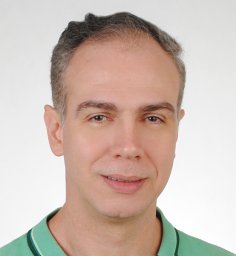
 David Menotti
· 7 previous affiliations
- Universidade Federal do ParanáSince 2015
- Full Professor · Since 2024
- Associate Professor · 2015–2024
- Universidade Federal de Ouro Preto2008–2014
- Assistant Professor · 2008–2014
- Postdoc · 2013–2014
- Universidade Federal de Minas Gerais2004–2008
- PhD student · 2004–2008
- Université Paris-Est Marne-la-Vallée2005–2007
- Doctor of Philosophy - PhD, Computer Science · 2005–2007
- Université Gustave Eiffel2005–2007
- PhD student · 2005–2007
- MS student · 2001–2003
Research Overview
David Menotti focuses on computer vision and pattern recognition, with specific emphasis on automatic license plate recognition, biometrics, and efficient object detection. His trajectory spans from early feature extraction techniques using partial least squares to the development of deep learning architectures for noisy character recognition and super-resolution. Recently, his research has expanded to address open-set face recognition and zero-shot action recognition in video environments.
Research Trajectory
In the early 2010s, Menotti's work emphasized efficient feature extraction and object detection using traditional machine learning techniques. As a senior author, he led research into Hyperspectral image interpretation based on partial least squares, extending morphological profiles to encode both spatial and spectral information to improve discriminative feature selection in remote sensing. During this period, he also participated in collaborative efforts to reduce the computational cost of pedestrian detection using partial least squares cascades.
Concurrently, Menotti established a long-term research agenda in Automatic License Plate Recognition (ALPR). His early contributions focused on optimizing detection pipelines, such as in An Adaptive Vehicle License Plate Detection at Higher Matching Degree, which improved computational efficiency by combining single-scale sliding window searches with multi-scale local refinement. He also contributed to the broader research direction of Temporal Aggregation for Robust Video Inference by exploring how temporal redundancy across sequential video frames could mitigate noise and improve recognition rates over single-frame analysis.
In the late 2010s, Menotti's research transitioned toward deep learning architectures to handle increasingly complex and degraded visual inputs. He directed work on Noisy Character Recognition Using Deep Convolutional Neural Networks, addressing the challenges of low-quality images in natural scenes and CAPTCHAs through filter learning and architecture optimization. This focus on robust, end-to-end systems culminated in An Efficient and Layout-Independent Automatic License Plate Recognition System Based on the YOLO detector. In this highly optimized pipeline, his team unified license plate detection and layout classification, utilizing extensive data augmentation to maintain real-time processing speeds and high accuracy across diverse environmental conditions.
Moving into the 2020s, Menotti expanded his focus to biometrics and image reconstruction. He led investigations into Open-set Face Recognition for Small Galleries Using Siamese Networks, tackling the practical security challenge of identifying individuals when not all faces are known during the training phase. Returning to the challenges of low-resolution surveillance data, he also directed Combining Attention Module and Pixel Shuffle for License Plate Super-Resolution. This work integrated transformer-based attention mechanisms with techniques from the broader area of Pixel Shuffling and Interpolation for Artifact Free Upsampling to reconstruct legible characters from severely degraded inputs, utilizing a custom loss function based on recognition predictions.
Current Directions
The most recent papers in the evidence indicate a shift toward complex video understanding and zero-shot learning paradigms. His 2025 work surveys the landscape of zero-shot action recognition in videos, addressing the fundamental bottleneck of collecting and annotating large-scale video datasets. This suggests an ongoing interest in developing models capable of classifying unseen events and actions without explicit training examples. Broadly, Menotti's current research continues to bridge the gap between theoretical computer vision and practical deployment, particularly focusing on systems that must operate reliably in environments characterized by limited training data or low-quality visual inputs.
Profile updated
Loading new papers…
Other researchers whose papers cluster into the same research directions — a proxy for overlapping technical interests and shared intellectual neighborhoods.
See something wrong? Report a mistake