

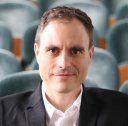
 David J. Crandall
· 1 previous affiliation
- Indiana UniversitySince 2010
- Full Professor · Since 2021
- Associate Professor · 2016–2021
- Assistant Professor · 2010–2016
Research Overview
David J. Crandall focuses on computer vision, multimodal learning, and egocentric video analysis. His early work explored object detection and the organization of large-scale social image collections using geospatial and temporal metadata. More recently, his research investigates first-person visual perception, video-and-language pretraining, and the use of state-change counterfactuals for procedural video understanding.
Research Trajectory
Crandall's early research addressed foundational challenges in computer vision, particularly in object detection under unconstrained conditions. In Robust Color Object Detection Using Spatial-Color Joint Probability Functions (2004), he introduced an algorithm to detect compound color objects from a single model image by leveraging spatial-color joint probability functions. As digital photography and photo-sharing platforms expanded, his focus broadened to the organization and analysis of large-scale social image collections. Rather than relying solely on visual features or simple tag co-occurrence, he explored the geographic and temporal patterns of social media metadata in Beyond co-occurrence: discovering and visualizing tag relationships from geo-spatial and temporal similarities (2012). This line of inquiry continued with Multimodal Learning in Loosely-Organized Web Images (2014), where he and his collaborators proposed a latent Conditional Random Field framework to handle noisy and sparse metadata, contributing to the research direction of Bridging the Gap Between Pixels and Semantic Meaning. He subsequently scaled these concepts to categorize nearly two million unconstrained consumer photos in Recognizing Landmarks in Large-Scale Social Image Collections (2016).
By the mid-2010s, Crandall began extensively investigating egocentric (first-person) vision, a domain characterized by unique framing biases and natural viewing tendencies. A major challenge in this space is distinguishing the camera wearer's body parts from those of others. In This Hand Is My Hand: A Probabilistic Approach to Hand Disambiguation in Egocentric Video (2014), he participated in developing a probabilistic framework that models paired interactions using spatial, temporal, and appearance constraints. This was followed by Lending A Hand: Detecting Hands and Recognizing Activities in Complex Egocentric Interactions (2015), which utilized Convolutional Neural Networks to locate hands and generate high-quality bounding boxes for activity recognition in complex social scenarios.
His work in egocentric vision naturally intersected with the challenge of coordinating multiple camera perspectives. In Identifying First-Person Camera Wearers in Third-Person Videos (2017), Crandall and colleagues proposed a semi-Siamese Convolutional Neural Network to establish person-level correspondences across first- and third-person videos, a problem complicated by the fact that the camera wearer is invisible in their own footage. This work advanced methods in the area of Deep Metric Learning with Triplet Loss and touched upon the emerging field of Egocentric Motion as a Biometric Signature. He further expanded on cross-view coordination in Joint Person Segmentation and Identification in Synchronized First- and Third-Person Videos (2018), developing techniques to produce pixel-level segmentations and identify corresponding individuals across heterogeneous, synchronized camera networks.
Concurrently, Crandall explored how machine learning models generate predictions and process data. In Stochastic Multiple Choice Learning for Training Diverse Deep Ensembles (2016), he contributed to a stochastic gradient descent approach that trains deep network ensembles to produce multiple highly likely hypotheses rather than a single output. He also addressed the lack of variety in visually-grounded natural language generation in Diverse Beam Search for Improved Description of Complex Scenes (2018), advancing the research direction of Overcoming Hypothesis Redundancy in Sequence Decoding. Looking to biological systems for efficient data sampling strategies, he co-authored Toddler-Inspired Visual Object Learning (2018), which used head-mounted cameras and eye trackers on children to approximate naturalistic training data collection. He also investigated data scarcity in fine-grained classification, proposing a meta-learning framework to bridge the domain gap between synthetic and real images in Meta-Reinforced Synthetic Data for One-Shot Fine-Grained Visual Recognition (2019).
In recent years, Crandall has continued to push the boundaries of egocentric biometrics and multimodal video understanding. Returning to the problem of identifying camera wearers, his research group systematically studied whether the appearance and motion of hands alone could serve as a biometric identifier in Whose hand is this? Person Identification from Egocentric Hand Gestures (2023). He has also contributed to foundational models for multimodal tasks, such as the architecture detailed in VindLU: A Recipe for Effective Video-and-Language Pretraining (2023). Most recently, in What Changed and What Could Have Changed? State-Change Counterfactuals for Procedure-Aware Video Representation Learning (2026), he collaborated on a novel approach that leverages Large Language Models to generate state descriptions and counterfactual scenarios, significantly improving the ability of models to detect errors and segment temporal actions in procedural videos.
Current Directions
The most recent papers in the evidence indicate a strong focus on advanced multimodal video understanding and egocentric biometrics. Crandall's current work investigates how to extract rich, actionable representations from complex video data by integrating visual information with natural language models. This includes developing effective architectures for video-and-language pretraining and leveraging Large Language Models to reason about procedural videos through state-change descriptions and "what if" counterfactuals. Additionally, he continues to explore the unique properties of first-person video, specifically investigating how unconstrained egocentric hand gestures can be utilized as a reliable biometric signature for person identification when the camera wearer's face is not visible.
Profile updated
Loading new papers…
Other researchers whose papers cluster into the same research directions — a proxy for overlapping technical interests and shared intellectual neighborhoods.
See something wrong? Report a mistake