

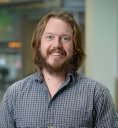
 David Duvenaud
· 3 previous affiliations
- University of TorontoSince 2016
- Assistant Professor · Since 2016
- Anthropic (United States)2023–2024
- Researcher · 2023–2024
- Harvard University2014–2017
- Postdoc · 2014–2017
Research Overview
David Duvenaud focuses on deep probabilistic modeling, continuous-depth neural networks, and the evaluation of advanced artificial intelligence systems. His earlier work developed foundational methods in generative modeling and differentiable inference, including neural ordinary differential equations. More recently, his research investigates AI governance, safety alignment vulnerabilities, and the systemic risks of human disempowerment from incremental AI development.
Research Trajectory
In his early research, Duvenaud explored nonparametric regression, defining a space of kernel structures built compositionally to automate model selection. This contributed to the research direction of Compositional Kernel Search for Automated Statistical Modeling with the publication of Structure Discovery in Nonparametric Regression through Compositional Kernel Search. In 2015, he addressed the difficulty of tuning learning algorithms without gradients. By chaining derivatives backwards through training procedures, he developed methods for exact gradient computation of cross-validation performance, advancing the area of Meta Overfitting in Hyperparameter Optimization in Gradient-based Hyperparameter Optimization through Reversible Learning. That same year, he introduced an architecture operating directly on graphs of arbitrary size and shape, generalizing molecular feature extraction in Convolutional Networks on Graphs for Learning Molecular Fingerprints.
Moving into variational inference, his lab proposed a variant of the reparameterized gradient estimator for the variational evidence lower bound. By removing the score function component, they produced an unbiased estimator with vanishing variance, detailed in Sticking the Landing: Simple, Lower-Variance Gradient Estimators for Variational Inference. This work supported the broader area of Pathwise Gradient Estimators for Stable Variational Inference. In 2018, he introduced a continuous-depth model family parameterizing the derivative of the hidden state using a neural network, evaluated via a blackbox differential equation solver. This work, Neural Ordinary Differential Equations, established the research direction of Continuous Time Latent Dynamics with Neural ODEs.
Building on continuous and invertible architectures, he participated in demonstrating that standard ResNet architectures could be made invertible for classification, density estimation, and generation, contributing to the area of Invertible Residual Networks via Contractive Mappings with Invertible Residual Networks. He also collaborated on re-evaluating discriminative architectures, showing in Your classifier is secretly an energy based model and you should treat it like one that joint distribution training improves calibration and out-of-distribution detection, advancing the field of Reinterpreting Discriminative Classifiers as Energy Based Models.
In 2023, his group addressed the verifiability of machine learning datasets in Tools for Verifying Neural Models' Training Data. He also continued exploring probabilistic predictions by integrating prior knowledge via natural language. In LLM Processes: Numerical Predictive Distributions Conditioned on Natural Language, his team built regression models guided by text. This approach was extended to tabular data in JoLT: Joint Probabilistic Predictions on Tabular Data Using LLMs, which utilized in-context learning to handle missing values and mixed data types without fine-tuning. Additionally, he applied neural network backbones to quantum simulations, introducing a computationally efficient layer to enforce fermionic antisymmetry in Sorting Out Quantum Monte Carlo.
A major shift in his recent trajectory focuses on AI safety, alignment, and governance. Investigating vulnerabilities in large language models, his group analyzed how extended context windows introduce new security flaws in Many-shot Jailbreaking. He also led the synthesis of global scientific consensus on frontier AI capabilities and evaluation shortfalls in the International AI Safety Report.
His most recent work extensively examines the systemic risks of incremental AI development. In Position: Humanity Faces Existential Risk from Gradual Disempowerment and the expanded technical report Gradual Disempowerment: Systemic Existential Risks from Incremental AI Development, he argues that the gradual replacement of human labor and cognition across societal functions poses a severe risk of irreversible human disempowerment, even without coordinated power-seeking by AI. This theoretical framework was empirically investigated in Who’s in Charge? Disempowerment Patterns in Real-World LLM Usage, which analyzed user interactions to identify how AI assistants might erode human autonomy in personal and moral domains.
Current Directions
The most recent papers in the evidence indicate a primary focus on the societal impacts and systemic risks of frontier AI systems. Recent work investigates the concept of "gradual disempowerment," analyzing how incremental improvements in AI capabilities might lead to a loss of human agency as automated systems increasingly replace human decision-making in economic, cultural, and governance domains. This theoretical research is complemented by empirical evaluations of real-world large language model usage, seeking to identify and quantify patterns where AI assistants undermine user autonomy. Additionally, ongoing efforts involve mapping the global consensus on AI safety, focusing on the gap between the rapid scaling of autonomous agents and the current technical capacity to evaluate and control them.
Profile updated
Loading new papers…
Other researchers whose papers cluster into the same research directions — a proxy for overlapping technical interests and shared intellectual neighborhoods.
See something wrong? Report a mistake