

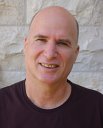
 David Carmel
· 6 previous affiliations
- Principal Researcher · Since 2024
- Senior Research Fellow · Since 2023
- PhD, Computer Science · 1990–1997
- Technology Innovation InstituteSince 2024
- Principal Researcher · Since 2024
- Amazon (United States)2017–2024
- Principal Researcher · 2017–2024
- Yahoo (Spain)2013–2017
- Principal Researcher · 2013–2017
- Researcher · 1997–2013
- IBM Research - Haifa1997–2013
- Research Staff Member · 1997–2013
Research Overview
David Carmel focuses on information retrieval, query performance prediction, and the integration of social signals into search systems. His temporal trajectory spans from early foundational work on XML search and query difficulty to the analysis of user-generated content and social recommender systems. Most recently, his research addresses the evaluation and optimization of retrieval-augmented generation architectures.
Research Trajectory
In the early 2000s, Carmel explored methodologies for structured document retrieval, bridging database and information retrieval approaches. In Searching XML documents via XML fragments (2003), he and his collaborators introduced an extension of the vector space model that allowed users to query XML collections using approximate XML fragments, ranking results by relevance.
Following this early work in structured search, his focus shifted significantly toward understanding and predicting query difficulty. He helped organize the community around this emerging topic, co-authoring the SIGIR workshop report: predicting query difficulty - methods and applications in 2005. This sustained investigation culminated in the 2010 book Estimating the Query Difficulty for Information Retrieval, which synthesized the underlying reasons search engines fail on certain queries and reviewed state-of-the-art approaches for estimating difficulty in the field.
Concurrently, Carmel investigated the intersection of social networks and search, examining how user-generated metadata could improve retrieval. He developed methods for Personalized social search based on the user's social network (2009) and proposed frameworks to evaluate the quality of user tags in Social bookmark weighting for search and recommendation (2010). This latter work demonstrated that weighting bookmarks by their estimated quality could significantly enhance search effectiveness. His expertise in this domain led to a comprehensive tutorial on Social recommender systems at WWW 2011, which covered recommendation methods specifically tailored for the social web.
The year 2012 marked a highly productive period spanning multiple dimensions of search and user-generated content. Returning to query performance, his research group led an analysis of a widely used predictor in Clarity re-visited, demonstrating that the Clarity metric actually quantifies result list diversity rather than just language model distance, which helped explain its low prediction quality on large-scale Web collections. He also participated in developing a novel prediction approach in Predicting Query Performance by Query-Drift Estimation, which utilized the standard deviation of retrieval scores as a surrogate for query drift. Beyond core information retrieval, he examined the dynamics of user-generated content, showing how contemporaneous, self, and discussion novelty affect content popularity in On the Relationship between Novelty and Popularity of User-Generated Content. Additionally, he introduced a tag-boost method for sparsely tagged domains in Folksonomy-Based Term Extraction for Word Cloud Generation, improving the agreement between manual tags and extracted terms.
Moving into the mid-to-late 2010s, Carmel engaged with entity recognition and the classification of query intents. He led the organization of the ERD'14: entity recognition and disambiguation challenge at SIGIR. Later, his research team investigated vertical selection by detecting queries that require a "human touch," framing them as community question answering intents in Identifying Web Queries with Question Intent (2016). He subsequently applied query log analysis to media platforms, presenting a three-phase retrieval framework in Enriching News Articles with Related Search Queries (2019) to recommend exploratory queries alongside news content based on article-dependent and independent relevance signals.
In recent years, his focus has shifted to the evaluation of large language models and Retrieval-Augmented Generation (RAG) systems. He contributed to the development of DataMorgana, a tool designed to generate diverse synthetic evaluation datasets, detailed in Generating Diverse Q&A Benchmarks for RAG Evaluation with DataMorgana (2025). This research intersects with broader efforts in diversifying synthetic data for large language model training and verifiable synthetic data generation. Continuing his history of organizing community benchmarks, he also led the evaluation effort detailed in the SIGIR 2025 - LiveRAG Challenge Report, which systematically compared retrieval and prompting strategies across numerous international teams using a fixed corpus and open-source model.
Current Directions
The most recent papers in the evidence indicate a strong focus on the evaluation, robustness, and benchmarking of Retrieval-Augmented Generation (RAG) systems. Recent work investigates the methodological challenges of assessing RAG architectures, particularly the need for high-quality, realistic, and diverse question-and-answer datasets. This includes exploring synthetic data generation techniques to overcome the repetitive nature of standard LLM-generated benchmarks, ensuring broader lexical, syntactic, and semantic coverage for model training and evaluation. Additionally, current efforts involve organizing large-scale, competitive community evaluations to systematically compare retrieval and prompting strategies under strict constraints, advancing the standardization of RAG assessment in both academic and industrial contexts.
Profile updated
Loading new papers…
Other researchers whose papers cluster into the same research directions — a proxy for overlapping technical interests and shared intellectual neighborhoods.
See something wrong? Report a mistake