

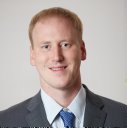
 David Carlson
· 3 previous affiliations
- Duke UniversitySince 2017
- Associate Professor · Since 2024
- Assistant Professor · 2017–2024
- PhD student · 2010–2015
- Bachelor of Science in Engineering, Major in Electrical and Computer Engineering, Minor in Physics and Math · 2006–2010
- Research Assistant · 2009
- Columbia University2015–2016
- Postdoctoral Researcher · 2015–2016
- Langley Research Center2010
- LARSS Summer Scholar · 2010
Research Overview
David Carlson focuses on machine learning for complex scientific data, spanning causal inference, spatial modeling, and computational neuroscience. His trajectory moves from early contributions in Bayesian nonparametrics and optimization to robust domain adaptation and deep causal representation learning. Currently, he investigates scalable methods for spatiotemporal forecasting, causal reasoning, and interpretable state space models.
Research Trajectory
Carlson's early research addressed the challenges of extracting reliable signals from high-dimensional neural recordings, while also contributing to the broader area of Task Driven Signal Acquisition and Compressive Inference. He developed methods to jointly detect and cluster neurons, introducing an online approximate inference scheme in Real-Time Inference for a Gamma Process Model of Neural Spiking. He expanded on this foundation with Multichannel Electrophysiological Spike Sorting via Joint Dictionary Learning and Mixture Modeling, which proposed a focused mixture model to track single units across multiple recording days by sharing information across channels, improving the reliability of chronic electrophysiology experiments.
Following his work in neural signal processing, Carlson investigated the geometry of deep learning objective functions and complex system optimization, including work in the research direction of Decomposing Complex Dynamics into Solvable Subproblems. In Preconditioned Spectral Descent for Deep Learning, he introduced optimization algorithms that combine preconditioning with spectral norms to accelerate convergence, advancing the area of Overcoming Local Minima Entrapment in Non Convex Optimization. He also explored probabilistic modeling techniques, presenting a novel approach to compute partition functions for complex, multimodal distributions in Partition Functions from Rao-Blackwellized Tempered Sampling. This research aligned with his broader interest in the area of Global Optimization through Annealed Stochastic Sampling.
A significant portion of Carlson's subsequent trajectory focused on the generalization of machine learning models across shifting environments. He investigated discrepancies between training and testing domains in On Target Shift in Adversarial Domain Adaptation, addressing the fundamental problem of learning domain-invariant representations. This work contributed to the research direction of Domain Adaptation under Label and Target Shift. He later formalized these challenges further in Domain Adaptation via Rebalanced Sub-domain Alignment, which introduced a theoretical framework and algorithm to explicitly account for shifted class distributions. This methodology advanced the area of Scaling Domain Adaptation to Multiple Environments by improving performance on tasks where identical class distribution assumptions fail.
Transitioning into causal inference and spatial data analysis, Carlson developed architectures that merge the representational power of deep learning with robust uncertainty quantification. In Estimating Causal Effects using a Multi-task Deep Ensemble, he introduced a framework theoretically equivalent to a multi-task Gaussian Process to estimate treatment effects from high-dimensional data such as medical images. He also addressed the challenge of unobserved mechanisms in Causal Mediation Analysis with Multi-dimensional and Indirectly Observed Mediators, providing methods to dissect direct and mediated effects when only proxy measurements, like brain imaging, are available.
His focus on complex spatial dependencies led to novel approaches in environmental modeling. He explored data-dependent kernel approximations in Incorporating Prior Knowledge into Neural Networks through an Implicit Composite Kernel. To improve ground-level air quality predictions, he leveraged geostatistical interpolation to generate pseudo-labels from satellite imagery in Augmenting Ground-Level PM2.5 Prediction via Kriging-Based Pseudo-Label Generation. Expanding on spatial causal inference, Deep Causal Inference for Point-referenced Spatial Data with Continuous Treatments integrated neural networks with approximate Gaussian Processes to model non-linear spillover effects, such as the impact of vegetation on urban heat, while accounting for unobserved geographic confounding.
In recent years, Carlson has applied advanced machine learning architectures to diverse domains, from epidemiology to behavioral analysis and large language models. He utilized graph neural networks to incorporate heterogeneous social, environmental, and climate factors from expanded neighborhoods in Neighborhood environmental and contextual factors improve prediction of childhood body mass index: an application of novel graph neural networks. In the realm of computer vision and behavioral science, he developed a framework for reconstructing the 3D geometry and appearance of animals without manual annotations in Pose Splatter: A 3D Gaussian Splatting Model for Quantifying Animal Pose and Appearance.
His work on causal discovery evolved to incorporate large language models in CARE: Turning LLMs Into Causal Reasoning Expert, which uses supervised fine-tuning to help models integrate world knowledge with traditional causal discovery algorithms. Returning to his roots in computational neuroscience, he introduced a scalable framework for analyzing high-dimensional circular phase data in Torus Graphs for Large Scale Neural Phase Analysis, enabling the study of brain-wide communication across thousands of variables. Concurrently, he explored the interpretability of modern sequence models in HiPPO Zoo: Explicit Memory Mechanisms for Interpretable State Space Models, making associative memory and adaptive gating mechanisms explicit through orthogonal polynomials.
Current Directions
The most recent papers in the evidence indicate a focus on scaling and interpreting complex machine learning architectures for high-dimensional scientific data. Recent work investigates the interpretability of modern sequence models, specifically exploring how explicit memory mechanisms can be integrated into State Space Models without sacrificing computational efficiency. In parallel, ongoing research addresses the challenges of large-scale neural phase analysis, developing scalable frameworks to model dynamic, multivariate relationships in brain-wide communication. Other current directions include leveraging large language models for causal discovery by combining their world knowledge with formal causal algorithms, as well as applying 3D Gaussian splatting techniques to automate high-fidelity behavioral tracking in biological research. Finally, recent epidemiological modeling efforts utilize graph neural networks to capture complex spatial and environmental determinants of health outcomes.
Profile updated
Loading new papers…
Other researchers whose papers cluster into the same research directions — a proxy for overlapping technical interests and shared intellectual neighborhoods.
See something wrong? Report a mistake