

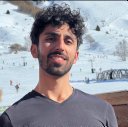
 Dario Shariatian
· 8 previous affiliations
- Centre Inria de ParisCurrent
- Current
- École Normale Supérieure - PSL2023–2026
- Doctor of Philosophy - PhD, Computer Science · 2023–2026
- PhD student · 2023–2026
- Research Intern · 2025
- University of Oxford2022–2023
- MS student · 2022–2023
- Quantitative Research Intern · 2022
- École Polytechnique2019–2022
- Undergrad student · 2019–2022
- Ledger2021
- Software Engineer Intern · 2021
Research Overview
Dario Shariatian focuses on the methodology and theoretical foundations of generative models, particularly continuous and discrete diffusion processes. His research investigates the interplay between probabilistic structure, empirical behavior, and scalable experimentation to improve generation quality and efficiency. Most recently, his work emphasizes discrete diffusion frameworks to enable faster, multi-token generation and address algorithmic limitations in language modeling.
Research Trajectory
In 2024, his research explored foundational alternatives to standard diffusive noise in generative modeling. He participated in the development of Piecewise deterministic generative models, which introduced a novel class of models based on Piecewise Deterministic Markov Processes (PDMPs). By utilizing processes like the Zig-Zag and Bouncy Particle samplers, this work demonstrated that learning to reverse deterministic motion and random jumps can yield high-quality data generation, often requiring fewer steps than traditional diffusion models. This research contributed to the broader area of Randomized Midpoint Discretization for Accelerated Langevin Sampling.
Moving into 2025, his focus expanded to address structural limitations in standard diffusion frameworks, particularly their reliance on Gaussian noise. He introduced Heavy-Tailed Diffusion with Denoising Levy Probabilistic Models, a discrete-time framework that substitutes Gaussian noise with $\alpha$-stable noise. By leveraging a mathematical decomposition, this model remains straightforward to implement while significantly outperforming previous heavy-tailed models in sampling speed, tail coverage, and robustness to imbalanced data. This approach advanced research in Stochastic Optimization under Heavy Tailed Gradient Noise and contributed to the theoretical framework of A Unified Mathematical Theory of Generative Diffusion Processes.
Alongside continuous diffusion, he investigated discrete data modalities. With collaborators, he developed Discrete Markov Probabilistic Models: An Improved Discrete Score-Based Framework with sharp convergence bounds under minimal assumptions. This work addressed the unstable training objectives and lack of theoretical guarantees often found in discrete diffusion models for binary masks, categorical labels, and molecular graphs. The resulting framework provided rigorous theoretical backing, intersecting with research directions such as Dimensional Efficiency and Convergence of Diffusion Models and Low-Variance Gradient Estimation for Discrete Latent Variables.
Later in 2025, he further strengthened the theoretical understanding of generative models by contributing to Algorithm- and Data-Dependent Generalization Bounds for Diffusion Models. By decomposing the score approximation error, this research established how optimization algorithms (such as Adam or SGLD) and their training trajectories influence a model's ability to generalize. These findings were validated empirically using gradient norms and topological complexity metrics, providing key insights into the area of Error Decomposition for Generative Diffusion and Flow Models.
By 2026, his trajectory shifted heavily toward discrete diffusion for language modeling and token generation. He introduced Latent-Augmented Discrete Diffusion Models (LADD), which augments the standard token diffusion process with an auxiliary continuous latent channel. This structural innovation enables the model to capture cross-token dependencies, significantly improving generation quality in few-step sampling scenarios. During this period, he also contributed to Uniform Diffusion Models Revisited: Leave-One-Out Denoiser and Absorbing State Reformulation. This work identified a mismatch in the standard training objectives of Uniform Diffusion Models—which optimize a "leave-one-out" prediction rather than direct denoising—and introduced an absorbing-state reformulation. This adjustment bridged the gap between uniform and masked diffusion models, ultimately improving generation quality.
Current Directions
The most recent papers in the evidence, published in 2026, indicate a strong focus on discrete diffusion models, particularly for text and token generation. This current work addresses the algorithmic and structural limitations of discrete diffusion by exploring latent-augmented architectures that facilitate cross-token modeling. Additionally, recent efforts investigate the refinement of training objectives in uniform and masked diffusion models, aiming to enable faster, higher-quality generation with fewer sampling steps while maintaining rigorous theoretical grounding.
Profile updated
Loading new papers…
Other researchers whose papers cluster into the same research directions — a proxy for overlapping technical interests and shared intellectual neighborhoods.
See something wrong? Report a mistake