

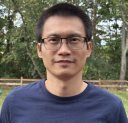
 Daren Wang
· 2 previous affiliations
- University of Notre DameSince 2021
- Assistant Professor · Since 2021
- Current
1 other author named Daren Wang: Daren Wang (1 paper)
Research Overview
Daren Wang focuses on the intersection of high-dimensional statistics, scientific computing, and nonparametric estimation. His research addresses the theoretical and algorithmic challenges of extracting structure from complex, non-stationary data, with a particular emphasis on change point detection, functional data analysis, and high-dimensional linear algebra. By developing rate-optimal estimators and computationally efficient algorithms, his work bridges the gap between statistical theory and the practical requirements of large-scale data analysis in domains such as biology, finance, and environmental science.
Research Trajectory
The evolution of Wang’s research reflects a progression from fundamental problems in nonparametric clustering toward the analysis of non-stationary and high-dimensional temporal processes. His early work established a foundation in density-based estimation, specifically focusing on the consistency and optimality of clustering algorithms. In DBSCAN: Optimal Rates For Density-Based Cluster Estimation, Wang provided a rigorous theoretical framework for the popular DBSCAN algorithm, deriving minimax rates for cluster tree estimation under various smoothness assumptions. This work transitioned the understanding of density-based clustering from heuristic application to a theoretically grounded statistical procedure.
Following his work on clustering, Wang’s focus shifted toward Statistical Learning for Infinite Dimensional Functional Data. This transition involved addressing the complexities of data observed as continuous trajectories or curves rather than discrete vectors. He explored the nuances of Phase Transitions in Functional Data Sampling Density, investigating how the sparsity or density of functional observations affects estimation accuracy. This period also saw contributions to functional linear regression, where he developed methods to accommodate both functional and high-dimensional vector covariates using reproducing kernel Hilbert space (RKHS) theory.
A significant and sustained theme in Wang’s trajectory is the localization of change points in high-dimensional settings. As data streams increasingly exhibit non-stationarity—where the underlying generative rules change over time—Wang has developed a suite of methods to detect these shifts. This work began with high-dimensional regression models and expanded to include network data, pairwise comparison data, and functional data. His contributions in this area are characterized by a dual focus on statistical optimality (achieving minimax rates) and computational feasibility (developing algorithms that scale to high dimensions).
In his most recent work, Wang has increasingly integrated deep learning and tensor methods into his statistical framework. This includes the use of Nuclear Norm Minimization for Low Rank Matrix Recovery principles for denoising high-dimensional tensors and the application of neural networks to temporal-spatial modeling. This shift represents a move toward more flexible, adaptive models that can circumvent the curse of dimensionality by exploiting low-dimensional structures in complex datasets.
Change Point Detection and Inference
Wang has made extensive contributions to the field of change point detection (CPD), particularly in settings where the parameter of interest is not directly observed. In high-dimensional regression, he has addressed the challenge of identifying shifts in regression coefficients when the number of covariates exceeds the sample size. His work in Statistically and Computationally Efficient Change Point Localization in Regression Settings introduced algorithms that maintain consistency even as dimensions and sparsity levels vary.
His research also extends to non-standard data types. For functional data, he proposed the Functional Seeded Binary Segmentation (FSBS) algorithm, which is designed to handle data observed on general $d$-dimensional domains. This work is notable for its ability to process both sparsely and densely sampled curves while remaining robust to heavy-tailed distributions and temporal dependence. Furthermore, Wang has applied CPD to pairwise comparison data under the Bradley-Terry-Luce model, providing a method for localizing changes in global rankings over time.
Beyond localization, Wang has participated in research regarding the broader challenges of multivariate nonparametric models. This includes work on Unified Modeling of Heterogeneous Mixed-Type Data and the study of Neural and Nonparametric Temporal Point Processes. These efforts contribute to a more robust understanding of how to perform inference on data streams that do not follow traditional parametric assumptions.
Current Directions
Wang’s current research focuses on the intersection of scientific computing and high-dimensional linear algebra. A primary area of interest is the development of theoretical guarantees for modern machine learning architectures. For example, his recent work on Dense ReLU Neural Networks for Temporal-spatial Model provides a rigorous framework for understanding how fully connected networks can adapt to low-dimensional manifolds, thereby outperforming traditional kernel-based methods in environmental and physical datasets.
Additionally, Wang is investigating the bias-variance tradeoffs inherent in tensor estimation. By establishing explicit decompositions for truncated singular value decompositions (SVD) and higher-order SVD (HOSVD), he is working to provide a mathematical justification for rank selection in denoising "approximately" low-rank structures. This line of inquiry is essential for improving the reliability of scientific computing tasks involving massive, noisy multi-way arrays.
His ongoing work also continues to refine the computational efficiency of change point methodologies. Recent developments include "divide and conquer" dynamic programming approaches that aim for almost linear time complexity in high dimensions, ensuring that the theoretical advances in CPD can be applied to real-time data monitoring and large-scale historical analysis.
Representative Work
DBSCAN: Optimal Rates For Density-Based Cluster Estimation In this first-author paper, Wang and collaborators study the optimal estimation of density cluster trees. They formulate a new notion of clustering consistency suited to smooth densities and derive minimax rates for cluster tree estimation under Hölder smoothness. The paper presents a rate-optimal estimator based on extensions of the DBSCAN algorithm, bridging the gap between popular heuristic clustering methods and formal statistical theory.
Statistically and Computationally Efficient Change Point Localization in Regression Settings As the first author, Wang addresses the problem of multiple change point localization in high-dimensional regression. The work is significant for handling scenarios where the regression coefficients change over time and are not directly observed. The proposed method achieves localization error rates that are optimal or near-optimal, even when the dimension of the covariates is large relative to the sample size.
Change-point Detection for Sparse and Dense Functional Data in General Dimensions In this first-author work, Wang introduces the Functional Seeded Binary Segmentation (FSBS) algorithm. The method is designed for functional data observed on $d$-dimensional spaces, accommodating both sparse and dense sampling. The algorithm is theoretically robust to heavy-tailed and temporally dependent observations, making it applicable to complex datasets in biology and climatology.
Detecting Abrupt Changes in Sequential Pairwise Comparison Data Serving as the senior author, Wang develops algorithms for localizing change points in high-dimensional Bradley-Terry-Luce models. This research is particularly relevant for applications where rankings among items evolve over time. The paper provides consistency rates for the proposed dynamic programming-based estimators, demonstrating their effectiveness in non-stationary ranking environments.
Dense ReLU Neural Networks for Temporal-spatial Model In this senior-author paper, Wang provides a theoretical framework for using ReLU neural networks to model data with complex temporal and spatial dependencies. The work proves that these networks can overcome the curse of dimensionality by adapting to low-dimensional manifolds. The findings suggest that deep learning models can consistently outperform traditional statistical methods like Generalized Additive Models (GAM) in specific environmental contexts.
Bias-variance Tradeoff in Tensor Estimation As senior author, Wang establishes a new theoretical framework for denoising approximately low-rank matrices and tensors. By providing explicit bias-variance decompositions for truncated SVD and HOSVD estimators, the work proves these methods are minimax optimal across user-specified ranks. This provides a rigorous justification for balancing approximation error against noise in high-dimensional linear algebra applications.
Profile updated
| Paper | Venue | Year |
|---|---|---|
| Detecting Abrupt Changes in Sequential Pairwise Comparison DataGitHubMountLee/ | NeurIPS | 2022 |
Loading new papers…
Other researchers whose papers cluster into the same research directions — a proxy for overlapping technical interests and shared intellectual neighborhoods.
See something wrong? Report a mistake