

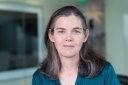
 Daphne Koller
· 7 previous affiliations
- Inistro Inc.Since 2018
- CEO · Since 2018
- insitro, inc. (United States)Since 2018
- Founder and CEO · Since 2018
- engageliSince 2020
- Co-Founder and Board member · Since 2020
- Coursera2011–2019
- Co-founder and co-Chairman · 2016–2019
- Co-founder and President · 2014–2016
- co-CEO, President · 2011–2016
- Co-founder and co-CEO · 2012–2014
- Calico Life Sciences2016–2018
- Chief Computing Officer · 2016–2018
- Stanford University1989–2014
- Professor · 1995–2014
- Doctor of Philosophy - PhD, Computer Science · 1989–1993
- University of California, Berkeley1993–1995
- Postdoc, Computer Science · 1993–1995
Research Overview
Daphne Koller focuses on probabilistic graphical models, machine learning for complex scene understanding, and computational methods for genetic discovery. Her early work established foundational algorithms for Bayesian inference and Markov network structure learning, gradually expanding into computer vision and unsupervised domain adaptation. Most recently, she investigates latent variable models and the systematic evaluation of machine learning embeddings for biomedical applications.
Research Trajectory
In the late 1990s, Koller’s research centered on foundational probabilistic modeling and inference. As the first author of Effective Bayesian Inference for Stochastic Programs, she proposed a stochastic version of a general-purpose functional programming language designed to model complex processes. This work introduced a language containing random choices, conditional statements, and recursion, providing an exact algorithm for computing conditional probabilities over potentially infinite sets of objects. During this period, she also contributed to the broader area of State Action Equivalence for Efficient Reinforcement Learning and the research direction of Overcoming the Non-Differentiable Physics Simulation Bottleneck, exploring how structured representations could improve learning efficiency and physical common sense in computational models.
By the mid-2000s, her focus expanded to the structural learning of complex graphical models. As the senior author of Efficient Structure Learning of Markov Networks using L, she addressed the computational bottleneck of manually constructing Markov networks for applications in computer vision and computational biology. The paper introduced a computationally efficient method utilizing L1 regularization on the weights of a log-linear model, effectively biasing the network toward sparse parameterizations where many parameters are zero. This era of her work also included participation in themes such as Rao-Blackwellized Particle Filters for Hybrid State Estimation, addressing the dimensionality challenges and exponential memory requirements inherent in complex tracking and signal processing.
In the late 2000s, Koller’s lab increasingly applied probabilistic frameworks to computer vision, specifically targeting holistic scene understanding. In Cascaded Classification Models: Combining Models for Holistic Scene Understanding, she and her collaborators developed a framework that allowed independent classifiers—such as those for object detection, region labeling, and 3D reconstruction—to iteratively inform and improve one another through repeated instantiations. This work aligned closely with her contributions to the research direction of Joint Learning of Scene Geometry and Semantics and the area of Global Partitioning via Pixelwise Mutual Exclusivity, which sought to resolve physical impossibilities in standard vision pipelines by enforcing spatial and semantic consistency across overlapping object masks.
Moving into the 2010s, her research addressed the scalability of inference and the adaptability of learned models across distinct data domains. She led work on Accelerated dual decomposition for MAP inference, developing an approximate inference algorithm for graphical models that utilized convex relaxations to provide strong theoretical convergence guarantees. Concurrently, she investigated unsupervised domain adaptation in Shifting Weights: Adapting Object Detectors from Image to Video. To overcome the performance degradation of image-trained detectors when applied to video, her lab proposed a self-paced learning approach that iteratively re-trained detectors using automatically discovered target domain examples, starting with the easiest instances first. Around this time, her work also touched upon the theme of Decoupled Uncertainty Estimation for Calibrated Machine Learning, exploring the tension between predictive accuracy and confidence estimation in probabilistic models.
Current Directions
The most recent papers in the evidence indicate a continued focus on latent variable models and the application of machine learning to biomedical domains. Recent work investigates max-margin min-entropy models, which are designed to optimize for both high output probability and low uncertainty in hidden variables. By minimizing a score that balances negative log-likelihood with a measure of uncertainty over the hidden variables' distribution, this approach aims to reduce confusion in latent representations and improve overall predictive confidence.
Additionally, her recent collaborative research addresses the evaluation of machine learning-derived embeddings for genetic discovery. This work focuses on developing systematic frameworks to assess whether high-dimensional, compressed data representations accurately capture heritability and disease relevance. By establishing rigorous evaluation methods for these embeddings, this research bridges the gap between complex machine learning representations of disease states and actionable genetic insights.
Profile updated
Loading new papers…
Other researchers whose papers cluster into the same research directions — a proxy for overlapping technical interests and shared intellectual neighborhoods.
See something wrong? Report a mistake