

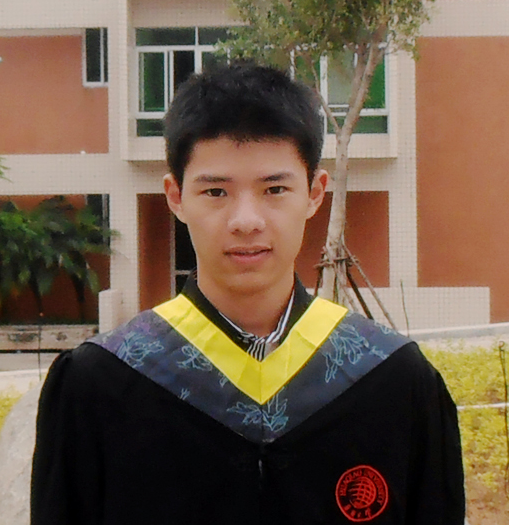
 Danny Xu
· 1 previous affiliation
- The University of MelbourneSince 2025
- Postdoc · Since 2025
- Current
Research Overview
Danny Xu focuses on computer vision, machine learning, and image processing, with particular emphasis on deep declarative networks, diffusion models, and efficient neural architectures. His trajectory spans early work in feature registration for radar imaging to foundational contributions in differentiable optimization and probabilistic inference. Most recently, his research investigates generative modeling, adversarial robustness, and the integration of large language models for automated code generation and cognitive reasoning.
Research Trajectory
Xu’s early research addressed geometric and feature-based image processing. In 2014, he developed Precise Cross-Range Scaling for ISAR Images Using Feature Registration, proposing an algorithm to estimate effective rotation angles by extracting and matching scale-invariant features across sequenced subaperture radar images. This foundational work in feature extraction and coordinate registration established a basis for his later transition into complex computer vision tasks.
By 2020, his focus had shifted toward optimizing deep learning architectures for visual understanding and computational efficiency. To improve object boundary delineation in semantic segmentation, he introduced Deep Learning Superpixel Semantic Segmentation with Transparent Initialization and Sparse Encoder. This approach jointly learned semantic segmentation with trainable superpixels, utilizing a transparent initialization strategy to preserve the learned parameters of pretrained networks. Concurrently, he addressed the computational bottlenecks of 3D Convolutional Neural Networks by introducing RANP: Resource Aware Neuron Pruning at Initialization for 3D CNNs. This algorithm computed importance scores for individual neurons based on resource consumption, allowing 3D CNNs to be pruned to high sparsity levels prior to training.
During this period, Xu also advanced the integration of classical probabilistic models with modern neural networks. He developed Fast and Differentiable Message Passing on Pairwise Markov Random Fields, introducing highly parallelizable algorithms that accelerated Markov Random Field optimization. By making these message-passing algorithms differentiable, the work enabled end-to-end learning for tasks like semantic segmentation, contributing significantly to the research direction of Unrolling Probabilistic Inference in Deep Networks.
Building on the theme of differentiable optimization, Xu’s subsequent work heavily explored Deep Declarative Networks (DDNs), which embed mathematical optimization problems directly into end-to-end learnable models. He guided research on Exploiting Problem Structure in Deep Declarative Networks: Two Case Studies, which demonstrated how differentiating the solution map of parameterized optimization problems could yield significant memory savings during the backward pass by avoiding the naive inversion of large Hessian matrices. Expanding on this framework, he proposed PMaF: Deep Declarative Layers for Principal Matrix Features in 2023. This work introduced differentiable layers—specifically least squares on a sphere and implicit eigen decomposition—to represent high-dimensional matrix data with low-dimensional vectors, utilizing bi-level optimization and adaptive descent steps to improve forward-pass efficiency.
In 2024, Xu’s research broadened to encompass generative AI, adversarial robustness, and multimodal systems. A major contribution to generative modeling was IMPUS: Image Morphing with Perceptually-Uniform Sampling Using Diffusion Models. This framework leveraged latent diffusion models to generate smooth, realistic transitions between endpoint images, avoiding common ghosting artifacts through dual-space interpolation and adaptive fine-tuning. This research advanced several distinct subfields, including the area of Perceptually Uniform Sampling for Smooth Generative Transitions, the broader area of Semantic Correspondence for Exemplar-Based Style Transfer, work in Automating Feature Correspondence for Geometric Vision, and the field of Tuning-Free Personalization of Text-to-Image Diffusion Models.
Parallel to his generative work, Xu investigated model security, co-developing Adversarial Purification with the Manifold Hypothesis. This method combined manifold learning with variational inference to defend against adaptive attacks without the computational overhead of traditional adversarial training. He also participated in collaborative hardware-aware vision research, contributing to weakly-supervised methods in Weakly-Supervised Depth Estimation and Image Deblurring via Dual-Pixel Sensors.
Most recently, Xu has explored the orchestration and reasoning capabilities of Large Language Models (LLMs). He contributed to Unleashing Artificial Cognition: Integrating Multiple AI Systems, which introduced an open-source framework connecting LLMs with specialized external tools—such as vector databases and chess engines—to facilitate explainable decision-making and general cognitive abilities. Extending this focus on LLM utility, he co-authored Large Language Model Guided Self-Debugging Code Generation in 2025. This paper presented a two-agent framework designed to automate Python code generation, utilizing iterative symbolic feedback and self-debugging to improve accuracy while minimizing computational overhead.
Current Directions
The most recent papers in the evidence indicate a strong focus on the intersection of generative artificial intelligence, system robustness, and complex reasoning architectures. A primary direction involves harnessing diffusion models for high-fidelity image synthesis and manipulation, specifically focusing on perceptually uniform sampling and latent space interpolation to ensure realistic generative transitions.
Simultaneously, recent work addresses the reliability and cognitive capabilities of AI systems. This includes developing adversarial purification techniques grounded in manifold learning to secure models against sophisticated attacks. Furthermore, current research investigates the deployment of Large Language Models as central orchestrators. By integrating LLMs with specialized external tools and designing multi-agent frameworks for iterative self-debugging, this line of inquiry aims to bridge the gap between raw computational generation and verifiable, explainable reasoning in domains such as automated software engineering and complex decision-making.
Profile updated
Loading new papers…
Other researchers whose papers cluster into the same research directions — a proxy for overlapping technical interests and shared intellectual neighborhoods.
See something wrong? Report a mistake