

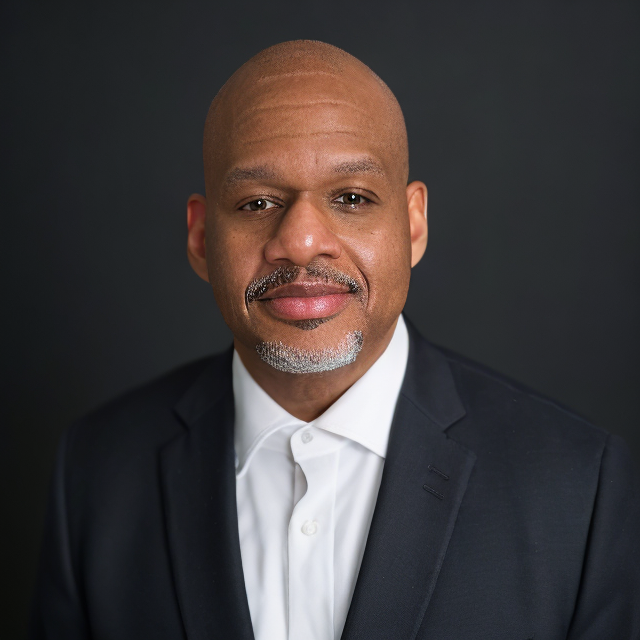
 Damon L. Woodard
· 8 previous affiliations
- University of FloridaSince 2015
- Full Professor · Since 2022
- Associate Professor · 2015–2022
- ModalCoreAI, LLCSince 2025
- Founder and CEO · Since 2025
- Current
- Meraglim Holdings CorporationSince 2021
- Technical Advisory Board Member · Since 2021
- Waffle VideoSince 2025
- Technical Advisory Board Member · Since 2025
- Warrington Ventures Inc.2025
- Technical Advisory Board Member (Artificial Intelligence) · 2025
- University of Notre Dame1999–2004
- Ph.D., Computer Science and Engineering · 1999–2004
- Pennsylvania State University1997–1999
- M. E., Computer Science and Engineering · 1997–1999
Research Overview
Damon L. Woodard focuses on biometrics, hardware security, and natural language processing, with an emphasis on securing systems against emerging threats. His trajectory spans early innovations in 3D and periocular biometrics to extensive work in hardware trust and printed circuit board inspection. Most recently, his research addresses the robust detection of AI-generated text, multimodal learning under distribution shifts, and the application of large language models to complex information extraction.
Research Trajectory
Woodard’s early research explored novel biometric modalities for human identification. He introduced methods for utilizing the back surface of the hand, detailing this approach in 3D Finger Biometrics. By calculating shape indices from segmented 3D range images of the index, middle, and ring fingers, this work established the stability and distinctiveness of finger surface curvature as a biometric feature. He later expanded his focus to facial features in Periocular region appearance cues for biometric identification, evaluating the utility of the periocular region as an independent modality. This approach employed local appearance-based representations, computing texture and color histograms across spatially salient patches to establish performance metrics for periocular identification.
In subsequent years, Woodard’s focus shifted toward hardware trust and the physical security of computing systems. He directed the development of FICS-PCB: A Multi-Modal Image Dataset for Automated Printed Circuit Board Visual Inspection, releasing a large-scale dataset of nearly 10,000 images with over 77,000 annotated components. This work aimed to transition automated visual inspection from controlled laboratory settings to real-world conditions by capturing variations in scale, lighting, and sensors. Continuing in this domain, he investigated vulnerabilities in electronics manufacturing in The Big Hack Explained: Detection and Prevention of PCB Supply Chain Implants. He also provided a comprehensive overview of automated countermeasures in Hardware Trust and Assurance through Reverse Engineering: A Tutorial and Outlook from Image Analysis and Machine Learning Perspectives. Together, these contributions advanced the broader area of Securing Integrated Circuits Against Untrusted Foundries, focusing on the use of image analysis and machine learning to combat counterfeiting and hardware Trojans.
More recently, Woodard has directed extensive research into natural language processing, particularly relation extraction (RE) and the security implications of large language models (LLMs). He investigated the limitations of modern neural extractors in Maximizing Relation Extraction Potential: A Data-Centric Study to Unveil Challenges and Opportunities, analyzing the data-centric characteristics that impede performance in complicated extraction scenarios. As generative models became prominent, he evaluated their utility for these tasks in LLM4RE: A Data-centric Feasibility Study for Relation Extraction, conducting a feasibility analysis of LLM robustness across complex RE environments. To further improve extraction accuracy, he explored prompt engineering techniques in From Syntax to Semantics: Evaluating the Impact of Linguistic Structures on LLM-Based Information Extraction, demonstrating that explicitly providing LLMs with linguistic structures like dependency trees and semantic roles significantly enhances the topical relevance and uniqueness of extracted information.
Parallel to information extraction, Woodard has addressed the forensic and security challenges introduced by generative AI. In Is the Digital Forensics and Incident Response Pipeline Ready for Text-Based Threats in LLM Era?, he examined vulnerabilities in digital forensics pipelines, introducing a novel human-LLM co-authorship attack to highlight the difficulties of attributing LLM-generated text. He also collaborated on defensive mechanisms in AAIG at GenAI Detection Task 1: Exploring Syntactically-Aware, Resource-Efficient Small Autoregressive Decoders for AI Content Detection, which presented a lightweight approach using small language models to distinguish between human and AI-generated content securely on-device. This body of work contributes directly to the research direction of Robust Detection of Adversarially Modified Machine Text.
His most recent work also addresses the theoretical and practical stability of machine learning systems, particularly in multimodal contexts. He developed the LS-OGD framework in Lyapunov-Stable Adaptive Control for Multimodal Concept Drift, applying control theory to dynamically adjust learning rates and fusion weights, ensuring that prediction errors remain bounded even as data distributions shift. He provided further theoretical grounding for these systems in Efficient Generalization via Multimodal Co-Training under Data Scarcity and Distribution Shift, introducing PAC-style generalization bounds that quantify how exchanging pseudo-labels between modalities reduces generalization risk.
Finally, Woodard has applied LLMs to specialized domains and interpretability. He guided the development of PsyTEx: A Knowledge-Guided Approach to Refining Text for Psychological Analysis, a framework that isolates psychologically relevant text segments that align with established psychological theory. In the realm of model transparency, he introduced the Qi-Framework in Abstracting general syntax for XAI after decomposing explanation sub-components, standardizing the mathematical syntax of explainable AI by decomposing existing methods into core sub-components to better describe how they aid human inspection.
Current Directions
The most recent papers in the evidence address the intersection of large language models, information extraction, and system robustness. Current work investigates how to secure digital forensics pipelines against sophisticated text-based threats, particularly human-LLM co-authorship attacks, and how to reliably detect AI-authored content using resource-efficient, syntactically-aware models.
Additionally, ongoing research focuses on multimodal learning under distribution shifts. This includes employing control theory to maintain the stability of multimodal models during concept drift and establishing theoretical generalization bounds for multimodal co-training under data scarcity. Other active areas include standardizing the mathematical syntax of explainable AI to improve model interpretability and integrating explicit linguistic structures into LLM prompts to enhance joint relation extraction.
Profile updated
Loading new papers…
Other researchers whose papers cluster into the same research directions — a proxy for overlapping technical interests and shared intellectual neighborhoods.
See something wrong? Report a mistake