

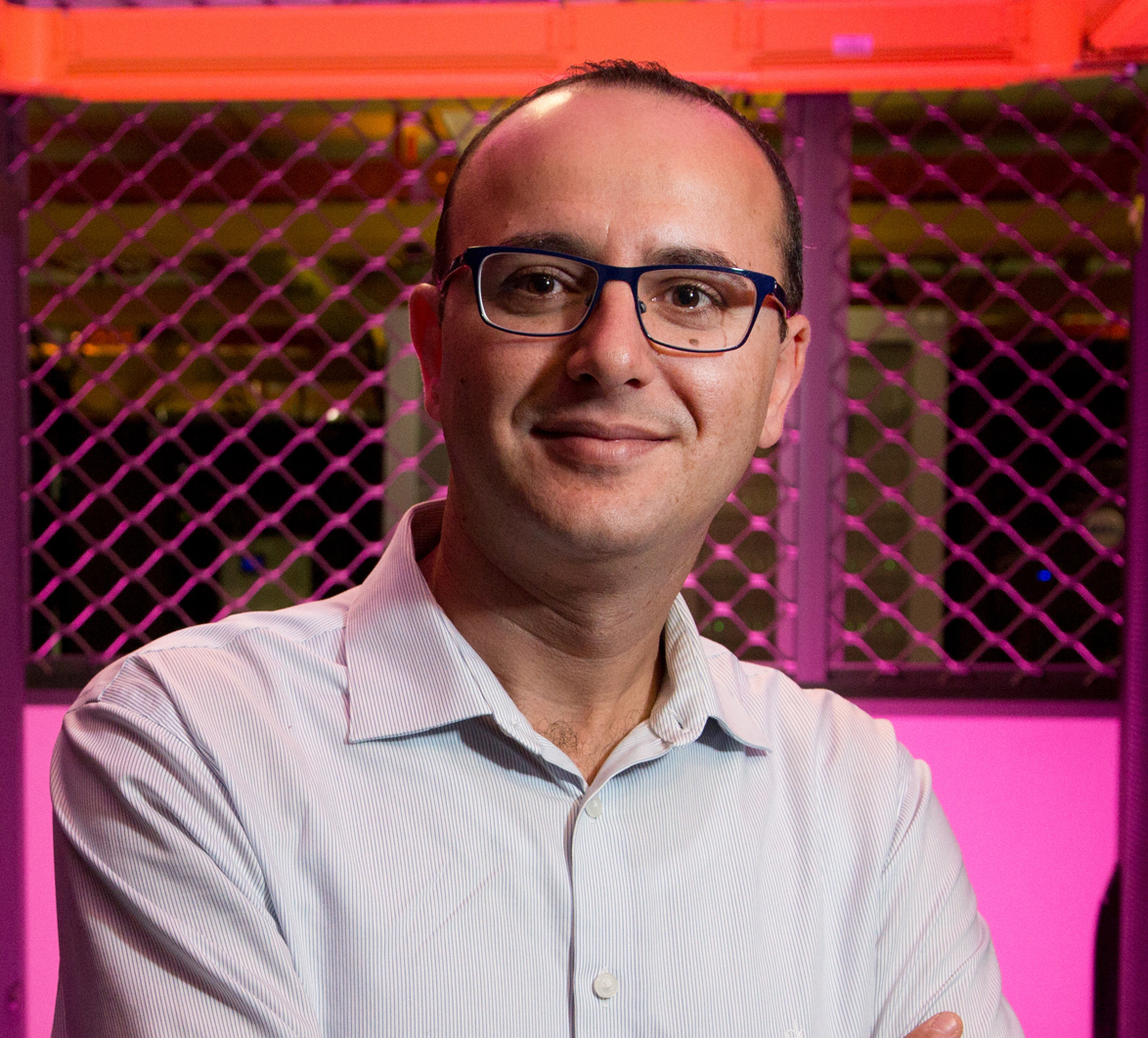
 Dali Kaafar
· 6 previous affiliations
- Macquarie UniversitySince 2017
- Executive Director MQ Cyber Security Hub · Since 2019
- Chief Scientist · 2017–2020
- Institute of Applied TechnologySince 2022
- Director Cyber Range Training Centre (CRTC) and Cyber Security Curriculum · Since 2022
- Apate.AISince 2024
- Founder and CEO · Since 2024
- Data612012–2020
- Group Leader, Information Security and Privacy · 2015–2020
- Principal Researcher · 2012–2015
- Principal Researcher · 2015–2020
- Doctor of Philosophy - PhD, Computer Science
Research Overview
Dali Kaafar focuses on cybersecurity, privacy-preserving machine learning, and the analysis of malicious behavior in online social networks. Early work addressed network caching and the vulnerabilities of deep neural networks, while later research expanded into differential privacy and the characterization of toxic social media users. Recent efforts investigate malware evasion techniques and the security of collaborative human-AI systems.
Research Trajectory
Dali Kaafar’s research trajectory demonstrates a sustained interest in the security and privacy of complex computational systems, evolving from early work in network architecture to a primary focus on machine learning vulnerabilities and online behavioral analysis.
In the late 2010s, Kaafar contributed to security evaluations of deep neural networks. This included collaborative work on adversarial machine learning, such as the development of covert triggers in Invisible Backdoor Attacks Against Deep Neural Networks. In this research, the authors demonstrated how steganography and regularization techniques could be used to embed invisible backdoors that evade both human inspection and algorithmic detection. Concurrently, Kaafar investigated the practical implications of privacy-preserving machine learning. As a key contributor to Not one but many Tradeoffs: Privacy Vs. Utility in Differentially Private Machine Learning, Kaafar helped establish an empirical evaluation framework to measure how different implementations of differential privacy affect both model utility and resilience against real-world privacy attacks.
Moving into the 2020s, Kaafar took on a senior leadership role in the longitudinal study of malicious behavior on social media platforms. Directing research into online toxicity, Kaafar served as the senior author on Exploring the Distinctive Tweeting Patterns of Toxic Twitter Users. Rather than relying on traditional keyword-based moderation analysis, this work analyzed 38 million tweets to identify how consistently toxic users circumvent platform moderation through distinctive behavioral patterns.
Parallel to this work in social network analysis, Kaafar has continued to participate in broader cybersecurity and AI safety research. This includes contributing to novel threat modeling, such as the exploration of resource-exhaustion attacks in DDoD: Dual Denial of Decision Attacks on Human-AI Teams. This collaborative work examined how "sponge attacks" can be deployed to simultaneously deplete computational resources and impair human decision-making in collaborative AI environments. Additionally, Kaafar has contributed to traditional cybersecurity domains, participating in the formal categorization and analysis of evasion tactics in Use of cryptography in malware obfuscation, which demonstrated the theoretical and practical limitations of cryptographic tools when shipped alongside decryption algorithms in malicious payloads.
Current Directions
The most recent papers in the evidence indicate a continued focus on applied cybersecurity, specifically addressing the limitations of traditional malware detection systems. Recent work investigates how attackers utilize minor binary modifications to bypass file-level fingerprinting. This is exemplified by the 2025 study Enhancing Malware Fingerprinting through Analysis of Evasive Techniques, which conducts a large-scale empirical assessment of cryptographic and fuzzy hashing methods against millions of Windows Portable Executable files to better understand and mitigate modern evasion tactics.
Profile updated
Loading new papers…
Other researchers whose papers cluster into the same research directions — a proxy for overlapping technical interests and shared intellectual neighborhoods.
See something wrong? Report a mistake