

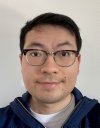
 Daiqing Li
· 2 previous affiliations
- RobloxSince 2025
- Principal Researcher · Since 2025
- Nvidia (United States)2018–2023
- Researcher · 2018–2023
Research Overview
Daiqing Li focuses on generative modeling, computer vision, and the development of efficient frameworks for semi-supervised learning. Li’s research primarily investigates how generative adversarial networks (GANs) and latent diffusion models can be utilized to synthesize high-quality training data, thereby reducing the reliance on large-scale manual annotation. This work spans several domains, including semantic image editing, 3D shape synthesis, and the distillation of generative features for pretraining discriminative backbones. By addressing the "expert bottleneck" in pixel-level labeling, Li’s contributions facilitate the training of robust models in data-constrained environments.
Research Trajectory
Li’s early research explored multimodal interaction and spatial generative modeling. In 2018, Li participated in the development of conversational agents that integrated verbal text with facial gestures, utilizing Decomposing Facial Expressions into Action Units to create more nuanced human-computer interactions. This was followed in 2019 by work on Neural Turtle Graphics, a sequential generative model designed to synthesize complex city road layouts as spatial graphs. These early projects established a foundation in modeling structured, high-dimensional data through recurrent and generative architectures.
By 2021, Li’s focus shifted toward the intersection of generative modeling and semantic segmentation. This period was characterized by efforts to solve the problem of Medical Image Segmentation with Limited Labels and the broader challenge of Robust Medical Imaging Across Clinical Sites, where domain shift and annotation costs are primary barriers. Li proposed frameworks that treat generative models not just as image synthesizers, but as joint distributions over images and their corresponding semantic labels. This approach allowed for the creation of massive synthetic datasets from only a handful of human-annotated examples, significantly improving out-of-domain generalization.
In 2022, Li scaled these concepts to handle the diversity of ImageNet-scale datasets. This work involved transforming class-conditional generative models into labeled dataset generators, effectively turning the latent space of a GAN into a source of infinite, annotated training data. During this time, Li also contributed to research on Disentangled Control in Generative Latent Spaces, enabling high-precision semantic editing by manipulating part-segmentation masks within the generative process.
Most recently, Li has expanded into 3D generative modeling and self-supervised representation learning. This includes participation in projects utilizing Tri-Plane Feature Representations for 3D Deep Learning to synthesize textured 3D meshes and complex scenes. A significant recent direction involves Expressive Latent Priors for Multimodal Generative Modeling, where Li has proposed methods to distill knowledge from pre-trained generative models into standard perception backbones, offering a self-supervised alternative to traditional ImageNet pretraining.
Representative Work
In A Face-to-Face Neural Conversation Model, Li and colleagues addressed the limitations of text-only dialogue systems by incorporating facial expressions into a neural conversation framework. The model employs an RNN encoder-decoder architecture where the decoder operates in two layers: the first generates verbal responses and coarse expressions, while the second refines subtle facial gestures. This work demonstrated how multimodal inputs could allow a model to adapt its responses based on the perceived "mood" of a conversation, moving toward more realistic human-agent interaction.
Li’s work on Semantic Segmentation With Generative Models: Semi-Supervised Learning and Strong Out-of-Domain Generalization introduced a framework for pixel-level tasks that leverages the joint image-label distribution of a GAN. By augmenting StyleGAN2 to produce both an image and its semantic mask, the researchers showed that a model could be trained with very few labeled examples while maintaining high performance. This approach proved particularly effective for out-of-domain generalization, as the generative model’s learned prior helps regularize the segmenter against the variations typically found in real-world data.
In EditGAN: High-Precision Semantic Image Editing, Li contributed to a method that enables detailed image manipulation through the modification of segmentation masks. Unlike previous editing tools that relied on high-level attribute shifts or simple interpolations, EditGAN allows for localized, high-precision changes—such as altering the shape of a specific car part or a facial feature—by backpropagating the desired mask changes into the GAN’s latent space. This work highlighted the utility of joint image-mask training for providing fine-grained control over generative output.
The challenge of scaling synthetic data generation was addressed in BigDatasetGAN: Synthesizing ImageNet with Pixel-wise Annotations. Li served as the primary author on this study, which extended the "DatasetGAN" concept to the 1,000 classes of ImageNet. By manually annotating only five images per class from a pre-trained BigGAN, the team trained a feature segmentation architecture that could then label the entire generative space. The resulting synthetic dataset allowed for the training of competitive segmentation models without the prohibitive costs of manual pixel-wise labeling for millions of images.
Li’s recent work, DreamTeacher: Pretraining Image Backbones with Deep Generative Models, proposes a shift in how generative models are used in the broader computer vision pipeline. Rather than focusing solely on image synthesis, DreamTeacher uses generative networks as "teachers" to pretrain standard image backbones like ConvNets or ViTs. By distilling learned generative features or labels into these backbones, Li demonstrated that generative models can serve as a powerful source of self-supervised knowledge, rivaling or exceeding the performance of traditional supervised pretraining on downstream perception tasks.
Li also participated in the development of NeuralField-LDM: Scene Generation with Hierarchical Latent Diffusion Models, which focuses on the synthesis of complex 3D environments. This research leverages latent diffusion models to generate neural fields represented as voxel grids. By using a hierarchical approach to compress these grids into a latent space, the model can generate high-quality, multi-view consistent 3D scenes. This work represents Li’s involvement in the transition from 2D image synthesis to the generation of immersive, three-dimensional virtual worlds.
Current Directions
Li’s current research continues to explore the boundaries of self-supervised learning and generative synthesis. A primary focus is the refinement of distillation techniques that allow discriminative models to inherit the rich structural priors found in large-scale generative models. This includes investigating more efficient ways to map generative latent spaces to downstream task requirements and improving the scalability of 3D content creation. Li is also interested in the theoretical limits of synthetic data, specifically how much more data is required to reach target performances in specialized domains like autonomous driving or medical imaging, where data acquisition remains a significant bottleneck.
Profile updated
Loading new papers…
Other researchers whose papers cluster into the same research directions — a proxy for overlapping technical interests and shared intellectual neighborhoods.
See something wrong? Report a mistake