

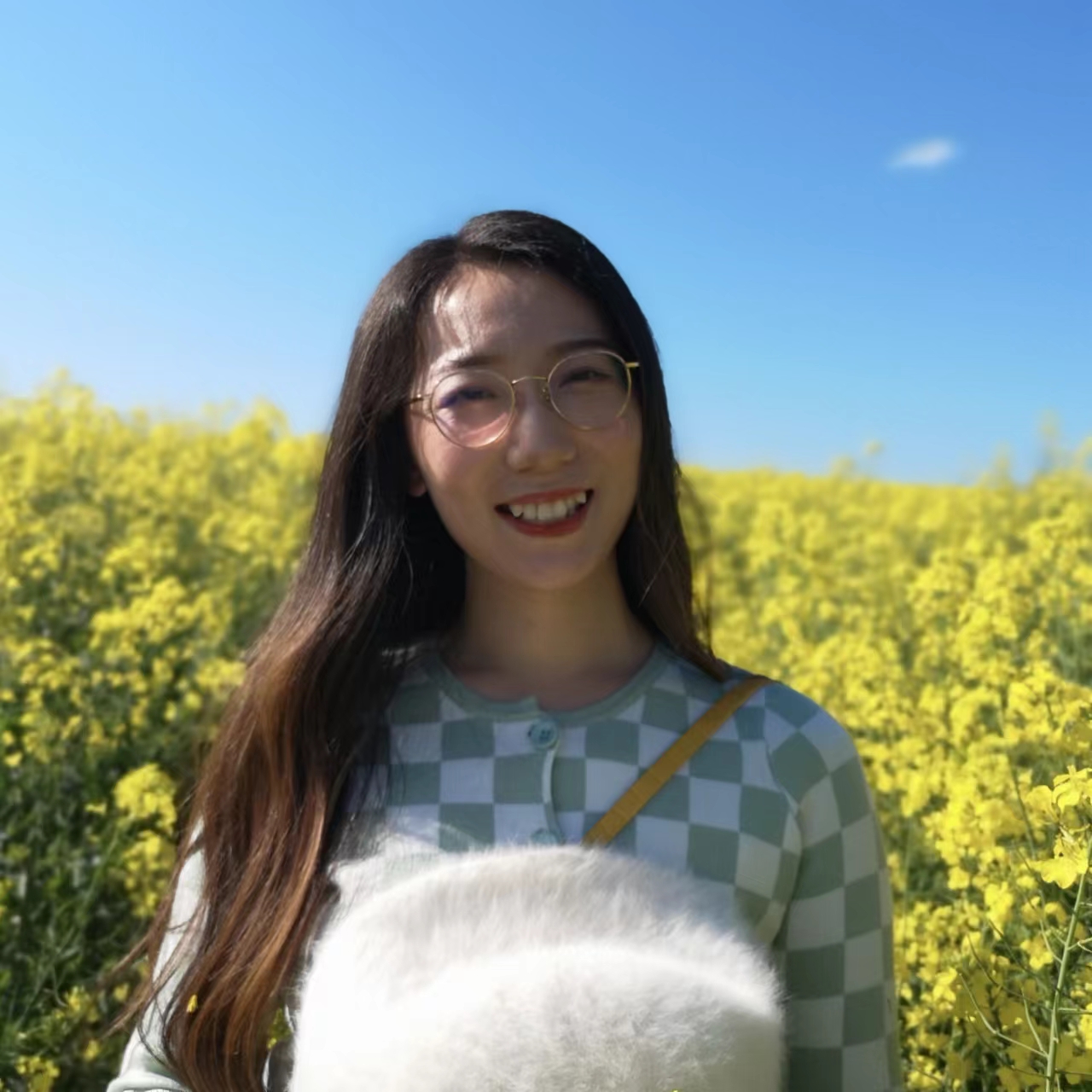
 Congbo Ma
· 4 previous affiliations
- New York UniversitySince 2025
- Postdoc · 2025–2027
- Current
- Macquarie University2023–2024
- Postdoc · 2023–2024
- Adelaide University2020–2024
- PhD student · 2020–2024
Research Overview
Congbo Ma focuses on natural language processing, heterogeneous graph learning, and unsupervised representation learning. His trajectory spans from early work in abstractive multi-document summarization and multi-modal learning to recent advancements in social event detection and hallucination mitigation in large language models. Currently, he investigates data augmentation and neural differential equations to improve the reliability of complex models.
Research Trajectory
His early research emphasized unsupervised learning methodologies and their application to complex data structures. In 2020, he led the development of Unsupervised Representation Learning by Predicting Random Distances, proposing a novel method that trains neural networks to predict distances between data points in a randomly projected space. This approach forced networks to learn underlying class structures without manual labels, demonstrating strong performance in anomaly detection and clustering.
Transitioning into natural language processing, he applied unsupervised techniques to text generation. He collaborated on Learning From the Source Document: Unsupervised Abstractive Summarization (2022), which utilized contrastive learning to remove the reliance on reference summaries by strategically generating fake source documents as negative examples. Concurrently, he advanced supervised multi-document summarization by authoring Incorporating Linguistic Knowledge for Abstractive Multi-document Summarization. This work aligns with the broader research direction of Integrating Explicit Linguistic Structures into Neural Networks, alongside his foundational interests in areas such as Label Aware Syntactic Graphs for Neural Language Processing and Shortest Dependency Path Filtering for Relation Extraction. To formalize the state of this rapidly evolving field, he subsequently published Multi-document Summarization via Deep Learning Techniques: A Survey in 2023, providing a comprehensive taxonomy of architectures, objective functions, and evaluation metrics.
During 2023, his research also expanded into multi-modal learning, specifically addressing the challenge of missing data modalities in computer vision and medical imaging. He participated in the design of the ShaSpec framework in Multi-Modal Learning with Missing Modality via Shared-Specific Feature Modelling, which captures both shared and modality-specific features through auxiliary tasks like distribution alignment. He further contributed to Learnable Cross-modal Knowledge Distillation for Multi-modal Learning with Missing Modality, an approach that adaptively identifies informative modalities and distills their knowledge to compensate for absent data sources during inference.
In 2024, a significant portion of his work pivoted toward heterogeneous graph learning, particularly for social event detection. He introduced the Learning To Sample (LTS) framework in Learning To Sample the Meta-Paths for Social Event Detection. By replacing manual feature engineering with a learnable, iterative sampling process to discover critical sequences of relationships, this work advanced the research area of Pareto Optimization for Feature and Subset Selection. He continued exploring this domain in An Efficient Automatic Meta-Path Selection for Social Event Detection via Hyperbolic Space, which combined automated meta-path selection with hyperbolic geometry to better model the complex, branching structures of social interactions.
Alongside his graph learning research, he continued to refine multi-document summarization. In Disentangling Specificity for Abstractive Multi-document Summarization (2024), he proposed an orthogonal constraint to separate document-specific content from shared topics, improving the comprehensiveness of generated summaries. He also applied graph neural networks to the medical domain, collaborating on Distributionally-Adaptive Variational Meta Learning for Brain Graph Classification to address data drift and the high costs of data collection in brain network analysis.
His most recent publications in 2025 focus heavily on model robustness, data augmentation, and the internal dynamics of large language models (LLMs). To overcome the high cost of labeled data in social media analysis, he developed Explicit and Implicit Data Augmentation for Social Event Detection, a dual framework combining LLM-driven text generation with feature-space perturbations. He also contributed to a comprehensive overview of reliability in clinical AI with Uncertainty Quantification for Machine Learning in Healthcare: A Survey. Finally, addressing the critical challenge of LLM factual accuracy, he participated in the development of HD-NDEs: Neural Differential Equations for Hallucination Detection in LLMs. This method systematically assesses the truthfulness of statements by capturing the continuous dynamics of LLMs within their latent space, contributing directly to the research directions of Probing the Intermediate Layers for Factual Self-Awareness and Continuous Time Latent Dynamics with Neural ODEs.
Current Directions
Based on his most recent work, his current research investigates the reliability, robustness, and internal mechanics of complex machine learning systems. A major theme is mitigating hallucinations in large language models by analyzing their continuous latent dynamics, moving beyond simple classification to understand and evaluate internal model states as they generate text.
Additionally, he is exploring advanced data augmentation strategies to improve performance in low-resource settings, specifically combining explicit text generation with implicit feature-space perturbations for tasks like social event detection. Finally, his recent collaborative efforts emphasize uncertainty quantification, aiming to bridge the gap between theoretical research and practical implementation to ensure the safety and adaptability of machine learning applications in high-stakes domains such as healthcare.
Profile updated
Loading new papers…
Other researchers whose papers cluster into the same research directions — a proxy for overlapping technical interests and shared intellectual neighborhoods.
See something wrong? Report a mistake