

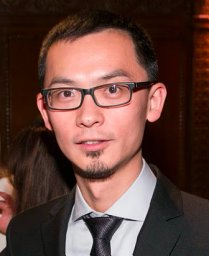
 Cong Yu
· 7 previous affiliations
- Board of Trustees, VLDB Endowment Inc.Since 2022
- Trustee · Since 2022
- DandySince 2025
- Head of Engineering · Since 2025
- Dandy / Zima InternationalSince 2025
- Head of Engineering · Since 2025
- Celonis2022–2025
- VP Engineering · 2022–2025
- Google (United States)2010–2022
- Principal Scientist / Research Director · 2010–2022
- Yahoo (Spain)2007–2010
- Research Scientist · 2007–2010
- University of Michigan2001–2007
- PhD student · 2001–2007
- M.S., Biology
2 other authors named Cong Yu: Cong Yu (Tsinghua University · 1 paper), Cong Yu (1 paper)
Research Overview
Cong Yu focuses on the intersection of data management, information retrieval, and machine learning, with a sustained interest in the structured representation and discovery of knowledge. His work has evolved from the foundational architecture of native XML databases and schema optimization to the development of sophisticated recommender systems and, more recently, to large-scale representation learning for relational tables and multimodal data. This trajectory reflects a broader shift in the field from managing structured data formats to extracting semantic meaning and utility from diverse, high-dimensional information sources.
Research Trajectory
The early phase of Yu’s research was centered on the technical challenges of XML data management. During the early 2000s, as XML emerged as a standard for data exchange, he contributed to the development of native storage and query processing systems. This work involved designing bulk algebras for tree manipulation and developing cost estimation techniques for query optimization in non-relational contexts. A significant focus during this period was the formalization of XML schema design. In XML schema refinement through redundancy detection and normalization, Yu addressed the problem of "casually designed" databases, proposing methods to detect redundancies and potential update anomalies through the application of functional dependencies. This foundational work in data modeling also extended to specialized domains, such as the integration of heterogeneous protein data, where he explored how better modeling could mitigate the challenges of information overload in bioinformatics.
By the late 2000s, Yu’s focus transitioned toward information filtering and the user-centric discovery of data. He began investigating the limitations of traditional Neighborhood-based Collaborative Filtering and other recommendation engines that prioritize accuracy at the expense of discovery. This period of work addressed the "accuracy-diversity dilemma," exploring how systems could be designed to prevent the formation of information cocoons. In Getting recommender systems to think outside the box, he proposed a framework for Breaking Filter Bubbles in Personalized Recommendation by identifying under-exposed item regions and Breaking the Accuracy Diversity Dilemma in Recommendations. This research emphasized the importance of "serendipity" and "risk" in algorithmic discovery, moving beyond simple relevance to help users find novel perspectives.
In the mid-2010s, Yu applied these discovery principles to the emerging field of computational journalism and complex data mining. He investigated how to identify "interesting" claims within high-dimensional datasets, such as sports statistics or public records. This led to the development of uniqueness-based measures for identifying "one-of-the-few" objects—entities that stand out in specific attribute subspaces. This work was critical for automating the detection of noteworthy facts in large datasets, ensuring that the identified claims were not merely statistical artifacts of high dimensionality but were genuinely meaningful to a human audience.
Structured Data and Table Understanding
In recent years, Yu has returned to structured data with a focus on Web-scale table understanding and knowledge extraction. Relational tables on the Web represent a massive but fragmented repository of human knowledge. Yu has led efforts to move beyond task-specific features toward universal representation learning for these structures. This work involves treating tables not just as grids of strings, but as rich relational contexts where entities and their attributes can be embedded into a shared semantic space.
His research in this area has addressed the problem of contextual fact ranking, where the goal is to identify the most informative facts for a set of entities based on a specific natural language context. This has direct applications in table synthesis and the enhancement of search engine results. Furthermore, he has participated in broader efforts to investigate the veracity of information online, contributing to frameworks for agreement-aware search that categorize news articles by their stance—agree, disagree, or discuss—to provide users with a holistic view of controversial topics or rumors.
Current Directions
Yu’s current research is heavily situated within the paradigm of large-scale pre-training and multimodal learning. He is investigating how to improve the efficiency and semantic depth of language models and encoders. This includes exploring Dense Training Objectives for Language Model Pre-training to overcome the sparse signal problems inherent in traditional masked language modeling. He has also contributed to research on Generalizing Model Pruning Across Diverse Neural Architectures, which seeks to reduce the computational redundancy of large models by identifying and utilizing only the most meaningful neural activations.
A primary current focus is the scaling of multimodal pre-training. Yu is addressing the noise and semantic misalignment often found in temporally aligned but semantically divergent data pairs, such as video and audio. By developing techniques like cross-modality gradient harmonization, he aims to create more robust representations that can better handle the unpredictable nature of real-world multimodal inputs. Additionally, his work continues to push the boundaries of natural language processing through collaborations on end-to-end subword tokenization, moving away from rigid, pre-defined algorithms toward data-driven, gradient-based methods for learning latent subword representations.
Finally, Yu maintains a methodological interest in Detecting Emerging Research Frontiers through Citation Bursts. This bibliometric approach complements his technical work by providing a macro-level view of how knowledge evolves across disciplines, helping to identify genuine shifts in research trajectories versus fleeting trends.
Representative Work
XML schema refinement through redundancy detection and normalization This work addresses the critical issue of redundancy in XML databases, which can lead to storage inefficiencies and update anomalies. Yu proposes a formal strategy for schema refinement based on functional dependencies, providing a framework for normalizing "casually designed" XML structures to ensure data consistency and reduce manipulation costs.
Getting recommender systems to think outside the box Addressing the problem of over-specialization in personalized filters, this paper introduces the "Outside-The-Box" (otb) recommendation framework. Yu develops an algorithm that balances relevance with the risk of novelty, identifying under-exposed item regions to help users discover content outside their established "filter bubbles."
On "one of the few" objects This research explores the identification of "interesting" objects in multi-attribute datasets. Yu proposes a uniqueness-based interestingness measure to validate claims that an object is "one of the few" in a given subspace. The work provides a computational foundation for journalism and data exploration, ensuring that such claims are statistically significant and meaningful.
Contextual Fact Ranking and Its Applications in Table Synthesis and Compression Yu investigates the problem of identifying the most informative facts for entities within a specific natural language context. This paper proposes a ranking framework that considers the collective informativeness of facts across multiple entities, with applications in synthesizing tabular data for search engines and knowledge bases.
TURL: Table Understanding through Representation Learning This paper introduces a pre-training and fine-tuning paradigm for relational Web tables. By learning deep contextualized representations in an unsupervised manner, the TURL framework provides a universal model design that can be applied to various table understanding tasks with minimal task-specific adjustment, moving away from heavily engineered features.
Scaling Multimodal Pre-Training via Cross-Modality Gradient Harmonization In this work, Yu addresses the challenges of semantic misalignment in large-scale multimodal data. He proposes a gradient harmonization technique to manage the noisy supervision inherent in cross-modality alignment (e.g., video/audio pairs), leading to more effective self-supervised pre-training for complex, multi-sensory datasets.
Profile updated
Loading new papers…
Other researchers whose papers cluster into the same research directions — a proxy for overlapping technical interests and shared intellectual neighborhoods.
See something wrong? Report a mistake