

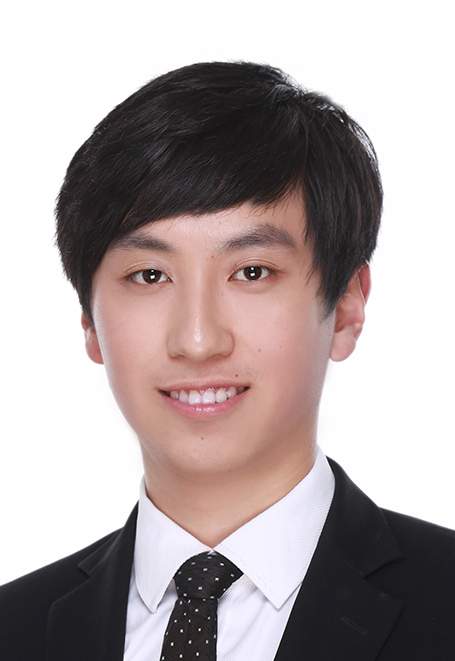
 Cong Ma
· 6 previous affiliations
- ByteDance (China)Since 2024
- Researcher · Since 2024
- 字节跳动Since 2024
- 大语言模型算法研究员 · Since 2024
- PhD degree, Pattern Recognition and Intelligent System · 2017–2024
- Institute of Automation2017–2024
- Doctor of Philosophy - PhD, Computer Applied Technology · 2017–2024
- Chinese Academy of Sciences2017–2024
- Doctor of Philosophy - PhD, Computer Applied Technology · 2017–2024
- Boeing (United States)2019–2020
- Software Engineer Intern · 2019–2020
2 other authors named Cong Ma: Cong Ma (University of Chicago · 42 papers), Cong Ma (1 paper)
Research Overview
Cong Ma focuses on machine translation, multimodal feature fusion, and reinforcement learning for language model reasoning. His trajectory spans from open-domain text translation to complex document image translation, integrating cross-modal and cross-lingual interactive mechanisms. Recent work investigates adaptive policy optimization techniques that allow large language models to internalize expert knowledge for complex reasoning tasks.
Research Trajectory
Initial work in the corpus centers on optimizing neural machine translation systems for open-domain challenges. In 2020, he contributed to CASIA's System for IWSLT 2020 Open Domain Translation, which focused on Chinese-Japanese and Japanese-Chinese translation tasks. This system achieved performance gains by augmenting training data and employing domain classification alongside weighted model ensembling. This work intersected with several methodological areas, including the area of Back-translation for Synthetic Data Augmentation and the research direction of Compressing Large Foundation Models via Knowledge Distillation. The system's evaluation methodologies also aligned with broader work in Shifting from Static Benchmarks to Dynamic Evaluation.
Building on foundational machine translation, his focus shifted toward the intersection of computer vision and natural language processing, specifically Text Image Machine Translation (TIMT). A recognized limitation of end-to-end TIMT models was their tendency to bypass explicit source language recognition, which degraded overall translation fidelity. To address this, he introduced CCIM: Cross-modal Cross-lingual Interactive Image Translation. This architecture incorporated a novel Cross-modal Cross-lingual Interactive Model (CCIM) that utilized an interactive attention mechanism between two distinct language decoders. By synchronously generating both source and target language outputs, the model effectively anchored the translation process in recognized source language information, improving performance over standard end-to-end approaches.
Collaborating on extensions to this multimodal paradigm, he subsequently contributed to Document Image Machine Translation with Dynamic Multi-pre-trained Models Assembling. This research expanded the scope of TIMT from isolated text lines to full document images characterized by long contexts and intricate layouts. The paper proposed a new task formulation, translating document images directly into markdown-formatted text to preserve structural integrity. To solve this, the authors developed the DIMTDA framework, which utilized a dynamic model assembler to integrate multiple pre-trained models. This contribution advanced the research area of Structure-Preserving Translation for Complex Document Layouts and utilized techniques relevant to the domain of Dynamic Gating for Multimodal Feature Fusion.
Most recently, his research has expanded into reinforcement learning and policy optimization for large language models. He co-developed EAPO: Enhancing Policy Optimization with On-Demand Expert Assistance, a framework designed to help LLMs learn complex reasoning tasks. Rather than relying solely on static datasets, EAPO allows models to adaptively consult external experts during the training phase. By internalizing this expert knowledge, the LLM achieves greater reasoning accuracy and stability, enabling it to operate independently at test time. This approach represents a significant contribution to the broader area of Adaptive Scaffolding for Reinforcement Learning Exploration.
Current Directions
The most recent papers in the evidence indicate a strategic pivot from multimodal translation architectures toward the optimization of reasoning capabilities in large language models. Current work investigates how reinforcement learning frameworks can be structured to dynamically leverage external expert knowledge during training. By focusing on adaptive scaffolding and policy optimization, this research aims to produce models that can internalize complex, multi-step reasoning processes and execute them autonomously during inference, addressing critical stability and accuracy challenges in modern LLM deployment.
Profile updated
Loading new papers…
Other researchers whose papers cluster into the same research directions — a proxy for overlapping technical interests and shared intellectual neighborhoods.
See something wrong? Report a mistake