

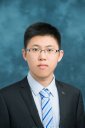
 Cong Fu
· 3 previous affiliations
- Texas A&M UniversityCurrent
- Current
- PhD student · 2021–2025
- University of Michigan2016–2018
- MS student · 2016–2018
- Harbin Institute of Technology2012–2016
- Undergrad student · 2012–2016
1 other author named Cong Fu: Cong Fu (Alibaba Group (China) · SHOPEE · 9 papers)
Research Overview
Cong Fu focuses on the intersection of machine learning and the physical sciences, with a particular emphasis on Geometric Graph Neural Networks for Molecular Modeling and generative modeling for biological and material structures. His research develops architectures that incorporate physical symmetries and geometric constraints to solve problems in quantum chemistry, protein engineering, and partial differential equations. By leveraging graph representation learning and diffusion models, his work aims to accelerate scientific discovery through the efficient simulation and generation of complex molecular and crystalline systems.
Research Trajectory
Fu’s research trajectory began with a focus on foundational graph neural network (GNN) architectures and their application to molecular property prediction. In 2021, his work addressed the challenge of Graph Representation Learning through Mutual Information Maximization, exploring how self-supervised objectives could improve node-level representations in sparse data environments. During this period, he also contributed to the development of community-standard software for graph deep learning, participating in the creation of the DIG library, which unified implementations for graph generation and explainability.
By 2022, Fu’s focus shifted toward the specific challenges of quantum many-body systems. He addressed the limitations of standard convolutional neural networks (CNNs) when applied to non-square lattices, developing methods to map irregular physical structures onto grid-like representations suitable for deep learning. This period marked a transition toward "AI for Science," where the primary goal was not just improving ML benchmarks but solving domain-specific problems in physics and chemistry.
In 2023 and 2024, Fu expanded his methodological toolkit to include generative modeling and equivariant neural operators. He led research into latent diffusion models for protein structure generation, moving beyond static property prediction to the design of novel biomolecules. Simultaneously, he contributed to the development of Fourier Neural Operators that respect physical symmetries, such as rotation and translation, in the frequency domain. This work was particularly relevant for solving partial differential equations (PDEs) that govern fluid dynamics and other physical phenomena.
Most recently, in 2025, Fu has focused on the computational efficiency of interatomic potentials and the role of large language models (LLMs) in the scientific process. His recent work addresses the high computational cost of equivariant operations in molecular simulations and explores the potential for autonomous agents to orchestrate the scientific discovery lifecycle, from hypothesis generation to experimental execution.
Representative Work
Fu’s contributions are centered on the development of specialized neural architectures for physical and biological systems. The following papers represent key milestones in his research on quantum systems, protein design, and material science.
In Lattice Convolutional Networks for Learning Ground States of Quantum Many-Body Systems, Fu addressed the difficulty of representing ground-state wave functions on non-square lattices. While CNNs are effective for square lattices due to their image-like structure, they typically fail on more complex geometries. Fu proposed a set of lattice operations that convert non-square lattices into augmented grid-like structures, allowing for the application of regular convolutions without the need for hand-crafted sublattice encoding. This work demonstrated that structural information could be captured more precisely than with standard GNNs in quantum contexts.
Addressing the challenges of drug discovery and synthetic biology, Fu led the development of A Latent Diffusion Model for Protein Structure Generation. Generating novel protein structures is computationally intensive due to the vast modeling space. Fu’s approach utilized an equivariant protein autoencoder to embed structures into a condensed latent space, followed by an equivariant diffusion model to generate new samples. This framework reduced the complexity of protein modeling while ensuring that the generated structures remained physically plausible and respected the geometric symmetries inherent in biomolecules.
In the domain of molecular property prediction, Fu contributed to Fast Quantum Property Prediction via Deeper 2D and 3D Graph Networks. This research focused on predicting quantum chemical properties without the need for expensive 3D equilibrium structures. By designing deep GNNs that learn directly from 2D molecular graphs and low-cost conformer sets, the work provided a more computationally affordable path for high-throughput screening in chemistry. This methodology was validated through participation in the 2021 KDD Cup on Open Graph Benchmark (OGB) datasets.
Fu’s work on Isometry Invariants for Periodic Crystal Representations led to the development of Complete and Efficient Graph Transformers for Crystal Material Property Prediction. Crystal structures present a unique challenge for ML because they are periodic and infinite. Fu and his collaborators introduced ComFormer, a graph transformer framework that uses a lattice-based representation for each atom. This approach allows the model to capture complete geometric information, including chirality, while maintaining the efficiency required for large-scale material science benchmarks.
To address the scalability of molecular simulations, Fu co-authored Tensor Decomposition Networks for Fast Machine Learning Interatomic Potential Computations. Equivariant neural networks are often slowed by the Clebsch-Gordan tensor product, which has high computational complexity. This work proposed replacing the standard tensor product with a low-rank CP decomposition, reducing the complexity of the core "fusion" operation. The resulting Tensor Decomposition Networks (TDNs) achieved significant speedups in interatomic potential computations without sacrificing the accuracy necessary for molecular dynamics.
Finally, Fu has explored the integration of LLMs into the broader scientific workflow in Autonomous Agents for Scientific Discovery: Orchestrating Scientists, Language, Code, and Physics. This work outlines a vision for LLM-based agents that can interact with human scientists, write code for physical simulations, and analyze results. By moving beyond specialized models for single tasks, this research suggests a paradigm shift toward autonomous systems that can manage the entire scientific discovery lifecycle.
Current Directions
Fu’s current research continues to push the boundaries of AI for Science by focusing on the scalability and autonomy of discovery systems. A major current theme is the optimization of machine learning interatomic potentials to enable longer and larger molecular dynamics simulations, which are critical for understanding complex chemical reactions and material behaviors. This involves refining tensor decomposition methods and exploring new ways to embed physical laws into neural architectures.
Another significant area of focus is the development of multi-modal models for drug design. This includes the tokenization of molecular fragments and geometries for use in language models, aiming to bridge the gap between topological graph representations and 3D spatial conformations. By combining the reasoning capabilities of large-scale pre-trained models with the geometric precision of GNNs, Fu seeks to create more robust tools for structure-based drug design.
Additionally, Fu is investigating the use of autonomous agents to bridge the "synthesis gap" in scientific research. This involves developing systems that can not only retrieve information but also connect disparate facts across scientific literature and experimental data to form coherent reasoning chains. This direction aligns with his recent work on LLM-based scientific agents, emphasizing a future where AI serves as a collaborative partner in the laboratory.
Profile updated
Loading new papers…
Other researchers whose papers cluster into the same research directions — a proxy for overlapping technical interests and shared intellectual neighborhoods.
See something wrong? Report a mistake